Stitch & Selvage earns a commission when you buy through the links on this page, at no extra cost to you. It does not change what we recommend, and we publish a skip-this verdict on products we could otherwise earn from. Full disclosure.
For most people the Brother to buy is the CS7000X — ten presser feet including a walking foot and a quarter-inch foot, a wide table, a hard cover and an adjustable speed control. The CP100X matches it on every published mechanical figure and on all ten feet, adds thirty stitches and an eighth buttonhole style, and lists twenty dollars lower — buy that one instead when it is in stock, which it has not reliably been. If you want the most equipment, the CS7205 has eleven feet. If the budget is the constraint, the GX37 is the cheapest Brother that threads its own needle.
The model numbers do not help you
Brother sells these machines as CS7000X, CP100X, CS7205, XR9550, XR3774, CS5055, GX37, XM3700, ST150HDH, ST531HD, ST371HD, LX3817, HC1850 and XM1010. Nothing in those names tells a buyer what changes between them, and the marketing copy is close to identical across the range.
What we can offer instead is a pattern in the machines we have actually documented. Across the fourteen we cover, every CS, CP and HC machine is computerized with an LCD; every XM, GX and LX machine is mechanical with a dial; the XR models split (the XR9550 is computerized, the XR3774 is mechanical); and ST is the heavy-fabric line, which itself splits — the ST150HDH is computerized while the ST371HD and ST531HD are dials. That is an observation about these fourteen specifications, not a statement of Brother's naming policy — Brother does not publish one, and we are not going to invent it.
The specification that actually separates them is much duller and much more useful: what is in the carton. Presser feet are the largest hidden cost in this category, and the difference between a machine that arrives ready to quilt and one that needs two more purchases is four lines on a spec sheet.
Every Brother we cover, side by side
Compiled from Brother USA's own product pages. Every specification and list price was read on 19 September 2026, except the CP100X row, which was read on 21 September — the CS7000X and CS7205 prices were re-read the same day and had not moved, so the column is still directly comparable. All were confirmed in stock on Brother's own store on the day they were read.
Read the walking foot column against the price column and the list stops behaving like a ladder. Five machines include a walking foot — the CS7205, CS7000X, CP100X, XR3774 and ST150HDH — and one of those five is the cheapest computerized-adjacent machine on the page. Two machines that cost more than the XR3774 do not include one.
How we judged these
Method
How we picked
- Compiled the full published specification for every machine from the manufacturer's own product page — Brother USA and SINGER — on 1 September 2026. Every stitch count, presser foot list, weight, warranty and carton content on this page is cited to one of those pages at the foot of the article.
- Scored against the formula published on how we pick: first-setup ease 30%, stitch range relative to beginner use 15%, presser feet included 15%, warranty 10%, portability 10%, price-to-spec ratio 20%.
- Excluded any machine we could not verify was currently purchasable with a published manufacturer specification. A pick whose buy button cannot exist is not a pick.
- Pulled every price live from Amazon at page load. Where no live figure is available the button reads 'Check price' — we never print a remembered number.
- Named one machine to skip, and said why. We could earn from it either way.
We have not sewn on these machines. There is no test bench here, we do not own them, and we do not accept free product. Everything above is compiled from published manufacturer specifications and live retailer data — and we tell you which is which on every claim. Our full method.
The ranking
Quick picks
Ranked against the published criteria below. Tap a row to jump to the full write-up; the price button goes straight to Amazon.
| # | Product | Best for | Score | Price |
|---|---|---|---|---|
| 1 | 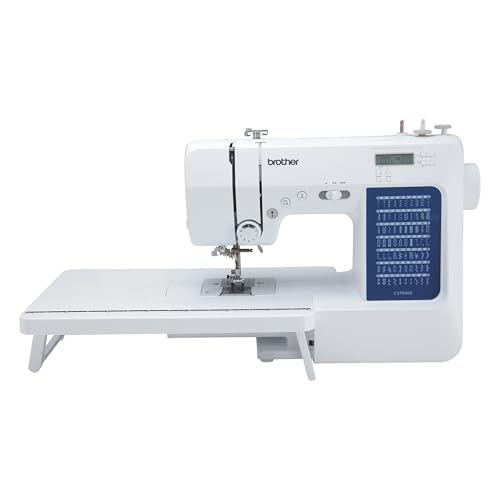 Brother CS7000X Computerized Sewing & Quilting Machine The first machine most beginners should buy | 70 built-in stitches | 9.2/10 | |
| 2 |  Brother CP100X Computerized Sewing & Quilting Machine The CS7000X specification for less money | 100 built-in stitches, 8 buttonhole styles | 9.4/10 | |
| 3 |  Brother CS7205 Computerized Sewing Machine The most machine in one carton | 205 built-in stitches, 8 buttonhole styles | 9.0/10 | |
| 4 |  Brother XR9550 Computerized Sewing & Quilting Machine Beginners who already know they want to make clothes | 165 built-in stitches | 8.9/10 | $269.99 on Amazon #ad affiliate link · price as of October 17, 2026 |
| 5 |  Brother XR3774 Sewing & Quilting Machine Quilting on the smallest sensible budget | 37 built-in stitches, 74 stitch functions | 8.2/10 | $184.99 on Amazon #ad affiliate link · price as of October 17, 2026 |
| 6 |  Brother CS5055 Computerized Sewing Machine The most stitches per dollar of any machine here | 60 built-in stitches, 7 buttonhole styles | 8.5/10 | |
| 7 | 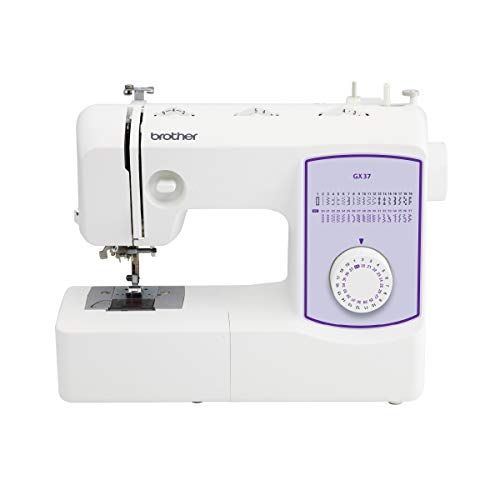 Brother GX37 Sewing Machine The cheapest machine that threads itself | 37 built-in stitches | 8.3/10 | $149.00 on Amazon #ad affiliate link · price as of October 17, 2026 |
| 8 |  Brother ST150HDH Strong & Tough Computerized Sewing Machine Heavy fabric without giving up the beginner features | 50 built-in stitches, 850 stitches per minute | 8.7/10 | $339.99 on Amazon #ad affiliate link · price as of October 17, 2026 |
| 9 |  Brother ST531HD Heavy Duty Sewing Machine The Strong & Tough machine you can actually buy | 53 built-in stitches, up to six layers of denim | 7.3/10 | $259.99 on Amazon #ad affiliate link · price as of October 17, 2026 |
| 10 |  Brother ST371HD Heavy Duty Sewing Machine Thick fabric on a mechanical dial | 37 built-in stitches, 800 stitches per minute | 7.0/10 | $233.99 on Amazon #ad affiliate link · price as of October 17, 2026 |
| 11 |  Brother XM3700 Sewing Machine 37 stitches at the cheap end, with the threader kept | 37 built-in stitches, 74 stitch functions | 8.1/10 | |
| 12 | No photo Brother LX3817 Sewing Machine Mending and hemming on the smallest budget | 17 built-in stitches | 6.3/10 | Check price on Amazon #ad affiliate link · no live price for this item |
| 13 |  Brother HC1850 Computerized Sewing Machine Monogramming, and a stitch chart you can read at a glance Our skip-this pick | 185 built-in stitches, 8 buttonhole styles | 7.9/10 |
The first machine most beginners should buy
Brother CS7000X Computerized Sewing & Quilting Machine
The only machine on this page that arrives with the two feet a beginner ends up buying anyway — a walking foot and a quarter-inch foot — plus an automatic needle threader and a drop-in bobbin, so the two jobs that make people quit are the two jobs it makes easy.
The CS7000X is the machine we point a first-time buyer at, and the reason has nothing to do with its stitch count. It is the presser feet. Brother lists ten of them in the box — zigzag, buttonhole, zipper, button sewing, overcasting, blind stitch, monogramming, quarter-inch, quilting and walking — plus a quilt guide. Two of those, the walking foot and the quarter-inch foot, are the exact accessories a beginner ends up ordering three months in, and they are not cheap bought separately.
The second reason is the threading. Brother's published specification lists an automatic needle threading system and a quick-set drop-in top bobbin. Threading the needle and setting the bobbin are the two jobs that make people put a machine back in its box, and this one turns both into a lever pull and a drop. On a front-loading machine you are removing a case, seating a bobbin in a particular orientation, and hoping.
It is a computerized machine, which means stitch selection is a mode key and a shift key against an LCD rather than a dial. That is a genuine trade-off, not a straight upgrade: a dial is legible at a glance and has nothing to fail, while an LCD tells you the stitch width and length the machine has actually selected. For someone learning, seeing the numbers is worth more than the simplicity of a dial.
The extras matter more than they sound. The detachable wide table turns a small free-arm machine into something you can push a quilt across, and the hard protective cover is the difference between a machine that stays out on a table and one that lives in a cupboard collecting dust. Brother also publishes a 25-year limited warranty and free phone and online technical support for the life of the product.
We have not sewn on this machine. Everything above is from Brother's own specification page, and the price on the button is live from Amazon rather than anything we typed. What we can tell you is what the box contains and what that saves you buying — which, for a first machine, is most of the decision.
What works
- Automatic needle threader and a drop-in bobbin — the two setup jobs that defeat most beginners
- Ten presser feet including the walking foot and a quilting foot, which the cheaper machines make you buy separately
- Detachable wide table and a hard cover are in the box, not extras
- Adjustable sewing speed control, so a first seam can be run slowly
- Brother publishes a 25-year limited warranty on it
What does not
- Seventy stitches is far more than a beginner will use; you are paying for decorative stitches you may never touch
- Computerized machines have more to go wrong electronically than a dial-and-lever mechanical
- At 10.5 lb it is light enough to walk across a table at speed unless it is on a firm surface
The kit it pairs with: It already includes the walking foot and quilting foot, so its starter kit is short: needles, bobbins, thread, shears and pins.
The CS7000X specification for less money
Brother CP100X Computerized Sewing & Quilting Machine
On Brother's own published figures this is the CS7000X — same speed, same stitch width, same weight, same shell, same ten presser feet — with thirty more stitches and an eighth buttonhole style, listed twenty dollars lower. The catch is not the machine, it is whether it is in stock.
The CP100X is the machine that makes our own top pick awkward. Set Brother's CP100X and CS7000X specification pages side by side and the overlap is not approximate — it is exact. Both run to 750 stitches a minute. Both publish a 7 mm maximum stitch width and a 5 mm maximum stitch length. Both weigh 10.5 lb, in a shell Brother measures at 12.2 x 6.65 x 16.26 inches, shipped in a carton of 12 x 20 x 18. Both use an LCD with mode and shift key stitch selection, an automatic needle threader, a quick-set drop-in bobbin and no lettering fonts. Both carry a 25-year limited warranty. Neither has a knee lifter or a pivot function.
The presser feet are the same too, and on this site that is the specification that decides a recommendation. Brother lists ten on each machine: zigzag, buttonhole, zipper, button sewing, overcasting, blind stitch, monogramming, quarter-inch, quilting and walking. Both also include a quilting guide — Brother just files it in the feet list on the CS7000X page and in the carton contents on the CP100X page. The walking foot and the quarter-inch foot, the two accessories a beginner otherwise buys three months later, are in both boxes.
Where they differ, the CP100X is ahead. It publishes 100 built-in stitches to the CS7000X's 70, and eight one-step auto-size buttonhole styles to the CS7000X's seven. And Brother lists it at $259.99 against the CS7000X's $279.99 — twenty dollars less for the machine with more on the spec sheet. We should be honest about how much that first advantage is worth: this site's consistent position is that stitch count is the least useful number on a sewing machine box, and thirty extra decorative stitches on top of seventy you already were not going to use changes nothing. The eighth buttonhole style is a genuine if small gain for garment sewing. The twenty dollars is the real difference.
So why is the CS7000X still the machine we name as our top first machine? One reason, and it is not about the sewing. The CP100X's Amazon listing has been intermittently unbuyable: we checked it on 14, 17 and 19 September 2026 and found no purchasable offer each time, while Brother's own store held stock. It came back on 21 September at $229.99. A top pick has to be a machine you can actually buy on the day you read about it, and a listing that disappears for a week at a time does not clear that bar. If it is in stock when you look, the specification says buy this one.
Two honest caveats on the comparison. Brother's CP100X page does not publish a free arm, a drop feed, accessory storage, adjustable presser foot pressure or a memory line — all of which appear on the CS7000X page. Given that every other published figure on the two machines is identical, this reads as a thinner specification sheet rather than a different machine, but we are not going to tell you a machine has a free arm on an inference. And we have not sewn on either one. Everything above is Brother's published specification, read on 21 September 2026 and cited below; the price on the button is live from Amazon rather than anything we typed.
What works
- The same ten presser feet as the CS7000X — including the walking foot and the quarter-inch foot — plus a quilting guide
- Eight one-step auto-size buttonhole styles, one more than the CS7000X publishes and matching the most any machine on this site offers
- Automatic one-step needle threader and a quick-set drop-in bobbin, the two jobs that defeat beginners
- Detachable wide table and a hard case, both in the carton — the hard case is what keeps a machine on the table instead of in a cupboard
- Adjustable sewing speed control, so a first seam can be run slowly
- Listed twenty dollars below the CS7000X for a specification that matches it line for line
- 25-year limited warranty, the same term Brother publishes on the CS7000X
What does not
- Its Amazon listing goes out of stock. We recorded it unbuyable on 14, 17 and 19 September 2026 and buyable again on 21 September. Brother's own store held stock throughout
- A hundred stitches is far more than a beginner will use — the thirty it adds over the CS7000X is the upgrade that matters least
- Brother's CP100X page does not publish a free arm, drop feed, accessory storage, presser foot pressure or memory line, all of which the CS7000X page does publish. That is a gap in Brother's documentation, not evidence the hardware differs — but we will not claim a feature a manufacturer does not state
- Computerized, so there is more to fail electronically than on a dial-and-lever mechanical
- At 10.5 lb it is light enough to walk across a table at speed unless it is on a firm surface
- Less well known than the CS7000X, so second-hand parts, tutorials and accessories are easier to find for its better-selling twin
The kit it pairs with: Like the CS7000X it already includes the walking foot and the quilting foot, so its starter kit is short: needles, bobbins, thread, shears and pins.
The most machine in one carton
Brother CS7205 Computerized Sewing Machine
Eleven presser feet including a walking foot, a quarter-inch foot and a stitch guide foot, plus a wide table, a 2-inch LCD, eight buttonhole styles, a start/stop button and 7-point feed dogs. On published specification nothing else we cover comes close for the money.
The CS7205 is the machine that makes the rest of Brother's consumer range look thin, and the reason is the carton. Brother lists eleven presser feet: walking, quarter-inch, spring-action quilting, stitch guide, buttonhole, zipper, overcasting, blind stitch, monogramming, zigzag and button sewing. Our previous benchmark for a generous box, the CS7000X, lists ten.
Two of those eleven are the ones that normally cost real money afterwards. The walking foot adds a second set of feed dogs above the fabric so a quilt sandwich advances evenly. The quarter-inch foot gives you a physical edge exactly a quarter inch from the needle, which is the seam allowance every quilt pattern assumes. A third — the stitch guide foot — appears on nothing else we cover; it carries seam-allowance markings on the foot itself, at the needle, rather than on the plate several inches behind where you are actually looking.
The controls are a step up too. Brother publishes a start/stop button, so the machine will sew without the foot pedal at all; a needle position key with needle stop up/down, which is how you pivot cleanly at a corner; a 2-inch back-lit LCD with built-in memory; and an independent bobbin winding motor, which means winding a bobbin does not require unthreading the top of the machine. It also publishes 7-point feed dogs, the same count as the heavy-duty ST150HDH and more than the 6-point arrangement on the XR3774.
About the stitch count, because the numbers do not agree. Brother's own product page says 205 built-in stitches, including 55 alphanumeric and 8 one-step buttonholes. Every Amazon listing for this machine says 150. Those are not contradictory once you do the arithmetic: 205 minus the 55 alphanumeric characters is exactly 150. The most likely explanation is that one count includes the monogramming alphabet and the other does not. We quote Brother's figure because our rule is the manufacturer's published specification, and we are flagging the discrepancy rather than quietly picking the bigger number.
What it gives up against the CS7000X is a hard case — Brother's carton contents here list the wide table and no cover at all. That is a real omission on a machine otherwise this well equipped, and it is the reason to think twice if yours has to be stored on a shelf.
Two further absences worth naming: Brother lists adjustable presser foot pressure as 'No', so thick multi-layer seams are not this machine's job, and there is no automatic thread cutter, with thread tension set manually. And one genuine gap in the published data — Brother does not state whether this machine has a free arm. Nearly everything in this class does, but it is not published here, so we are not going to tell you it does.
One last oddity, reported as found: the warranty on Brother's own CS7205 page renders as '1/5/25 Year Limited Serger Warranty'. This is not a serger. We assume that is a labeling error in Brother's data rather than a different warranty, but we are quoting the string Brother actually publishes rather than substituting the one we expect.
We have not sewn on this machine. Every specification above was read off Brother's own product page on 14 September 2026, where it was listed in stock at $289.99.
What works
- Eleven presser feet — more than any other machine we cover, and they include the walking foot AND the quarter-inch foot, which are the two people usually buy afterwards
- A stitch guide foot, which no other machine here includes: it puts seam-allowance markings right at the needle instead of on the needle plate behind it
- Eight one-step buttonhole styles, matching the XR9550 and beating everything else on the site
- A start/stop button, so you can sew without the foot pedal — genuinely useful for free-motion work and for anyone who finds pedal control hard
- A needle position key with needle stop up/down, which is what lets you pivot accurately at a corner without turning the handwheel
- 7-point feed dogs and a wide table, plus an independent bobbin winding motor so you can wind a bobbin without unthreading the machine
- 10.14 lb, the lightest figure Brother publishes across the machines we cover
What does not
- No hard case. Brother's carton contents list a wide table and no cover of any kind — the CS7000X includes a hard protective cover
- Adjustable presser foot pressure: No. Not a denim, canvas or upholstery machine
- No automatic thread cutter, and thread tension is manual rather than automatic
- Brother does not publish a free arm for this machine anywhere on its product page. We are not going to assume one — check before you buy if you hem trouser legs
- 205 stitches is more than anyone needs. You will use four, and the count is the least predictive number on any specification sheet
- Amazon's listings for this machine say 150 built-in stitches where Brother says 205 — see the note below before you assume either is wrong
The kit it pairs with: Almost nothing on the accessory side — the walking foot and quarter-inch foot are already in the box. Add universal needles in 80/12 and 90/14, extra bobbins, and a dust cover, since Brother does not include one.
Beginners who already know they want to make clothes
Brother XR9550 Computerized Sewing & Quilting Machine
The stitch library and the buttonhole range are the point here: 165 stitches, eight one-step buttonhole styles and 55 alphanumeric characters, on the lightest machine in this line-up.
The XR9550 and the CS7000X sit at almost the same list price on Brother's own site — $269.99 against $279.99 — and they are not the same machine. The XR9550 spends its budget on the stitch library and the electronics; the CS7000X spends it on presser feet. Which is right for you comes down to one question: are you making clothes, or are you quilting?
For clothes, the XR9550 wins on buttonholes. Brother lists eight one-step auto-size buttonhole styles, against seven on the CS7000X and one on the XM2701. Buttonhole style matters more than it sounds — a keyhole buttonhole for a jacket, a rounded one for a blouse, a bar-tacked one for heavy cotton. It also carries an upper thread sensor, which stops you sewing eighteen inches of nothing before you notice the spool ran out, and a needle position key, which lets you shift the needle to sew an accurate narrow seam without owning a quarter-inch foot.
For quilting, the CS7000X wins, and it wins on one part: the walking foot. The XR9550 includes a spring-action quilting foot, which is a free-motion foot — it hops, and you move the fabric yourself. A walking foot is a different thing entirely: it feeds the top layer at the same rate as the feed dogs move the bottom layer, which is what stops a quilt sandwich shifting. The XR9550 does not include one.
The eight feet it does include cover garment work properly — an overcasting foot for finishing raw edges, a blind hem foot for invisible hems, a monogramming foot. Brother also puts a wide table and a hard case in the box, and at 10.14 lb it is the lightest machine on this site.
We have not sewn on this machine. The specifications are Brother's, and the price on the button is live from Amazon rather than remembered.
What works
- Eight one-step buttonhole styles — the widest buttonhole range of any machine here, and buttonholes are what garment sewing turns on
- An upper thread sensor: the machine tells you the top thread has broken instead of letting you sew an empty seam
- A needle position key, which is how you sew an accurate quarter-inch seam without a quarter-inch foot
- Wide table and hard case both included
- 10.14 lb, the lightest machine in this line-up
What does not
- No walking foot in the box, which the CS7000X does include for a similar list price
- 165 stitches is a menu to scroll, and a beginner will use perhaps eight of them
- 55 alphanumeric characters is a monogramming feature most first-time buyers will never open
- A backlit LCD and a thread sensor are more electronics to fail than a mechanical machine has
The kit it pairs with: Add a walking foot if you intend to quilt; the spring-action quilting foot in the box is for free-motion work, not for feeding batting evenly.
Quilting on the smallest sensible budget
Brother XR3774 Sewing & Quilting Machine
The only machine we cover besides the CS7000X that includes a walking foot AND a wide table — and it is mechanical, so you get the quilting hardware without paying for the electronics.
The XR3774 is the machine that makes the CS7000X's pitch at a lower price, and it does it by being mechanical. Brother's argument for the CS7000X has always been the carton — ten feet including a walking foot and a quarter-inch foot, plus a wide table. The XR3774 includes a walking foot, a quilting foot, a quilt guide and a wide table too, and drops the computerized stitch selection to get there.
That trade is the whole machine. What you keep is the hardware a quilter actually uses: the walking foot that adds a second set of feed dogs above the fabric so the top layer of a sandwich cannot outrun the bottom one, the wide table that stops a quilt dragging off a free arm and distorting every seam, and a free-motion quilting foot for stippling once the feed dogs are dropped. What you give up is the LCD, and with it the ability to read your stitch width and length back as numbers.
Brother also publishes two figures here it does not publish on its other beginner machines. 6-point feed dogs — more teeth in contact with the cloth than the standard arrangement, which is a feeding advantage on the layered work this machine is sold for. And a 7 mm maximum stitch width, tied with the CS5055 and CS7205 for the widest in the range, which matters for appliqué and for overcasting a raw edge properly.
The honest weakness is the buttonhole. Brother lists one style of one-step auto-size buttonhole. That is genuinely fine — a one-step buttonhole sizes itself to the button you drop into the foot and it is a world away from steering a four-step one by eye — but the CS5055 publishes seven styles at a *lower* list price, and a keyhole buttonhole for a coat button or a stretch construction for jersey is something one style cannot give you.
The other gap is narrower than it looks: there is no quarter-inch piecing foot. Quilt patterns are built on a quarter-inch seam allowance, and that foot puts a physical edge exactly there to follow. It is the cheapest of the quilting accessories to add, but it is an add.
We have not sewn on this machine. Every specification above was read off Brother's own product page on 14 September 2026, where it was listed in stock at $184.99.
What works
- A walking foot, a quilting foot, a quilt guide AND a wide table in the box — the quilting package, on a mechanical machine at a mechanical machine's price
- 8 presser feet, second only to the CS7000X's ten among everything we cover
- Automatic needle threading and a jam-resistant Quick-Set drop-in bobbin — the two specifications whose absence beginners complain about
- A 7 mm maximum stitch width, tied with the CS5055 and CS7205 for the widest figure Brother publishes across the machines we cover
- 6-point feed dogs, which Brother publishes here and on none of its other beginner machines
- 25-year limited warranty, and a darning plate and twin needle included
What does not
- Only one buttonhole style. The CS5055 publishes seven at a lower list price, and if you sew garments with buttons that gap matters more than the quilting feet
- No quarter-inch piecing foot, which is the one quilting accessory the CS7000X has and this does not — you will buy it separately
- No display. Stitch width and length are dial positions rather than numbers you can read back
- Adjustable presser foot pressure: No, so this is not a denim or upholstery machine
- 12.3 lb, heavier than every other Brother we cover — the wide table is part of why
- Brother's own feature text calls the work area 'brightly lit LED' while its specification attribute lists the lighting type as a bulb. We cannot resolve that from published data and will not guess
The kit it pairs with: A quarter-inch piecing foot, which is the one quilting accessory missing from the box, plus quilting needles in 75/11 and 90/14 and extra Class 15 bobbins.
The most stitches per dollar of any machine here
Brother CS5055 Computerized Sewing Machine
Sixty stitches, seven one-step buttonhole styles and an automatic needle threader on a 10.5 lb computerized machine — the cheapest route to the features that actually make garment sewing pleasant.
The CS5055 is the machine we would point at if someone said 'I want a computerized machine and I do not want to spend CS7000X money.' Brother lists 60 built-in stitches including seven styles of one-step auto-size buttonhole, an automatic needle threading system, a quick-set drop-in bobbin, an LCD with computerized stitch selection, a free arm and an LED-lit work area, on a machine that weighs a published 10.5 lb.
Seven buttonhole styles is the specification worth stopping on. A buttonhole style is not decoration — a keyhole buttonhole is for a thick shanked coat button, a rounded one for fine blouse fabric, a stretch construction for knits, a plain bar-tacked rectangle for shirts. Most machines at this price have one style or, on the mechanical models, a four-step buttonhole you steer by eye. Seven is what the XR9550 has eight of at a considerably higher list price.
Sixty stitches is more than anyone needs and that is fine — you will use four. The reason the number matters here is what comes with it: computerized selection means the stitch width and length are numbers on a screen rather than dial positions you have to remember, which is the practical difference between a mechanical and a computerized machine. We cover that trade in full here.
What Brother leaves out is the accessory package. Seven feet — zigzag, buttonhole, zipper, button sewing, overcasting, blind stitch and monogramming — and no walking foot, no quarter-inch foot, no wide table and no hard cover. Those four items are most of what separates this machine from the CS7000X, and if you intend to quilt they are exactly the four you would want. What a walking foot does explains why it is the one worth buying first.
Two other absences are worth naming because they are easy to assume: Brother lists adjustable presser foot pressure as 'No', so this is not a denim machine, and there is no automatic thread cutter, needle position key or start/stop button. The top speed is 750 stitches per minute, the slowest figure we have on file — gentle for learning, slow if you are sewing curtains.
We have not sewn on this machine. Every specification above was read off Brother's own product page on 13 September 2026, where the machine was listed in stock at $169.99.
What works
- Seven one-step auto-size buttonhole styles — more than the CS7000X's seven-at-a-higher-price and vastly more than any mechanical machine here
- 60 built-in stitches with computerized selection on an LCD, so the stitch you set is a number you can read and repeat
- Automatic needle threading and a quick-set drop-in bobbin: the two specifications that most reduce early frustration
- 10.5 lb, so it can live on a shelf and come down for an hour
- A 7 mm maximum stitch width, wider than the 6 mm the SINGER Heavy Duty machines publish
- 25-year limited warranty, the same term Brother publishes on the CS7000X
What does not
- No walking foot and no quarter-inch foot in the seven — if you intend to quilt, those are two accessories you will buy
- No wide table and no hard cover, both of which the CS7000X includes
- Adjustable presser foot pressure: No, so thick multi-layer seams are not this machine's job
- 750 stitches per minute is the slowest top speed we have on file — fine for learning, limiting for long production seams
- No automatic thread cutter, no needle up/down key and no start/stop button, all of which appear higher up Brother's range
The kit it pairs with: A walking foot and a quarter-inch foot if quilting is on the list, plus universal needles in 80/12 and 90/14 and extra bobbins.
The cheapest machine that threads itself
Brother GX37 Sewing Machine
An automatic needle threader, a one-step buttonhole and a drop-in bobbin at Brother's lower end, on a 10.14 lb machine that ships with its own dust cover — the three convenience features that decide a beginner's first month, without the price of a computerized model.
The GX37 is the machine that answers a narrow question very well: what is the cheapest Brother that still threads its own needle? Brother's specification lists the needle threading system as automatic and the buttonhole as an automatic one-step, on a machine it lists at $149.99. At the XM1010's $139.99 the threading system is manual, and that ten-dollar gap buys the feature we would protect first.
The rest of the specification is a competent mechanical machine and nothing surprising: 37 utility and decorative stitches selected on a dial, a jam-resistant quick-set drop-in top bobbin, a free arm for cuffs and sleeves, and an LED-lit work area. Brother lists six presser feet — zigzag, buttonhole, zipper, button sewing, blind stitch and narrow hemmer — which covers ordinary garment sewing and stops there.
Two things make it unusually well suited to a young or first-time sewer specifically. It weighs 10.14 lb, which is the lightest figure Brother publishes across the machines we cover, so it can be lifted onto a table and put away by someone small. And Brother includes a dust cover, which sounds trivial until you notice that the XM2701, the LX3817 and the SINGER M1500 all ship without one and a machine stored uncovered collects the lint that later causes tension problems.
What it does not have is a speed limiter. Brother publishes adjustable sewing speed control on the CS7000X and does not list it here, so on this machine the foot pedal is the only thing standing between a nervous beginner and full speed. That is manageable with a bit of practice on scrap and it is the one specification we would trade up for if the budget allowed.
We have not sewn on this machine. Every figure above is from Brother's own product page, read on 3 September 2026, and the price on the button is live from Amazon rather than remembered.
What works
- Automatic needle threading at the bottom of the range — the single feature we would least willingly give up, and one the similarly-priced XM1010 does not have
- A one-step buttonhole rather than a four-step one, which is the difference between placing a button and pressing, and turning a dial through four positions by eye
- Quick-set drop-in top bobbin, so loading it is a lid and a drop
- A dust cover is included — the Brother XM2701, LX3817 and SINGER M1500 all ship without one
- 10.14 lb, tied with the XR9550 as the lightest machine we cover
What does not
- Six presser feet, and none of them a walking foot or a quarter-inch foot
- Stitches are selected on a dial with no display, so the width and length you have actually set are not readable as numbers
- Brother does not publish an adjustable sewing speed control for it — the pedal is the only speed limiter
- 37 decorative stitches is more than a first year needs; you are choosing this machine for the threader, not the library
The kit it pairs with: Universal needles in 80/12 and 90/14, and more bobbins. The dust cover is already in the box, which is one line off the usual starter list.
Heavy fabric without giving up the beginner features
Brother ST150HDH Strong & Tough Computerized Sewing Machine
Brother solves thick-fabric feeding with geometry rather than pressure: 7-point feed dogs on a box-feed design, a metal interior frame, and nine feet in the box including both a walking foot and a quarter-inch foot.
The ST150HDH is Brother's answer to the question the SINGER Heavy Duty line usually owns, and it answers it differently. Singer's approach to thick fabric is force and pressure: a metal frame, a motor it states is 60% stronger than standard, 1,100 stitches per minute and an adjustable presser foot pressure dial. Brother's approach here is geometry.
The specification to read twice is the feed system. Brother publishes 7-point feed dogs on a box feed design and describes what that does in unusually concrete terms: the right and left feed dogs grip the fabric securely while the center feed dog holds the thread. Longer feed dogs mean more teeth in contact with the cloth at any moment, which is a different way of solving the problem that makes thick seams stall — the feed dogs losing their grip on fabric that bridges rather than sits flat.
It is worth being blunt about the trade, because Brother publishes it: adjustable presser foot pressure is listed as 'No'. On the SINGER Heavy Duty 4423 and 4452 you can turn a dial to press the layers harder onto the feed dogs. Here you cannot, and the machine is relying on its feed dog design to compensate. Whether that is enough is a hands-on question and we have not had hands on it — what we can tell you is which mechanism each manufacturer is selling you.
The accessory package is the other reason it is on this list. Nine feet, including a walking foot and a quarter-inch piecing foot, plus a heavyweight needle pack with two #14 heavy duty needles for denim and leather, two #11 for lighter fabric and two #14 ball point for knits. Bought separately those items are a meaningful fraction of the machine's price, and it means the machine arrives able to do the job rather than needing a second order.
The last surprise is the weight. At a published 10.14 lb it is the same figure as the XR9550 and four and a half pounds lighter than either SINGER Heavy Duty machine. For a machine sold on toughness that is unusual, and it cuts both ways: much easier to move and store, and less mass sitting still when the machine is working hard.
We have not sewn on this machine. Every figure above is from Brother's own product page, read on 6 September 2026, and the price on the button is live from Amazon rather than remembered.
What works
- 7-point feed dogs with a box feed design — Brother's description is specific: the outer feed dogs grip the fabric while the center one holds the thread, which is a feeding answer rather than a motor answer
- Nine feet, including both a walking foot and a quarter-inch foot — the two accessories most often bought after the fact, in one box
- A heavyweight needle pack is included: two #14 heavy duty for denim and leather, two #11 for light to medium, two #14 ball point for knits
- Metal interior frame, which Brother links directly to stability at higher speeds
- 10.14 lb — remarkably light for a machine sold for heavy fabric, and far easier to store than the 14.6 lb Singers
- Five one-step auto-size buttonhole styles, so it is still a competent garment machine
What does not
- Brother lists adjustable presser foot pressure as 'No' — the control that most directly helps thick layers feed, and both SINGER Heavy Duty machines have it
- 850 stitches per minute is slower than the SINGER Heavy Duty machines' 1,100, which matters if you sew long straight seams in bulk
- The most expensive machine we cover at $339.99 list
- A computerized machine has a board, a display and sensors that a mechanical heavy-duty machine does not
- Light weight is a portability win and a stability trade — a heavier machine moves around less when it is working hard
The kit it pairs with: Almost nothing. The heavyweight needle pack, the walking foot and the quarter-inch foot are already in the box — add bobbins and heavier all-purpose thread.
The Strong & Tough machine you can actually buy
Brother ST531HD Heavy Duty Sewing Machine
The same chassis as the ST371HD with sixteen more stitches and a metal finger guard for twenty dollars more — and, unlike its stablemate, Brother has 611 of them in stock.
The ST531HD is the Strong & Tough machine to buy if you want one today, and the reason is mundane: Brother has 611 of them and none of the ST371HD. It is also, on Brother's own published figures, the same machine.
That claim is worth showing rather than asserting. Brother publishes an identical 14.3 lb unit weight for both, identical unit dimensions of 12.21 x 16.10 x 7.87 inches, an identical 11 x 19 x 15 inch carton, the same 800 stitches per minute, the same 7 mm maximum stitch width and 5 mm maximum stitch length, the same jam-resistant Quick-Set drop-in bobbin, the same built-in needle threader, the same free arm, and the same six presser feet — spring action zigzag, non-stick, blind stitch, zipper, buttonhole and button sewing. Neither publishes adjustable presser foot pressure. The two machines are one chassis.
What the extra twenty dollars buys is sixteen more stitches — 53 against 37 — and a metal finger guard, which is a small piece of metal in front of the needle and a genuinely useful thing on a machine a young person will use. It also buys a cleaner warranty: this page publishes a plain 25-year limited term, where the ST371HD's page reads '25 Year Serger' on a machine that is not a serger.
The specification we would point to first, though, is one Brother rarely states this plainly: up to six layers of denim. Most machines in this category are sold with adjectives — heavy duty, strong, tough — and a number is a much more useful thing to hold a manufacturer to. Six layers is a hemmed jean seam crossing another hemmed jean seam, which is the exact place cheaper machines stall. Brother backs it with a metal frame, a metal needle plate and heavy duty needles in the box.
The honest limit is the same as its stablemate's. Brother lists adjustable presser foot pressure as 'No', and that dial is what lets a machine hold varying thicknesses without the top layer creeping. SINGER's Heavy Duty line publishes it on all four models. If thick fabric is the *only* reason you are buying, the SINGER 4452 at $219.99 has the dial, a walking foot, a non-stick foot and a clearance plate, and is cheaper. What it does not have is this machine's needle threader convenience at the same price, a finger guard, or 53 stitches.
One buttonhole style is the other thing to weigh, and at $259.99 it is a real cost. The CS7205 is $289.99 with eight buttonhole styles and eleven presser feet including a walking foot. The two machines are aimed at different jobs — one at thick fabric on a dial, one at garment range on a screen — and thirty dollars is not what separates them.
We have not sewn on this machine. Everything above is Brother's own published specification, read on 27 September 2026 and cited below, and the price on the button is live from Amazon rather than anything we typed.
What works
- Brother publishes a specific fabric claim: up to six layers of denim. Most machines in this class describe 'heavy fabric' vaguely; this one puts a number on it
- 53 built-in stitches — sixteen more than the ST371HD for twenty dollars, including blind hem, stretch, overcasting and decorative
- A metal finger guard, which is the specification that makes this the one to consider if a teenager or a nervous beginner will use it
- A metal frame and a metal needle plate, plus heavy duty needles in the box
- Built-in easy needle threader and a jam-resistant Quick-Set drop-in bobbin — the two jobs that defeat beginners
- 611 units in stock on Brother's own store on the day we checked, against zero for the ST371HD
- A clean 25-year limited warranty string, where the ST371HD's page says '25 Year Serger'
What does not
- One buttonhole style. At $259.99 the CS7205 publishes eight and eleven presser feet; if you sew garments with varied buttons, this is the wrong machine at this price
- Six presser feet, no walking foot and no quarter-inch foot. Not a quilting machine — the quilting roundup explains why those two feet decide it
- Adjustable presser foot pressure: Brother lists it as 'No', which is the honest ceiling on the six-layers-of-denim claim. SINGER's Heavy Duty line publishes that dial
- 14.3 lb, tied with the ST371HD as the heaviest Brother we cover
- No published speed limiter. 800 stitches per minute is slower than SINGER's 1,100, but there is no slider to cap it for a first seam
- An instructional DVD is listed in the carton, which is of limited use on a computer without an optical drive
The kit it pairs with: Denim needles in 100/16 beyond the included heavy duty pack, heavier all-purpose thread, and a walking foot if you plan to quilt — it is not in this box.
Thick fabric on a mechanical dial
Brother ST371HD Heavy Duty Sewing Machine
The Strong & Tough platform without the screen or the walking foot — a metal needle plate, heavyweight needles, a non-stick foot and drop feed for $100 less than the ST150HDH. Brother's own store has none; Amazon does.
The ST371HD is Brother's answer to a specific question: what does the Strong & Tough platform cost if you take the screen off. The answer on Brother's own list is $239.99, against $339.99 for the computerized ST150HDH, and the hundred dollars buys back a dial and costs you three presser feet.
What makes it a heavy-fabric machine on paper is narrower than the marketing suggests, and worth stating precisely. Brother publishes three things: a metal needle plate for smoother feeding, heavyweight needles in the box, and a non-stick foot. That is a real and useful set — the metal plate matters because a plastic one flexes under thick seams, and the non-stick foot is the accessory people discover they need the first time they sew vinyl. What Brother does *not* publish is adjustable presser foot pressure, which is the specification SINGER's Heavy Duty line is actually built around. If you are choosing between this and a SINGER 4452, that dial is the difference.
The stitch side is a mechanical machine's stitch side: 37 built-in stitches on a dial and one auto-size one-step buttonhole. One buttonhole style is the line that should decide this purchase for a garment sewer. The XR9550 and CS7205 publish eight, and buttonhole variety is the specification garment sewing turns on far more than stitch count does.
Two details in its favor that the price does not advertise. It publishes drop feed, so the feed dogs drop for free-motion work — a specification the more expensive HC1850 does not state at all. And it has a built-in carry handle and accessory storage, which on a 14.3 lb machine is not a courtesy but a requirement.
The catch is availability, and it is the reason this review carries a caveat rather than a recommendation. On 27 September 2026 Brother's own store reported zero units with ordering disabled for this model, while listing it at $239.99 and marking its lifecycle status as current. Amazon had it in stock the same day. So it is buyable — the button on this page goes to Amazon — but the manufacturer is not the one selling it, and that is a materially different situation from a machine Brother is actively stocking. If you want the Strong & Tough platform from a supply line that is currently healthy, the ST531HD is the same chassis with sixteen more stitches and 611 units on Brother's shelf.
We have not sewn on this machine. Everything above is Brother's own published specification, read on 27 September 2026 and cited below, and the price on the button is live from Amazon rather than anything we typed.
What works
- A metal needle plate and heavyweight needles in the box — Brother's two published concessions to thick fabric, and the reason this sits in the Strong & Tough line
- A non-stick foot, which is the foot that stops vinyl, laminates and coated canvas dragging under the presser foot
- Drop feed, so the feed dogs lower for free-motion sewing — the specification the HC1850 does not publish
- Built-in easy needle threader and a jam-resistant Quick-Set drop-in bobbin
- Free arm, a built-in carry handle and accessory storage
- $100 below the ST150HDH on Brother's own list for the same heavy-fabric intent
What does not
- Brother's own store has zero units and ordering disabled as of 27 September 2026. It is buyable on Amazon, but the manufacturer is not currently selling it
- One buttonhole style. The computerized machines in this price band publish five to eight; if you sew garments with varied buttons this is the specification you will miss
- Six presser feet, and no walking foot or quarter-inch foot. The ST150HDH includes both. For quilting through batting this machine will fight you
- Adjustable presser foot pressure: Brother lists it as 'No'. SINGER's Heavy Duty line publishes that dial and this does not, which is the honest limit of its thick-fabric claim
- 14.3 lb — the heaviest Brother we cover, and it is meant to stay on a table
- Brother's warranty field on this page reads '25 Year Serger' on a machine that is not a serger. We quote the string as published rather than substituting the term we would expect
- Brother's specification attribute gives the display type as LCD, while the product description describes shift-key selection and never mentions a screen. We report the conflict rather than picking one
The kit it pairs with: Denim needles in 100/16 beyond the included heavyweight pack, heavier all-purpose thread, and a walking foot if you intend to quilt — this box does not include one.
37 stitches at the cheap end, with the threader kept
Brother XM3700 Sewing Machine
Brother's best-value mechanical on stitch count per dollar — 37 stitches, an automatic threader, a drop-in bobbin and an LED light at $149.99. Its own product title overstates the stitch count, and we untangle that below.
The XM3700 is the machine that makes Brother's bottom end confusing, and once you sort out the numbers it is also the best value in it. At $149.99 on Brother's own list it publishes 37 built-in stitches, an automatic needle threader, a drop-in bobbin, a 7 mm maximum stitch width, a built-in LED light and a 25-year limited warranty. That is a lot of specification for the money.
Start with the number problem, because Brother created it. The product title on Brother's own page reads 'XM3700 Sewing Machine with Free Arm & 74 Built-in Stitches'. The machine does not have 74 built-in stitches. Brother's specification field says 37, and the product description says '37 stitches and 74 stitch functions'. A stitch function is a stitch at a particular width or length setting, so one built-in stitch can yield several functions. The honest figure is 37 stitches, 74 functions, and we are recording the discrepancy because a buyer comparing that title against a machine advertising 60 or 70 actual stitches is being misled by the manufacturer, not by the competition.
With that cleared up, the comparison that matters is against the GX37, which Brother also lists at $149.99 with 37 stitches. Both keep the automatic threader and the drop-in bobbin. The GX37 includes six presser feet and a dust cover; the XM3700 includes five feet and no cover, but adds a built-in LED work light and a wider 7 mm stitch. Which is the better buy comes down to whether you would rather have the cover and the sixth foot or the light and the wider zigzag. We would take the GX37 for a first machine on the strength of the cover, and the XM3700 if you sew in poor light.
Against the cheaper end of Brother's range the case is clearer. The XM2701 is 27 stitches at the same $149.99 list, so the XM3700 is simply ten stitches better for the same money. The LX3817 at $99 and the XM1010 both drop to manual needle threading, which is the one downgrade we consistently advise against — the cheap-machine question goes through why.
What it is not is a machine for thick fabric or for varied buttonholes. Brother lists adjustable presser foot pressure as 'No', there is no walking foot, and there is a single buttonhole style. Five presser feet is the thinnest accessory set of any Brother at this price that still threads its own needle, so budget for the feet you find you need rather than assuming they are in the box.
We have not sewn on this machine. Everything above is Brother's own published specification, read on 27 September 2026 and cited below, and the price on the button is live from Amazon rather than anything we typed.
What works
- 37 built-in stitches for $149.99 — the same count as the GX37 at the same list price, and ten more than the XM2701
- Keeps the automatic needle threader and the drop-in bobbin, which is the line that separates a machine a beginner sticks with from one that goes back in the box
- A 7 mm maximum stitch width, matching machines at twice the price and wider than most mechanicals at this money
- A built-in LED work light, which the cheaper LX3817 and XM1010 do not publish
- Free arm / flat bed convertible, plus built-in accessory storage
- A 25-year limited warranty and 858 units in stock on Brother's own store
What does not
- Brother's own product title says '74 Built-in Stitches'. It has 37. The 74 figure is stitch *functions* — the specification field and the description both say 37 stitches, 74 functions. The title is misleading and we are flagging it rather than repeating it
- Five presser feet — the fewest of any Brother at this price except the mending machines. No walking foot, no quarter-inch foot, no non-stick foot
- One buttonhole style, so varied garment buttons are out of scope
- No screen. Stitch selection is a dial, which is legible but tells you nothing about the width and length the machine has actually selected
- Adjustable presser foot pressure: 'No' — not a denim or canvas machine
- 12.5 lb with no hard case or dust cover listed in the carton, so it needs a cupboard shelf and something to keep the lint out
The kit it pairs with: Universal needles in 80/12 and 90/14, extra bobbins, a dust cover — Brother does not include one — and a walking foot if quilting is on the horizon.
Mending and hemming on the smallest budget
Brother LX3817 Sewing Machine
The cheapest machine Brother lists here, and the one where the saving is visible: seventeen stitches, four presser feet, a four-step buttonhole and manual needle threading.
The LX3817 is where the budget line genuinely bites, and it is worth being specific about how. Brother's specification page lists the needle threading system as manual. On the XM2701, fifty dollars higher, it is automatic. That one line is, in our view, the difference between a machine a beginner keeps using and one that gets put away — threading a needle by eye under a machine arm, at the end of a long day, is where a lot of first attempts end.
The buttonhole is the second cut. This machine sews a four-step auto-size buttonhole, which means moving the dial through four positions in the right order for each buttonhole. The XM2701 and the CS7000X sew a one-step buttonhole: place the button, press, done. If you are shortening trousers and taking in seams you will never notice. If you are making a shirt you will notice on the first placket.
What survives the cost-cutting is more interesting than what does not. It keeps the jam-resistant quick-set drop-in top bobbin — Brother has not fitted a front-loading case to save money — and it has an independent bobbin winding motor, so winding does not drive the needle. It has a free arm and an LED-lit work area. At 10.36 lb it is lighter than the XM2701.
The honest use case: this is a mending and hemming machine. If what you actually want is to take up jeans, fix a seam, and run a curtain hem twice a year, seventeen stitches and four feet is not a compromise, it is the correct amount of machine. If you think you might make a garment, the next machine up buys back the two features you will miss.
We have not sewn on this machine. Every specification above is from Brother's own product page, and the price on the button is live.
What works
- Brother lists it at $99.00, the lowest entry point in this line-up
- Keeps the jam-resistant drop-in bobbin, which is the more important of the two convenience features
- Independent bobbin winding motor, so winding a bobbin does not fight the needle drive
- Free arm for hems, cuffs and sleeves — the jobs most people buy a first machine for
- 10.36 lb, the second-lightest machine here
What does not
- Manual needle threading. Brother's own specification says so, and it is the single feature we would not give up
- A four-step buttonhole rather than a one-step, so every buttonhole is four dial positions you have to get right
- Four presser feet, with no overcasting or blind stitch foot
- Seventeen stitches runs out quickly once you move past mending
The kit it pairs with: Add a needle threader tool, a blind stitch foot and an overcasting foot if you intend to sew garments rather than mend them.
Monogramming, and a stitch chart you can read at a glance
Brother HC1850 Computerized Sewing Machine
185 stitches, eight buttonhole styles, an alphabet, adjustable speed and a start/stop button — a capable machine that Brother lists above the CS7205, which has more feet in the box, a walking foot and a quarter-inch foot, and weighs three pounds less.
Skip this one
The skip on this page, and it is the Brother most people search for by name — which is exactly why it needs saying. At Brother's own list prices on 19 September 2026 the HC1850 was $299.99 and the CS7205 $289.99. For ten dollars less the CS7205 gives you twenty more stitches, the same eight buttonhole styles, three more presser feet including a walking foot and a quarter-inch foot the HC1850 does not have, built-in memory, and three pounds less to lift. Buy the HC1850 only if a retailer prices it below the CS7205 on the day you look and you sew garments rather than quilts.
At 4,400 searches a month on Google (DataForSEO, September 2026) the HC1850 is the most-searched model number we have measured for this site, and on its own terms it is easy to see why. Brother publishes 185 built-in stitches, including 55 alphanumeric characters and eight styles of one-step auto-size buttonhole, a large backlit LCD with push-button selection, an automatic needle threader, a quick-set drop-in bobbin, adjustable sewing speed, a start/stop button that lets it sew without the foot pedal, a needle position key and a built-in carry handle.
The feature nobody else here has is the flip chart — a stitch reference attached to the front of the machine showing every built-in stitch. On a 185-stitch machine that is not decoration. It is the difference between picking a stitch and scrolling through a menu hoping to recognize it.
The problem is the machine beside it. Brother lists the HC1850 at $299.99 and the CS7205 at $289.99. For ten dollars less, the CS7205 publishes more stitches (205), the same eight buttonhole styles, eleven presser feet to this machine's eight, built-in memory, and — the part that matters for anyone who quilts — both a walking foot and a quarter-inch foot, neither of which is in the HC1850 carton. It also weighs 10.14 lb against this machine's 13.2.
That is the honest shape of the decision. The HC1850 wins on the flip chart and the carry handle; the CS7205 wins on nearly everything you would actually buy separately. And the 'sewing and quilting' label this machine usually travels under is generous: Brother includes a spring-action quilting foot and a wide table, but not the walking foot or quarter-inch foot that make piecing and quilting accurate.
We have not sewn on this machine. Every specification above was read off Brother's own product page on 17 September 2026, where it was listed in stock at $299.99.
What works
- Eight one-step buttonhole styles — the most any machine on this site publishes, shared with the XR9550, CS7205 and CP100X
- A flip chart on the front of the machine showing all 185 stitches, which is the single most useful thing on a machine with this many
- Adjustable sewing speed and a start/stop button, so you can cap the speed and sew without the pedal — a genuine help for beginners and free-motion work
- 55 alphanumeric characters and a monogramming font for names and labels
- A needle position key, an automatic needle threader and a quick-set drop-in bobbin
- A built-in carry handle, and a 25-year limited warranty
What does not
- No walking foot and no quarter-inch foot, despite being widely sold as a 'sewing and quilting' machine — those are the two quilting feet that matter most
- Brother lists it at $299.99, above the [CS7205](/reviews/brother-cs7205) at $289.99, which has eleven feet including both of those, built-in memory, and weighs 10.14 lb
- 13.2 lb — heavier than every other computerized Brother we cover, carry handle or not
- No built-in memory, no automatic thread cutter, and Brother lists adjustable presser foot pressure as 'No'
- No free arm is published on Brother's product page, and no hard case is listed
- Brother's own data is inconsistent on free-motion quilting: a spring-action quilting foot is listed in the box while a separate attribute marks the free-motion foot 'Optional'
The kit it pairs with: A walking foot and a quarter-inch piecing foot if you intend to quilt, since neither is in the box, plus universal needles in 80/12 and 90/14 and extra bobbins.
The three places the price order is wrong
All three are worth knowing before you spend anything, because in each case the more expensive machine is the weaker buy at list.
The CS7000X against the CP100X, which is the starkest of the three because there is no trade-off in it at all. Brother's two specification pages, read on the same day, publish identical figures for maximum speed (750 spm), stitch width (7 mm), stitch length (5 mm), unit weight (10.5 lb), unit dimensions, carton dimensions, warranty, threading system, bobbin system and display type — and identical ten-foot accessory lists, both including the walking foot and the quarter-inch foot, both with a quilting guide, a wide table and a hard case. The CP100X then adds thirty more stitches and an eighth buttonhole style, and lists twenty dollars lower. The only reason the CS7000X remains our overall pick is stock: the CP100X's Amazon listing was unbuyable on 14, 17 and 19 September 2026, and buyable again on 21 September. When it is available, it is the better buy.
The HC1850 against the CS7205. The HC1850 is the Brother model number people search for most, and Brother lists it ten dollars *above* the CS7205. For that ten dollars you get twenty fewer stitches, three fewer presser feet, no walking foot, no quarter-inch foot, no built-in memory and three extra pounds. What the HC1850 keeps is a flip chart of every stitch attached to the front of the machine, which is genuinely useful on a machine with this many, and a carry handle. It is not ten dollars plus two presser feet's worth of useful, which is why it is the skip above.
The CS7205 against the CS7000X. Ten dollars the other way, and here the more expensive machine wins: 135 more stitches, an alphabet, an eighth buttonhole style, an eleventh foot, a start/stop button and a needle position key. The CS7000X keeps the hard cover, which the CS7205 does not have at all, and an explicitly published adjustable speed control. If your machine lives on a shelf between projects, that cover is worth the trade. If it lives on a table, the CS7205 is more machine.
Buying by the job instead of by the number
- A first machine, general sewing. The CS7000X. Automatic threader, drop-in bobbin, seven buttonhole styles, a speed limiter, and the walking foot and quarter-inch foot you would otherwise buy later — plus a hard cover. It is the machine we point most first-time buyers at, and the beginner roundup explains why against the rest of the market.
- The most equipment for the money. The CS7205, with eleven feet, eight buttonhole styles and a stitch guide foot nothing else here includes.
- The same machine as our top pick, cheaper. The CP100X matches the CS7000X on every published mechanical figure and on the full ten-foot accessory list, adds thirty stitches and an eighth buttonhole style, and lists twenty dollars below it. Buy it instead if it is in stock — its Amazon listing has not reliably been.
- Garments with buttons. The XR9550 — eight buttonhole styles, an upper thread sensor and a needle position key. Sewing machines for clothes ranks the wider field on the same criteria.
- Quilting on a budget. The XR3774. Mechanical, no screen, but a walking foot, a quilting foot, a quilt guide and a wide table in the box for well under the computerized machines.
- The cheapest computerized. The CS5055 — 60 stitches and seven one-step buttonhole styles, with no quilting accessories.
- The smallest sensible budget. The GX37, which is the cheapest Brother here with both an automatic needle threader and a one-step buttonhole. Its stablemate the XM2701 lists at the same price with 27 stitches instead of 37 and no dust cover — we compare the two directly.
- Denim, canvas and thick seams. The ST150HDH, with 7-point box-feed feed dogs, a metal interior frame and both a walking foot and a quarter-inch foot. Read the caution below about its stock.
- Thick fabric on a dial, for less. The ST531HD at $259.99 — a metal frame, a metal needle plate, heavy duty needles, a non-stick foot, a metal finger guard, and the only published fabric claim in Brother's range: up to six layers of denim. The ST371HD is the same chassis for $239.99 with sixteen fewer stitches, and Brother's own store has none left.
- The most real stitches at the bottom of the range. The XM3700 at $149.99: 37 stitches, an automatic threader, a drop-in bobbin, a 7 mm stitch and an LED light. Note that Brother's own product title for it claims 74 built-in stitches and the specification says 37 — the review untangles that.
- Mending only. The LX3817 at $99. Manual threading and a four-step buttonhole, and honest about being a repair machine rather than a garment one.
A stock caution on the ST150HDH
The ST150HDH is the right answer for thick fabric on this list, and it has been hard to buy. We checked it on 9 and 14 September and Brother's own store reported zero units and no ability to order. On 19 September it was orderable again, but with 39 units against 600-1,000 for every other machine on this page, and its Amazon listing had also returned to stock.
We are including it because it is genuinely purchasable today and it is the best heavy-fabric Brother. We are flagging the thin stock because a buy button that works this week may not next week, and because you deserve to know the difference between 'popular' and 'barely in stock'. If it has gone again by the time you read this, the denim roundup covers the SINGER Heavy Duty machines that do the same job with a presser foot pressure dial.
The same treatment for SINGER
SINGER's range gets its own ranked page, built the same way — every specification off SINGER's own product pages, all five list prices and stock counts read on one day. It finds something odder than anything here: SINGER's Heavy Duty ladder is upside down. The least capable model in the line, the 4411, lists highest at $269.99 and is sold out on SINGER's own store, while the best-equipped 4452 is the cheapest at $219.99.
What is not on this list, and why
The XM1010 is absent because you cannot currently buy it. Brother's own store has reported zero units and `orderable: false` on every check we have made — 9, 12, 14 and 19 September — and its Amazon listing has no buyable offer either. We still publish a review of it because the specification is real and it may return, but a roundup pick has to be a machine you can actually put in a basket, so it is not one here.
Several Brother machines are absent because we have not read their specifications yet — the SM1400 and FB1757X among them. We only rank machines whose full published specification we have gone through line by line and cited. Being absent from this page means we have not done that work, not that the machine is bad. The CP100X was on this list until 21 September 2026, and the ST371HD, ST531HD and XM3700 until 27 September 2026, when we read their specifications and added them above.
The CS6000i is absent because Brother has discontinued it. For years it was the most-recommended beginner machine on the internet, and a great many of those recommendations are still online — but Brother's own product page now carries a `Discontinued` badge with zero available units, and Amazon's catalog returns five other Brother machines when you search its model number. What it published and what replaced it covers the migration, including the 1-year against 25-year warranty gap and the one specification the old machine still wins.
And no embroidery or combination machine is here at all. Those are a different category at a different price, and we explain why we leave them alone rather than recommending into a category we have not researched.
The honest summary
One more axis worth knowing: four of these machines tie at a published 10.14 lb, and the lightweight roundup puts the whole field — Brother and Singer — in weight order, including which ones actually ship with a case.
Brother's range is unusually good value at the bottom and unusually confusing in the middle. The bottom is simple: $99 buys a real mending machine with a published warranty, and $149.99 buys one that threads its own needle.
The middle is where the money goes wrong. Between $170 and $300 there are six machines whose prices do not track their carton contents, and the single most reliable way to choose between them is to ignore the stitch count entirely and count the presser feet — then check whether a walking foot is one of them.
Answers
Questions people ask
What is the best Brother sewing machine?
Which Brother sewing machine is best for beginners?
Which Brother sewing machines come with a walking foot?
Are Brother sewing machines better than Singer?
Is the Brother HC1850 a good machine?
What do Brother's model numbers mean?
Which Brother sewing machine is best for quilting?
Where this came from
Sources
- Brother USA — CS7000X product page, specifications, carton contents, price and stock (checked 19 September 2026)
- Brother USA — CS7205 product page, specifications and price (checked 19 September 2026)
- Brother USA — HC1850 product page, specifications and price (checked 19 September 2026)
- Brother USA — XR9550 product page, specifications and price (checked 19 September 2026)
- Brother USA — XR3774 product page, specifications and price (checked 19 September 2026)
- Brother USA — CS5055 product page, specifications and price (checked 19 September 2026)
- Brother USA — GX37 product page, specifications and price (checked 19 September 2026)
- Brother USA — XM2701 product page, specifications and price (checked 19 September 2026)
- Brother USA — LX3817 product page, specifications and price (checked 19 September 2026)
- Brother USA — ST150HDH product page, specifications, price and stock level (checked 19 September 2026)
- Brother USA — XM1010 product page, for the out-of-stock status (checked 19 September 2026)
About the author
Scooter M.
An enthusiast who is genuinely into this. I read the manuals, compile the published specs, and do the arithmetic. No lab coat, no test bench, and no machines I am pretending to have used — which is exactly why every claim here carries a source.
Published by Slate Mill Group. Published September 19, 2026; last updated September 19, 2026. Editorial policy.
Keep reading
Read next
Our top first machine
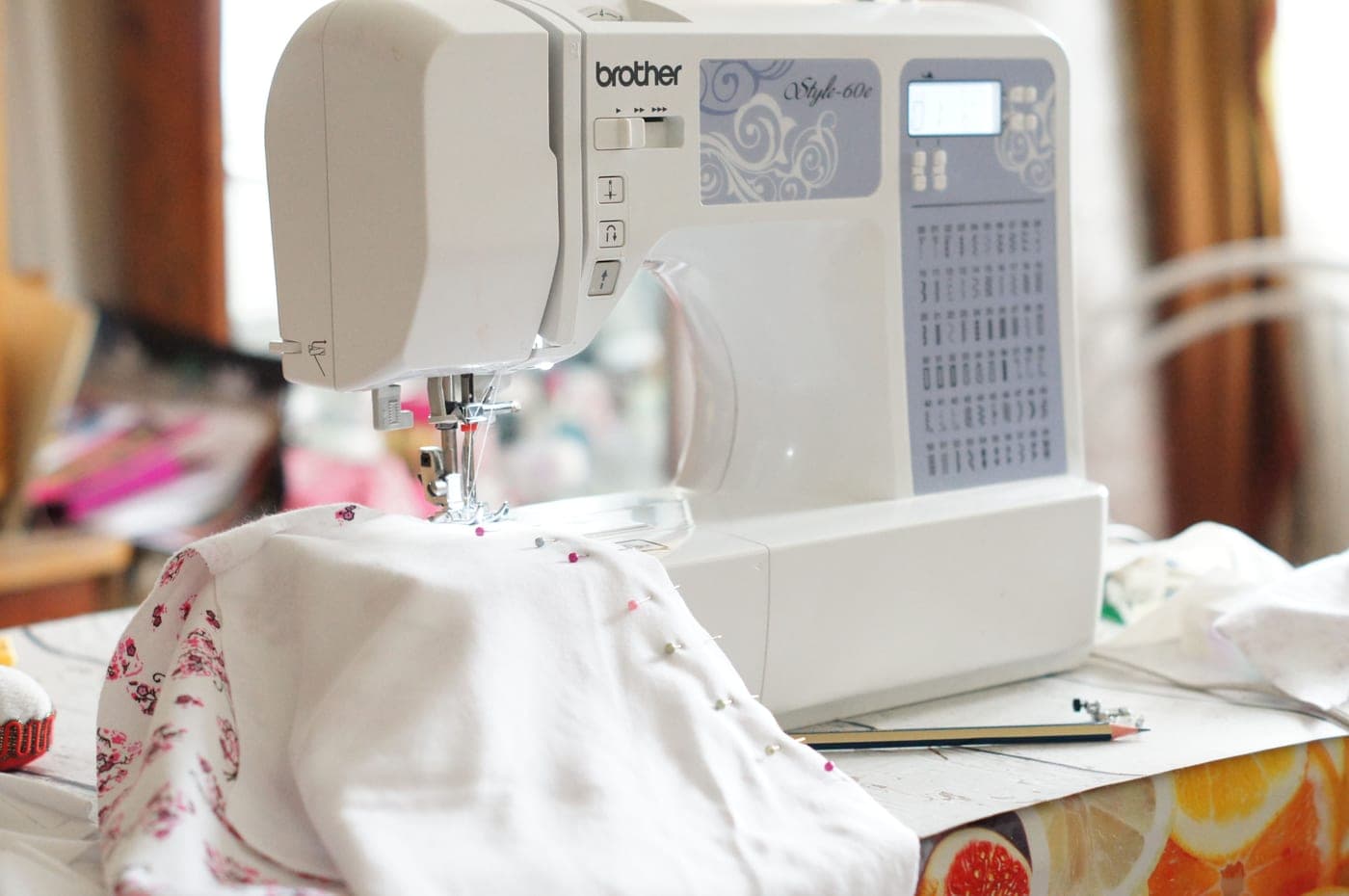
Brother CS7000X review: you are buying the presser feet, not the stitches
Ten presser feet, an automatic threader and a drop-in bobbin — the machine we point most first-time buyers at.
Best overall
The best sewing machines for beginners
Six machines ranked on threading, bobbin, buttonhole and included feet — with the one we say not to buy first.
CS5055 vs CS7000X
Brother CS5055 vs CS7000X
The two computerized Brothers, separated by four accessories — and the answer depends entirely on whether you quilt.
Brother vs Singer
Brother or Singer for a first sewing machine?
Bobbin type and needle threading settle it at the entry level — and Singer's own Heavy Duty machine is the exception.