Stitch & Selvage earns a commission when you buy through the links on this page, at no extra cost to you. It does not change what we recommend, and we publish a skip-this verdict on products we could otherwise earn from. Full disclosure.
The lightest machine we cover is the SINGER M1500 at a published 10 lb, and four machines tie at 10.14 lb — the Brother GX37, XR9550, ST150HDH and CS7205. The whole field spans only 10 to 14.6 lb, so weight alone rarely decides it. What decides it is whether the machine ships with a case, and whether 'portable' is being used to mean 'mini'.
The honest version of this category
Three things are worth saying before any ranking, because the search results for this topic are unusually misleading.
First, the spread is small. Across every machine we have documented, published weights run from 10 lb to 14.6 lb. That is a range of four and a half pounds — about the difference between a full and an empty kettle. If you can lift the heaviest machine here you can lift all of them, and choosing a machine on a half-pound difference means giving up features that matter far more.
Second, 'portable' is not a specification. No manufacturer we cover publishes a portability rating. SINGER puts the words 'Lightweight & Portable' in the M1500's product name; Brother describes the HC1850 as 'lightweight and portable' at a published 13.2 lb, which is heavier than nine other machines on this page that do not use the word. Read the number, not the adjective.
Third, the case matters more than the pound. A machine that lives on a shelf is carried twice per project — down and back. Doing that without a cover means dust in the bobbin race and tension discs, which is a real cause of the gradual stitch problems people cannot explain later. Machine maintenance covers why. Of everything here, three machines include a hard case — the CS7000X, the CP100X and the XR9550 — and a soft dust cover comes with the GX37 and with the SINGER Heavy Duty 4411, 4432 and 4452. The CS7205 explicitly lists no case of any kind, and the rest ship bare.
Every machine we cover, by published weight
Weights are the unit weights the manufacturers publish on their own product pages, compiled from the citations on each machine's review. Availability was checked on 21 September 2026.
Two patterns fall out of that table. The SINGER Heavy Duty line is the heavy end — all four sit at 14 lb or more, because mass is part of how they sew thick fabric without walking across the table. And four machines tie at 10.14 lb, which means at the light end you are choosing on features, not on weight.
How we judged these
Method
How we picked
- Compiled the full published specification for every machine from the manufacturer's own product page — Brother USA and SINGER — on 1 September 2026. Every stitch count, presser foot list, weight, warranty and carton content on this page is cited to one of those pages at the foot of the article.
- Scored against the formula published on how we pick: first-setup ease 30%, stitch range relative to beginner use 15%, presser feet included 15%, warranty 10%, portability 10%, price-to-spec ratio 20%.
- Excluded any machine we could not verify was currently purchasable with a published manufacturer specification. A pick whose buy button cannot exist is not a pick.
- Pulled every price live from Amazon at page load. Where no live figure is available the button reads 'Check price' — we never print a remembered number.
- Named one machine to skip, and said why. We could earn from it either way.
We have not sewn on these machines. There is no test bench here, we do not own them, and we do not accept free product. Everything above is compiled from published manufacturer specifications and live retailer data — and we tell you which is which on every claim. Our full method.
The ranking
Quick picks
Ranked against the published criteria below. Tap a row to jump to the full write-up; the price button goes straight to Amazon.
| # | Product | Best for | Score | Price |
|---|---|---|---|---|
| 1 | 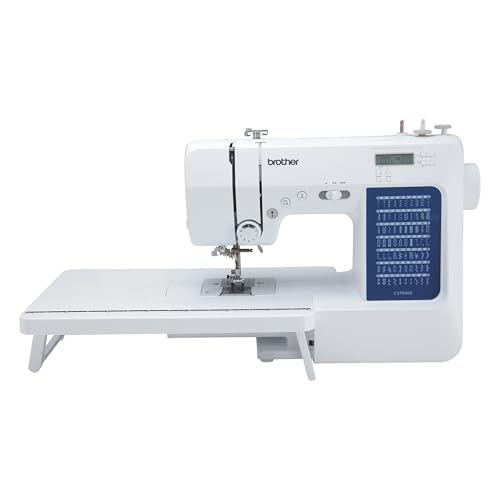 Brother CS7000X Computerized Sewing & Quilting Machine The first machine most beginners should buy | 70 built-in stitches | 9.2/10 | |
| 2 | 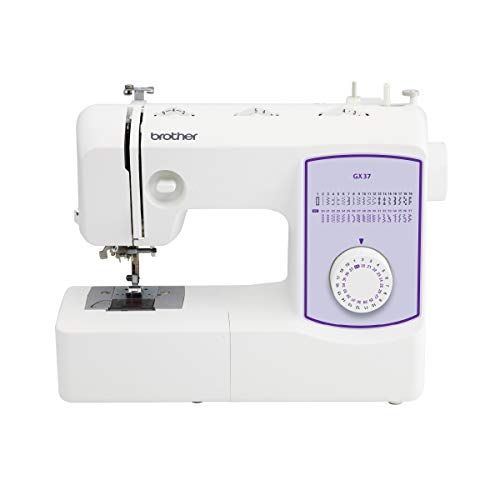 Brother GX37 Sewing Machine The cheapest machine that threads itself | 37 built-in stitches | 8.3/10 | $149.00 on Amazon #ad affiliate link · price as of October 16, 2026 |
| 3 |  Brother XR9550 Computerized Sewing & Quilting Machine Beginners who already know they want to make clothes | 165 built-in stitches | 8.9/10 | $269.99 on Amazon #ad affiliate link · price as of October 16, 2026 |
| 4 |  Brother CS7205 Computerized Sewing Machine The most machine in one carton | 205 built-in stitches, 8 buttonhole styles | 9.0/10 | |
| 5 | No photo SINGER M1500 Sewing Machine The lowest-cost route to a working machine | 6 built-in stitches, 57 stitch applications | 5.7/10 | Check price on Amazon #ad affiliate link · no live price for this item |
| 6 | No photo The battery-powered mini 'kids' sewing machine Nothing we can recommend Our skip-this pick | Our skip-this pick | 2.9/10 | Check price on Amazon #ad affiliate link · no live price for this item |
The first machine most beginners should buy
Brother CS7000X Computerized Sewing & Quilting Machine
The only machine on this page that arrives with the two feet a beginner ends up buying anyway — a walking foot and a quarter-inch foot — plus an automatic needle threader and a drop-in bobbin, so the two jobs that make people quit are the two jobs it makes easy.
The CS7000X is the machine we point a first-time buyer at, and the reason has nothing to do with its stitch count. It is the presser feet. Brother lists ten of them in the box — zigzag, buttonhole, zipper, button sewing, overcasting, blind stitch, monogramming, quarter-inch, quilting and walking — plus a quilt guide. Two of those, the walking foot and the quarter-inch foot, are the exact accessories a beginner ends up ordering three months in, and they are not cheap bought separately.
The second reason is the threading. Brother's published specification lists an automatic needle threading system and a quick-set drop-in top bobbin. Threading the needle and setting the bobbin are the two jobs that make people put a machine back in its box, and this one turns both into a lever pull and a drop. On a front-loading machine you are removing a case, seating a bobbin in a particular orientation, and hoping.
It is a computerized machine, which means stitch selection is a mode key and a shift key against an LCD rather than a dial. That is a genuine trade-off, not a straight upgrade: a dial is legible at a glance and has nothing to fail, while an LCD tells you the stitch width and length the machine has actually selected. For someone learning, seeing the numbers is worth more than the simplicity of a dial.
The extras matter more than they sound. The detachable wide table turns a small free-arm machine into something you can push a quilt across, and the hard protective cover is the difference between a machine that stays out on a table and one that lives in a cupboard collecting dust. Brother also publishes a 25-year limited warranty and free phone and online technical support for the life of the product.
We have not sewn on this machine. Everything above is from Brother's own specification page, and the price on the button is live from Amazon rather than anything we typed. What we can tell you is what the box contains and what that saves you buying — which, for a first machine, is most of the decision.
What works
- Automatic needle threader and a drop-in bobbin — the two setup jobs that defeat most beginners
- Ten presser feet including the walking foot and a quilting foot, which the cheaper machines make you buy separately
- Detachable wide table and a hard cover are in the box, not extras
- Adjustable sewing speed control, so a first seam can be run slowly
- Brother publishes a 25-year limited warranty on it
What does not
- Seventy stitches is far more than a beginner will use; you are paying for decorative stitches you may never touch
- Computerized machines have more to go wrong electronically than a dial-and-lever mechanical
- At 10.5 lb it is light enough to walk across a table at speed unless it is on a firm surface
The kit it pairs with: It already includes the walking foot and quilting foot, so its starter kit is short: needles, bobbins, thread, shears and pins.
The cheapest machine that threads itself
Brother GX37 Sewing Machine
An automatic needle threader, a one-step buttonhole and a drop-in bobbin at Brother's lower end, on a 10.14 lb machine that ships with its own dust cover — the three convenience features that decide a beginner's first month, without the price of a computerized model.
The GX37 is the machine that answers a narrow question very well: what is the cheapest Brother that still threads its own needle? Brother's specification lists the needle threading system as automatic and the buttonhole as an automatic one-step, on a machine it lists at $149.99. At the XM1010's $139.99 the threading system is manual, and that ten-dollar gap buys the feature we would protect first.
The rest of the specification is a competent mechanical machine and nothing surprising: 37 utility and decorative stitches selected on a dial, a jam-resistant quick-set drop-in top bobbin, a free arm for cuffs and sleeves, and an LED-lit work area. Brother lists six presser feet — zigzag, buttonhole, zipper, button sewing, blind stitch and narrow hemmer — which covers ordinary garment sewing and stops there.
Two things make it unusually well suited to a young or first-time sewer specifically. It weighs 10.14 lb, which is the lightest figure Brother publishes across the machines we cover, so it can be lifted onto a table and put away by someone small. And Brother includes a dust cover, which sounds trivial until you notice that the XM2701, the LX3817 and the SINGER M1500 all ship without one and a machine stored uncovered collects the lint that later causes tension problems.
What it does not have is a speed limiter. Brother publishes adjustable sewing speed control on the CS7000X and does not list it here, so on this machine the foot pedal is the only thing standing between a nervous beginner and full speed. That is manageable with a bit of practice on scrap and it is the one specification we would trade up for if the budget allowed.
We have not sewn on this machine. Every figure above is from Brother's own product page, read on 3 September 2026, and the price on the button is live from Amazon rather than remembered.
What works
- Automatic needle threading at the bottom of the range — the single feature we would least willingly give up, and one the similarly-priced XM1010 does not have
- A one-step buttonhole rather than a four-step one, which is the difference between placing a button and pressing, and turning a dial through four positions by eye
- Quick-set drop-in top bobbin, so loading it is a lid and a drop
- A dust cover is included — the Brother XM2701, LX3817 and SINGER M1500 all ship without one
- 10.14 lb, tied with the XR9550 as the lightest machine we cover
What does not
- Six presser feet, and none of them a walking foot or a quarter-inch foot
- Stitches are selected on a dial with no display, so the width and length you have actually set are not readable as numbers
- Brother does not publish an adjustable sewing speed control for it — the pedal is the only speed limiter
- 37 decorative stitches is more than a first year needs; you are choosing this machine for the threader, not the library
The kit it pairs with: Universal needles in 80/12 and 90/14, and more bobbins. The dust cover is already in the box, which is one line off the usual starter list.
Beginners who already know they want to make clothes
Brother XR9550 Computerized Sewing & Quilting Machine
The stitch library and the buttonhole range are the point here: 165 stitches, eight one-step buttonhole styles and 55 alphanumeric characters, on the lightest machine in this line-up.
The XR9550 and the CS7000X sit at almost the same list price on Brother's own site — $269.99 against $279.99 — and they are not the same machine. The XR9550 spends its budget on the stitch library and the electronics; the CS7000X spends it on presser feet. Which is right for you comes down to one question: are you making clothes, or are you quilting?
For clothes, the XR9550 wins on buttonholes. Brother lists eight one-step auto-size buttonhole styles, against seven on the CS7000X and one on the XM2701. Buttonhole style matters more than it sounds — a keyhole buttonhole for a jacket, a rounded one for a blouse, a bar-tacked one for heavy cotton. It also carries an upper thread sensor, which stops you sewing eighteen inches of nothing before you notice the spool ran out, and a needle position key, which lets you shift the needle to sew an accurate narrow seam without owning a quarter-inch foot.
For quilting, the CS7000X wins, and it wins on one part: the walking foot. The XR9550 includes a spring-action quilting foot, which is a free-motion foot — it hops, and you move the fabric yourself. A walking foot is a different thing entirely: it feeds the top layer at the same rate as the feed dogs move the bottom layer, which is what stops a quilt sandwich shifting. The XR9550 does not include one.
The eight feet it does include cover garment work properly — an overcasting foot for finishing raw edges, a blind hem foot for invisible hems, a monogramming foot. Brother also puts a wide table and a hard case in the box, and at 10.14 lb it is the lightest machine on this site.
We have not sewn on this machine. The specifications are Brother's, and the price on the button is live from Amazon rather than remembered.
What works
- Eight one-step buttonhole styles — the widest buttonhole range of any machine here, and buttonholes are what garment sewing turns on
- An upper thread sensor: the machine tells you the top thread has broken instead of letting you sew an empty seam
- A needle position key, which is how you sew an accurate quarter-inch seam without a quarter-inch foot
- Wide table and hard case both included
- 10.14 lb, the lightest machine in this line-up
What does not
- No walking foot in the box, which the CS7000X does include for a similar list price
- 165 stitches is a menu to scroll, and a beginner will use perhaps eight of them
- 55 alphanumeric characters is a monogramming feature most first-time buyers will never open
- A backlit LCD and a thread sensor are more electronics to fail than a mechanical machine has
The kit it pairs with: Add a walking foot if you intend to quilt; the spring-action quilting foot in the box is for free-motion work, not for feeding batting evenly.
The most machine in one carton
Brother CS7205 Computerized Sewing Machine
Eleven presser feet including a walking foot, a quarter-inch foot and a stitch guide foot, plus a wide table, a 2-inch LCD, eight buttonhole styles, a start/stop button and 7-point feed dogs. On published specification nothing else we cover comes close for the money.
The CS7205 is the machine that makes the rest of Brother's consumer range look thin, and the reason is the carton. Brother lists eleven presser feet: walking, quarter-inch, spring-action quilting, stitch guide, buttonhole, zipper, overcasting, blind stitch, monogramming, zigzag and button sewing. Our previous benchmark for a generous box, the CS7000X, lists ten.
Two of those eleven are the ones that normally cost real money afterwards. The walking foot adds a second set of feed dogs above the fabric so a quilt sandwich advances evenly. The quarter-inch foot gives you a physical edge exactly a quarter inch from the needle, which is the seam allowance every quilt pattern assumes. A third — the stitch guide foot — appears on nothing else we cover; it carries seam-allowance markings on the foot itself, at the needle, rather than on the plate several inches behind where you are actually looking.
The controls are a step up too. Brother publishes a start/stop button, so the machine will sew without the foot pedal at all; a needle position key with needle stop up/down, which is how you pivot cleanly at a corner; a 2-inch back-lit LCD with built-in memory; and an independent bobbin winding motor, which means winding a bobbin does not require unthreading the top of the machine. It also publishes 7-point feed dogs, the same count as the heavy-duty ST150HDH and more than the 6-point arrangement on the XR3774.
About the stitch count, because the numbers do not agree. Brother's own product page says 205 built-in stitches, including 55 alphanumeric and 8 one-step buttonholes. Every Amazon listing for this machine says 150. Those are not contradictory once you do the arithmetic: 205 minus the 55 alphanumeric characters is exactly 150. The most likely explanation is that one count includes the monogramming alphabet and the other does not. We quote Brother's figure because our rule is the manufacturer's published specification, and we are flagging the discrepancy rather than quietly picking the bigger number.
What it gives up against the CS7000X is a hard case — Brother's carton contents here list the wide table and no cover at all. That is a real omission on a machine otherwise this well equipped, and it is the reason to think twice if yours has to be stored on a shelf.
Two further absences worth naming: Brother lists adjustable presser foot pressure as 'No', so thick multi-layer seams are not this machine's job, and there is no automatic thread cutter, with thread tension set manually. And one genuine gap in the published data — Brother does not state whether this machine has a free arm. Nearly everything in this class does, but it is not published here, so we are not going to tell you it does.
One last oddity, reported as found: the warranty on Brother's own CS7205 page renders as '1/5/25 Year Limited Serger Warranty'. This is not a serger. We assume that is a labeling error in Brother's data rather than a different warranty, but we are quoting the string Brother actually publishes rather than substituting the one we expect.
We have not sewn on this machine. Every specification above was read off Brother's own product page on 14 September 2026, where it was listed in stock at $289.99.
What works
- Eleven presser feet — more than any other machine we cover, and they include the walking foot AND the quarter-inch foot, which are the two people usually buy afterwards
- A stitch guide foot, which no other machine here includes: it puts seam-allowance markings right at the needle instead of on the needle plate behind it
- Eight one-step buttonhole styles, matching the XR9550 and beating everything else on the site
- A start/stop button, so you can sew without the foot pedal — genuinely useful for free-motion work and for anyone who finds pedal control hard
- A needle position key with needle stop up/down, which is what lets you pivot accurately at a corner without turning the handwheel
- 7-point feed dogs and a wide table, plus an independent bobbin winding motor so you can wind a bobbin without unthreading the machine
- 10.14 lb, the lightest figure Brother publishes across the machines we cover
What does not
- No hard case. Brother's carton contents list a wide table and no cover of any kind — the CS7000X includes a hard protective cover
- Adjustable presser foot pressure: No. Not a denim, canvas or upholstery machine
- No automatic thread cutter, and thread tension is manual rather than automatic
- Brother does not publish a free arm for this machine anywhere on its product page. We are not going to assume one — check before you buy if you hem trouser legs
- 205 stitches is more than anyone needs. You will use four, and the count is the least predictive number on any specification sheet
- Amazon's listings for this machine say 150 built-in stitches where Brother says 205 — see the note below before you assume either is wrong
The kit it pairs with: Almost nothing on the accessory side — the walking foot and quarter-inch foot are already in the box. Add universal needles in 80/12 and 90/14, extra bobbins, and a dust cover, since Brother does not include one.
The lowest-cost route to a working machine
SINGER M1500 Sewing Machine
Six built-in stitches, a four-step buttonhole and a front-loading bobbin: a genuinely basic machine that Singer prices accordingly and does not pretend otherwise.
There is a number on Singer's page for the M1500 that is easy to misread, so read it carefully: 6 built-in stitches, 57 stitch applications. Those are not the same thing. Singer defines a stitch application as a technique you can perform with a selected stitch — so a straight stitch used for seaming, basting, topstitching and edgestitching counts four times. The machine has six stitches. Brother's XM2701 has twenty-seven, for thirty dollars more.
The bobbin is the other thing to weigh. Singer lists this machine as front loading, taking a Class 15 transparent bobbin. A front-loading bobbin sits in a removable case under the needle plate: you take the case out, drop the bobbin in with the thread running the correct way, thread the tension slot, and put the case back. A drop-in bobbin, which every Brother machine on this site has, is a lid and a drop. For someone who has never done either, that is a real difference in how many attempts the first hour takes.
What Singer does give you at this price is genuinely worth having. It arrives pre-threaded, which sounds trivial and is not — the first thing that stops a new owner is an unthreaded machine and a manual. It includes a darning plate, which covers the feed teeth for free-motion work. It has an extra-high presser foot lifter for thick fabric, snap-on feet, and an LED light. Singer publishes the warranty as 90 day / 2 year / 25 year.
At 10 lb with a 13 x 7 x 11.5 inch footprint, this is the machine to buy if it has to live in a cupboard, come out for an hour, and go back. It is also the machine to buy if you genuinely are not sure you will stick with sewing and want the cheapest honest answer to that question.
We have not sewn on this machine. The specifications are Singer's own, published on its product page, and the price on the button is live from Amazon.
What works
- 10 lb, the lightest machine on this site — it can genuinely be carried to a class
- Ships pre-threaded, which removes the first obstacle a beginner hits
- An extra-high presser foot lifter, so thick fabric fits under the foot
- Includes a darning plate for free-motion work, which is unusual at this price
- Snap-on presser feet, so changing a foot is a click rather than a screwdriver
What does not
- Front-loading bobbin. You remove a case, seat the bobbin the right way round and re-seat the case — measurably harder than a drop-in
- Singer's specification does not list an automatic needle threader
- Six built-in stitches is the smallest library here; the 57 figure counts *applications* of those six, not additional stitches
- Four-step buttonhole
- 5.6 inches from needle to tower is the tightest throat here, which limits anything bulky
The kit it pairs with: Class 15 transparent bobbins, a needle threader tool, and a second pack of universal needles.
Nothing we can recommend
The battery-powered mini 'kids' sewing machine
Sold as a child's first machine and priced like a toy, but it is the category most likely to convince a child that sewing does not work — usually within an hour of opening it.
Skip this one
The skip on this page, and on this page specifically it is the most important thing we can tell you. Search for a portable sewing machine and the results fill with palm-sized battery machines and handheld stapler-shaped devices. They are light because they have almost no mechanism — a weak presser bar, a tiny motor and feed that cannot pull anything thicker than quilting cotton. 'Light enough to carry' is worthless if the machine cannot sew when it arrives. A real full-size machine at 10 lb is lighter than a bag of flour and it actually works.
Every roundup on this site names one pick we tell you not to buy. On this page it is a whole category, because the mini machine marketed as a child's first sewing machine is the most commonly bought wrong thing in it.
Start with what we cannot tell you about it, because that is the argument. There is no manufacturer product page to cite. Stitch count, motor rating, weight, bobbin class and warranty vary by seller and are frequently absent altogether. On every other product on this site we link the maker's own specification and the date we read it; here there is nothing to link, and a product nobody will publish a specification for is a product nobody is standing behind.
Compare that with what the same money buys. Brother lists the XM1010 at $139.99 and the GX37 at $149.99. Both publish a full specification, a jam-resistant quick-set drop-in bobbin, a free arm, an LED-lit work area, a foot controller and a limited warranty measured in decades. The GX37 adds an automatic needle threader and a one-step buttonhole.
The practical failure is feeding. A sewing machine moves fabric with feed dogs that have to press it firmly enough to grip, and a very light machine with a small motor struggles the moment the fabric is thicker than a single layer of quilting cotton. What a child experiences is the machine stitching on the spot, bunching thread underneath, and stopping. What they conclude is that they cannot sew.
If the honest constraint is money rather than storage, the better answer is not a smaller machine. It is a full-size machine at the bottom of a real manufacturer's range, or a hand-sewing project first — a felt pouch or a simple cushion teaches running stitch, backstitch and finishing, costs almost nothing, and does not jam.
What works
- Genuinely light and small, which is the one real argument for it
- Cheap enough to be an impulse purchase, which is also how it goes wrong
What does not
- No published specification from a named manufacturer, so there is nothing to verify and no warranty to rely on
- A straight stitch and little else — no buttonhole, often no reverse, so a seam cannot be locked at the ends
- Proprietary bobbins that are not a standard class, so replacements are tied to one seller
- Fabric feeding is the usual failure: light machines with weak feed cannot pull anything thicker than quilting cotton
- A child who fights a machine for an hour concludes they cannot sew, when what actually happened is the machine could not sew
Who actually needs a light machine
Worth being specific, because the answer changes which of the four 10.14 lb machines you want.
- The machine lives in a cupboard. This is the most common case and the one where weight genuinely matters, because the machine gets carried every single time you sew. Here the case is the specification — the CS7000X with its hard cover, or the GX37 with its dust cover.
- You take it to a class or a group. Add a car to the equation and four pounds stops mattering; a case and a handle start mattering a great deal. The HC1850 has a built-in carry handle but no case and is the third-heaviest Brother here, which is an odd combination.
- A small home, a shared table, a dorm. Footprint matters as much as weight, and the footprints on these machines are close enough that storage volume is really about the case and the wide table — the machines that include a wide table need somewhere to put it.
- Reduced grip or strength. Ten pounds is still ten pounds, at an awkward height, usually from a shelf. If lifting is genuinely hard, the honest answer is not a lighter machine — it is leaving the machine out permanently on a small dedicated table and buying a cover for it.
The trap: 'portable' meaning 'mini'
Search this category and a large share of the results are not full-size machines at all. They are palm-sized battery units and handheld devices shaped like staplers, sold on exactly the promise this page is about.
They are genuinely light. They are also the machines most likely to make a beginner conclude they cannot sew, because their usual failure is feeding — the presser bar cannot press the fabric hard enough onto the feed dogs, so the cloth stops moving while the needle keeps going, and you get a nest of thread instead of a seam. Are mini sewing machines worth it goes through the mechanism properly, and the handheld version forms a chain stitch that can unravel along its whole length.
The arithmetic is the point: a real full-size machine with a published specification, a standard bobbin class and a long warranty starts at Brother's $99 list. A palm-sized machine that cannot feed is not a cheaper way to sew, it is a more expensive way not to.
What we are not telling you
We have not carried these machines. Every weight on this page is the figure the manufacturer publishes, cited on each machine's review, and weight is one of the few specifications where the published number is the whole truth — there is no 'feels lighter than it is' we could honestly report without having lifted them.
We also do not publish footprint comparisons for every machine, because the manufacturers do not publish dimensions consistently across the range. Where a figure exists it is on that machine's review page.
Answers
Questions people ask
What is the lightest sewing machine?
How much does a sewing machine weigh?
Is a lightweight sewing machine worse?
Are portable sewing machines any good?
Which sewing machine comes with a carrying case?
Does a heavier sewing machine sew better?
Where this came from
Sources
- Brother USA — product pages for every Brother machine listed, unit weights and carton contents (checked 19 September 2026)
- SINGER — M1500 product page, machine weight and included soft cover (checked 1 September 2026)
- SINGER — Heavy Duty 4452 product page, machine weight (checked 13 September 2026)
- Brother USA — HC1850 product page, 13.2 lb and the 'lightweight and portable' description (checked 17 September 2026)
About the author
Scooter M.
An enthusiast who is genuinely into this. I read the manuals, compile the published specs, and do the arithmetic. No lab coat, no test bench, and no machines I am pretending to have used — which is exactly why every claim here carries a source.
Published by Slate Mill Group. Published September 21, 2026; last updated September 21, 2026. Editorial policy.
Keep reading
Read next
The honest answer
Are mini sewing machines worth it?
The honest answer on mini and handheld machines — what they can do, the failure that makes beginners quit, and what to buy instead.
Best overall
The best sewing machines for beginners
Six machines ranked on threading, bobbin, buttonhole and included feet — with the one we say not to buy first.
Best budget mechanical
Brother GX37 review: ten dollars buys the feature that matters
37 stitches, an automatic threader, a one-step buttonhole and a dust cover, on the lightest machine Brother publishes.
Best Brother
The best Brother sewing machines
Fourteen Brother machines on one page, ranked by the job you are buying for — with same-day list prices and the one to skip.