Stitch & Selvage earns a commission when you buy through the links on this page, at no extra cost to you. It does not change what we recommend, and we publish a skip-this verdict on products we could otherwise earn from. Full disclosure.
The SINGER Heavy Duty 4423 has a heavy-duty metal interior frame, a stainless steel bed plate, a motor Singer states is 60% stronger than a standard sewing machine motor, and a top speed of 1,100 stitches per minute. The specification that actually makes thick fabric work, though, is the quiet one: adjustable presser foot pressure, which on this site only its bigger stablemate the 4452 also has.
The ranking
Quick picks
Ranked against the published criteria below. Tap a row to jump to the full write-up; the price button goes straight to Amazon.
| # | Product | Best for | Score | Price |
|---|---|---|---|---|
| 1 |  SINGER Heavy Duty 4423 Sewing Machine Denim, canvas and thick seams | 23 built-in stitches, 1,100 stitches per minute | 6.8/10 | $239.99 on Amazon #ad affiliate link · price as of October 16, 2026 |
Denim, canvas and thick seams
SINGER Heavy Duty 4423 Sewing Machine
A metal internal frame, a stainless steel bed plate and 1,100 stitches a minute — bought for fabric weight, not for beginner features, and priced above machines that are easier to learn on.
The Heavy Duty 4423 is the machine people buy when the last one could not get through what they wanted to sew. Singer's specification is unusually concrete about why it can: a heavy-duty metal interior frame, a stainless steel bed plate, a motor Singer states is 60% stronger than a standard sewing machine motor, and a top speed of 1,100 stitches per minute.
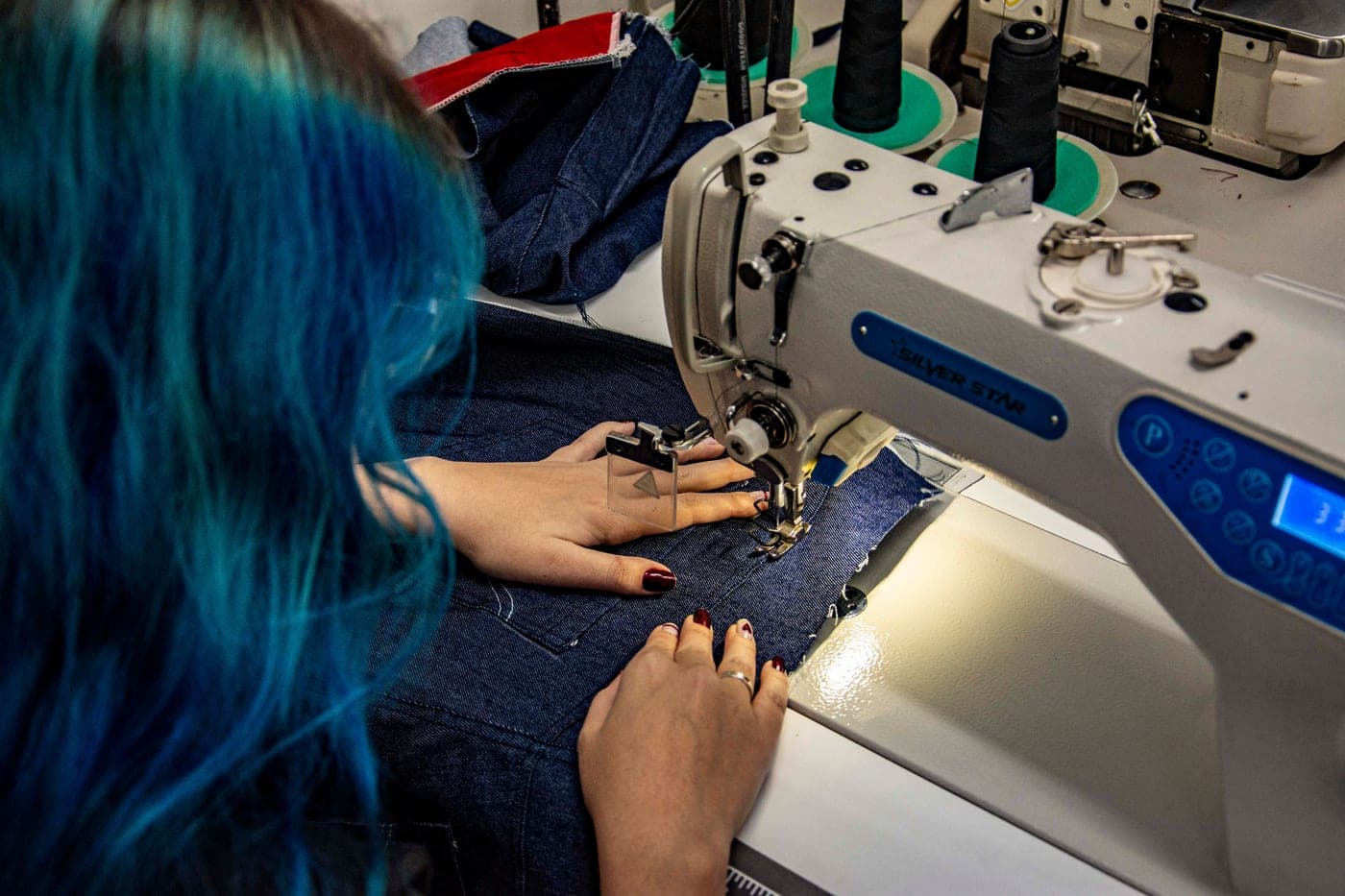
The specification that matters most for thick fabric is the least glamorous one: adjustable presser foot pressure. When you sew eight layers of denim, the problem is not that the needle cannot pierce it — a 100/16 denim needle will — it is that the feed dogs cannot drag it. Increasing presser foot pressure presses the fabric onto the feed dogs so they can grip. Most beginner machines do not offer that adjustment at all; Brother lists it as 'No' on the CS7000X, the XM2701 and the LX3817.
As a first machine it is a compromise, and we would rather say so. Twenty-three stitches for a list price of $229.99 is less stitch library than Brother's CS7000X at $279.99, and 14.6 lb is a machine that stays on the table. The speed is the part that catches people out: at 1,100 stitches a minute the foot pedal has a much narrower usable range, and a first straight seam can get away from you.
What it does keep from the beginner playbook is worth noting, because Singer's cheaper M1500 does not have it: a one-step buttonhole, a built-in needle threader and a top drop-in bobbin. If you are choosing between the two Singers on this site and you can afford the difference, this is the better machine to learn on as well as the stronger one.
We have not sewn on this machine. Every figure above is published by Singer, including the warranty, which its product page lists as 90 day / 2 yr / 24 yr.
What works
- Metal interior frame and a stainless steel bed plate — the fabric glides and the machine does not flex
- Adjustable presser foot pressure, which is the control that actually makes heavy fabric feed
- One-step buttonhole and a built-in needle threader, both of which the M1500 lacks
- Top drop-in bobbin rather than Singer's front-loading case
- Drop feed for free-motion work, and three variable needle positions
What does not
- 14.6 lb — by far the heaviest machine here, and it is meant to stay put
- 1,100 stitches per minute is a lot of speed to hand a beginner; the pedal gets sensitive
- 23 stitches for a list price above the 70-stitch CS7000X
- It is bought for what it sews through, not for how easy it is to learn on
The kit it pairs with: Denim needles in 90/14 and 100/16, and heavier all-purpose thread. A universal needle will deflect and skip in eight layers of denim.
Why adjustable presser foot pressure is the real feature
When people say a machine 'cannot sew denim', they usually imagine the needle failing to pierce it. That is rarely the problem — a 100/16 denim needle goes through eight layers without much drama. The problem is feeding. The feed dogs are small serrated bars that rise through the needle plate and drag the fabric backwards one stitch at a time, and they can only grip fabric that is pressed down onto them.
On a thick, stiff, multi-layer seam the fabric bridges rather than sits flat, the feed dogs lose their grip, and the machine stitches on the spot — which produces a knot of thread and, often, a broken needle when the fabric shifts. Increasing presser foot pressure presses the fabric harder onto the feed dogs so they can grip it. Brother lists 'Adjustable Presser Foot Pressure: No' on the CS7000X, the XM2701 and the LX3817. Singer lists it as a feature here.
The metal frame is the second half. Sewing hard means force, and force flexes a plastic chassis. A flexing chassis moves the needle relative to the bobbin hook by a fraction of a millimeter, which is enough to skip a stitch. Singer specifies the interior frame as metal and the bed plate as stainless steel, which also means fabric slides across it rather than gripping.
The speed is a genuine warning
Singer publishes a top speed of 1,100 stitches per minute and describes the motor as 60% stronger than a standard sewing machine motor. That is a real capability and it is also the thing most likely to catch a beginner out, because a faster machine has a narrower usable range on the foot pedal. The difference between 'crawling' and 'gone' is a smaller movement of your foot than on a slower machine, and this machine has no sewing speed control slider — Brother's CS7000X does.
If this is your first machine, practice on scrap until the pedal is predictable before you put it near anything you have cut out.
The bigger machine on the same platform
Singer also lists a Heavy Duty 4452 on this same platform — 32 stitches instead of 23, and a walking foot, non-stick foot and clearance plate included in the box, which is the accessory set thick fabric actually needs. On 7 September 2026 Singer listed it at $219.99 against this machine's $229.99, so the better-equipped one was also the cheaper one. Our full 4452 review goes through what that box contains, and the denim roundup compares them. Singer also lists a 4432 above this machine and a 4411 below it — all four are set against each other here, and the price order is not what the model numbers suggest.
What it keeps from the beginner playbook
More than its reputation suggests, and considerably more than its cheaper stablemate. Singer lists a built-in needle threader, a top drop-in bobbin with a transparent cover, and a one-step buttonhole. All three of those are absent from the SINGER M1500. It also has drop feed for free-motion sewing, three variable needle positions, adjustable stitch length and width (to 6 mm), and a 6.25 inch sewing space from needle to tower.
If you are choosing between the two Singer machines on this site and the price difference is affordable, this is both the stronger machine and the easier one to learn on.
Where it loses to the Brother machines
Stitch library. Twenty-three built-in stitches, against 70 on the CS7000X and 165 on the XR9550, at a list price between the two on the manufacturers' own sites. If breadth is what you want, this is not the machine.
Weight. 14.6 lb, with a 15.5 x 6.25 x 12 inch footprint. That is four and a half pounds more than the XR9550. It is meant to stay on a table, and the weight is part of why it can sew hard — a light machine walks when it is working.
Presser feet. Singer's included accessory list here is modest next to the ten feet Brother puts in the CS7000X carton, and there is no walking foot — which matters for quilting through batting, though less for the denim work this machine is bought for.
The kit this machine specifically needs
Denim needles, in 90/14 and 100/16. This is not optional. SCHMETZ describes the denim needle as having a reinforced blade for 'penetrating extra thick woven fabrics, denims, or quilts with minimum needle deflection, reduced risk of needle breakage and skipped stitches'. Put a universal needle into eight layers of denim and it will flex, miss the bobbin hook and skip, or hit the needle plate and snap. A machine built to sew denim with the wrong needle in it is still a machine that cannot sew denim. More on needle types here.
Beyond that: Class 15 transparent bobbins, and heavier all-purpose thread for topstitching. Singer includes a soft cover, so a dust cover is one thing you do not need to add.
We have not sewn on this machine. We do not own it, there is no test bench here, and we are not going to describe a stitch we never made. What we did instead: read the manufacturer's published specification line by line, cite every figure to the page it came from, and price the whole setup — machine and the kit it still needs — so you know what starting actually costs.
Method
How we picked
- Compiled every specification from Singer's own Heavy Duty 4423 product page, checked 1 September 2026, including the warranty structure exactly as Singer publishes it.
- Checked the adjustable presser foot pressure claim against the Brother machines' specification pages, all three of which list it as 'No'.
- Weighted first-setup ease at 30% per how we pick, which is why a stronger machine does not automatically score higher as a *first* machine.
- Priced live from Amazon.
We have not sewn on these machines. There is no test bench here, we do not own them, and we do not accept free product. Everything above is compiled from published manufacturer specifications and live retailer data — and we tell you which is which on every claim. Our full method.
Answers
Questions people ask
Is the SINGER Heavy Duty 4423 good for beginners?
Can the SINGER Heavy Duty 4423 sew denim?
How fast is the SINGER Heavy Duty 4423?
What warranty does the SINGER Heavy Duty 4423 have?
Where this came from
Sources
About the author
Scooter M.
An enthusiast who is genuinely into this. I read the manuals, compile the published specs, and do the arithmetic. No lab coat, no test bench, and no machines I am pretending to have used — which is exactly why every claim here carries a source.
Published by Slate Mill Group. Published September 1, 2026; last updated September 1, 2026. Editorial policy.
Keep reading
Read next
Best under $500
The best sewing machines under $500
Every machine we cover fits this budget, so the ranking is about what you want to make rather than what you can afford.
Lightest machine here
SINGER M1500 review: six stitches, not fifty-seven
10 lb, pre-threaded out of the box, and six built-in stitches behind a headline that says fifty-seven.
Hemming
How to hem pants
The ordinary trouser hem, the jeans version, and the needle that stops you snapping one at the side seam.
Best for clothes
The best sewing machines for making clothes
Buttonhole styles, an overcasting foot and a blind hem foot — the three published specs that decide garment sewing.