Stitch & Selvage earns a commission when you buy through the links on this page, at no extra cost to you. It does not change what we recommend, and we publish a skip-this verdict on products we could otherwise earn from. Full disclosure.
The Brother XR9550 is a computerized machine with 165 built-in stitches, eight one-step auto-size buttonhole styles, an upper thread sensor and a needle position key. It is the better of Brother's two computerized beginner machines for making clothes, and the worse of the two for quilting, because it does not include a walking foot.
The ranking
Quick picks
Ranked against the published criteria below. Tap a row to jump to the full write-up; the price button goes straight to Amazon.
| # | Product | Best for | Score | Price |
|---|---|---|---|---|
| 1 |  Brother XR9550 Computerized Sewing & Quilting Machine Beginners who already know they want to make clothes | 165 built-in stitches | 8.9/10 | $269.99 on Amazon #ad affiliate link · price as of October 17, 2026 |
Beginners who already know they want to make clothes
Brother XR9550 Computerized Sewing & Quilting Machine
The stitch library and the buttonhole range are the point here: 165 stitches, eight one-step buttonhole styles and 55 alphanumeric characters, on the lightest machine in this line-up.
The XR9550 and the CS7000X sit at almost the same list price on Brother's own site — $269.99 against $279.99 — and they are not the same machine. The XR9550 spends its budget on the stitch library and the electronics; the CS7000X spends it on presser feet. Which is right for you comes down to one question: are you making clothes, or are you quilting?
For clothes, the XR9550 wins on buttonholes. Brother lists eight one-step auto-size buttonhole styles, against seven on the CS7000X and one on the XM2701. Buttonhole style matters more than it sounds — a keyhole buttonhole for a jacket, a rounded one for a blouse, a bar-tacked one for heavy cotton. It also carries an upper thread sensor, which stops you sewing eighteen inches of nothing before you notice the spool ran out, and a needle position key, which lets you shift the needle to sew an accurate narrow seam without owning a quarter-inch foot.
For quilting, the CS7000X wins, and it wins on one part: the walking foot. The XR9550 includes a spring-action quilting foot, which is a free-motion foot — it hops, and you move the fabric yourself. A walking foot is a different thing entirely: it feeds the top layer at the same rate as the feed dogs move the bottom layer, which is what stops a quilt sandwich shifting. The XR9550 does not include one.
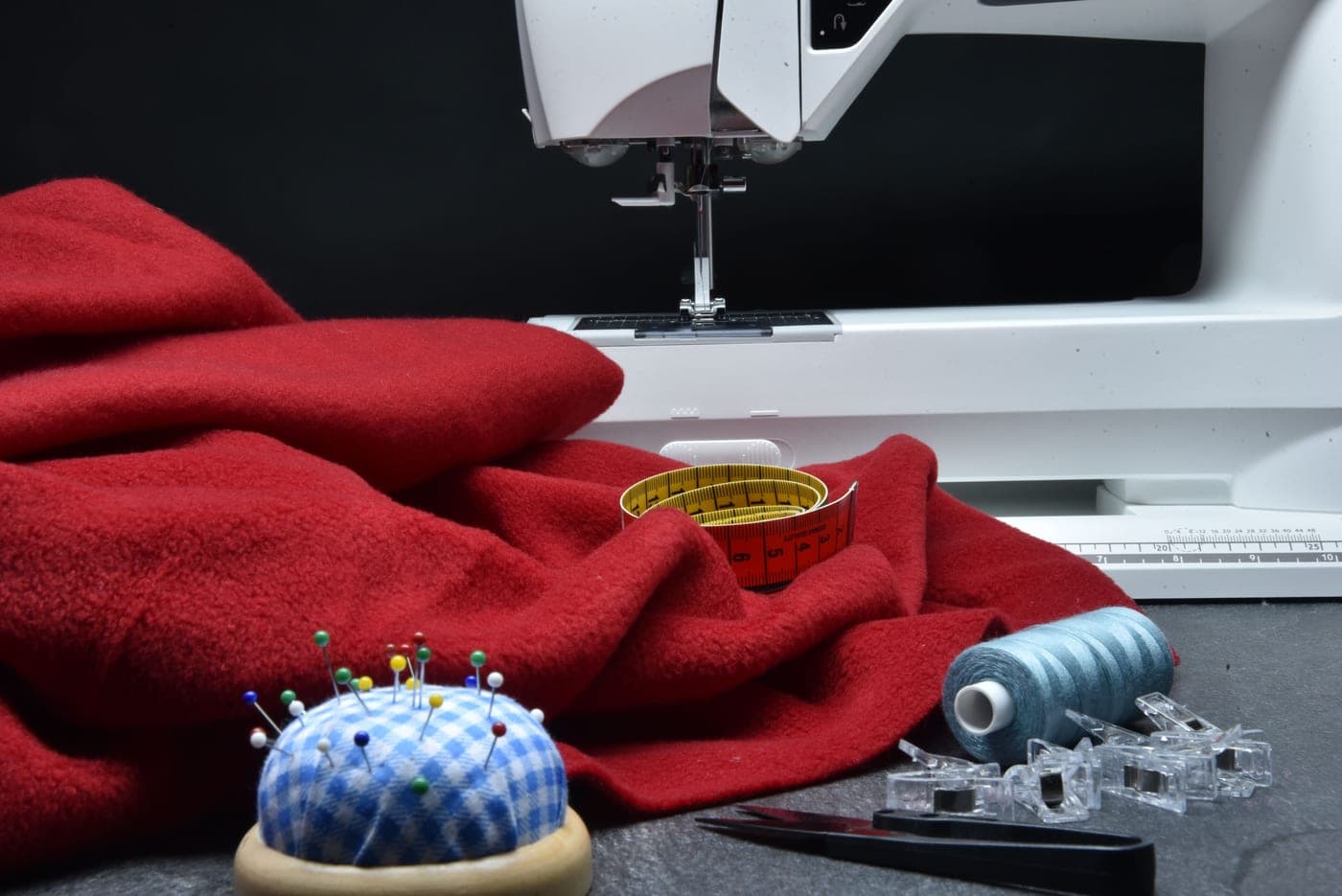
The eight feet it does include cover garment work properly — an overcasting foot for finishing raw edges, a blind hem foot for invisible hems, a monogramming foot. Brother also puts a wide table and a hard case in the box, and at 10.14 lb it is the lightest machine on this site.
We have not sewn on this machine. The specifications are Brother's, and the price on the button is live from Amazon rather than remembered.
What works
- Eight one-step buttonhole styles — the widest buttonhole range of any machine here, and buttonholes are what garment sewing turns on
- An upper thread sensor: the machine tells you the top thread has broken instead of letting you sew an empty seam
- A needle position key, which is how you sew an accurate quarter-inch seam without a quarter-inch foot
- Wide table and hard case both included
- 10.14 lb, the lightest machine in this line-up
What does not
- No walking foot in the box, which the CS7000X does include for a similar list price
- 165 stitches is a menu to scroll, and a beginner will use perhaps eight of them
- 55 alphanumeric characters is a monogramming feature most first-time buyers will never open
- A backlit LCD and a thread sensor are more electronics to fail than a mechanical machine has
The kit it pairs with: Add a walking foot if you intend to quilt; the spring-action quilting foot in the box is for free-motion work, not for feeding batting evenly.
The buttonhole range is the actual feature
Eight one-step auto-size buttonhole styles is the highest count on this site — the CS7000X has seven, the XM2701 has one, and the LX3817 has a four-step. If you have never sewn a buttonhole this sounds like a trivial difference. It is not.
Different garments want different buttonholes. A shirt front wants a plain rectangular buttonhole with bar tacks at each end. A jacket or a coat with a thick shank button wants a keyhole buttonhole — one end is rounded out so the shank sits without distorting the fabric. A blouse in fine fabric wants a narrow rounded buttonhole. Stretch fabric wants a buttonhole with a wider, more elastic stitch. A machine with one buttonhole style makes all of those the same way, which works and looks like it worked.
Two electronics that do real work
The upper thread sensor. Brother lists this machine with an upper thread sensor, and no other machine on this site has one. Its job is to notice that the top thread has broken or run out and to tell you, rather than letting the machine keep running the needle up and down through fabric while sewing nothing. If you have never done that, you will: the bobbin keeps making a mark on the underside, so the seam looks like it is being sewn from above, and you can lose a foot of work before you notice.
The needle position key. This moves the needle left or right of center. It sounds cosmetic and it is the free alternative to a quarter-inch foot: instead of buying a foot whose edge sits a quarter inch from the needle, you shift the needle so that a quarter inch falls at the edge of the standard foot, measure once with a ruler, and note the setting. It is also how you topstitch a consistent distance from a folded edge, and how you get a zipper foot close to the teeth.
What eight presser feet cover
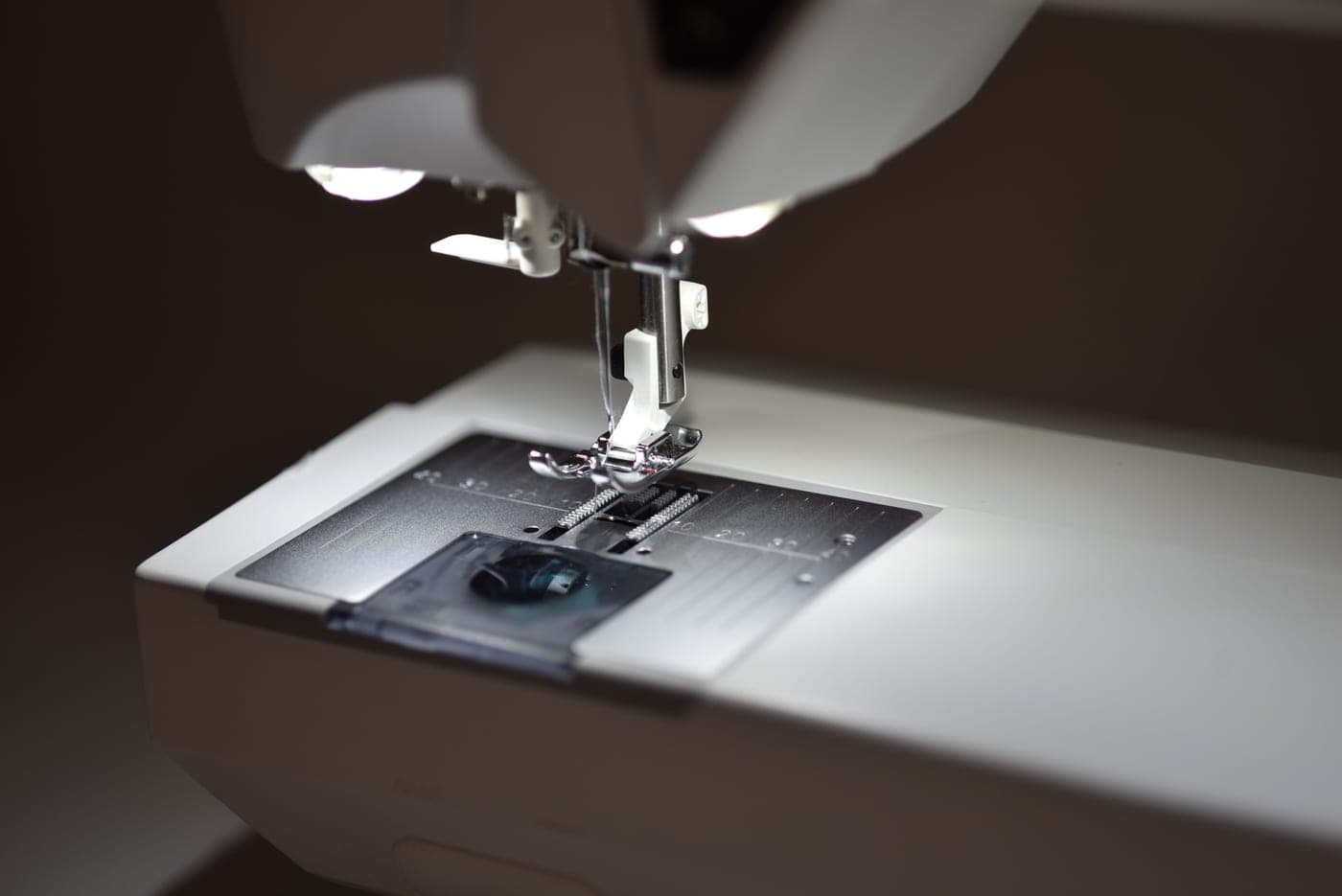
Brother lists the XR9550's included feet as buttonhole, blind hem stitch / multi-purpose guide, zipper, overcasting, monogramming, zigzag, spring-action quilting and button sewing. For garment sewing that is a strong set. The overcasting foot finishes a raw edge so it does not fray, which is the job a serger does and the reason beginners think they need one. The blind hem foot produces a hem where the stitching is almost invisible from the right side — the finish on a pair of trousers or a lined skirt.
The gap is the walking foot, and the spring-action quilting foot in the box is not a substitute. A spring-action quilting foot is a free-motion foot: it hops up and down with the needle, the feed dogs are dropped, and you move the fabric by hand. A walking foot does the opposite — it feeds the top layer mechanically in time with the feed dogs. They solve different problems, and layer shift on a quilt sandwich is the walking foot's problem. The difference is explained here.
The 55 alphanumeric characters
Brother lists 55 alphanumeric characters among the 165 stitches. This is monogramming: you can stitch a name into a towel or a child's coat. It is a genuinely nice feature and it is also, in our view, the least likely thing on the specification to be used by a first-time buyer. Do not let it decide the purchase, and do not pay a premium for it — if you want serious lettering, that is an embroidery machine's job, not a sewing machine's — and those two machines are not alternatives, because an embroidery machine cannot sew a seam at all. This machine's eight buttonhole styles are the reason it also leads our roundup for intermediate sewers. Two other machines we cover match that count — the CS7205, which also publishes 55 alphanumeric characters and adds a walking foot and a quarter-inch foot this machine does not include, and the HC1850, which adds adjustable speed, a start/stop button and a flip chart of every stitch on the front of the machine.
Weight, case and the practical stuff
Brother publishes a unit weight of 10.14 lb, which makes this the lightest machine on this site, and lists a hard case and a wide table in the carton along with four bobbins, a seam ripper, a needle set, a ball point needle, a twin needle, a cleaning brush, an eyelet punch, a screwdriver, three spool caps and an extra spool pin. A hard case on a 10 lb machine is a genuinely portable setup for a class.
The warranty Brother publishes is a 1/2/25-year limited warranty, the same structure as the LX3817, rather than the flat 25-year limited warranty on the CS7000X and the XM2701. Read Brother's warranty documentation for what falls into which period.
We have not sewn on this machine. We do not own it, there is no test bench here, and we are not going to describe a stitch we never made. What we did instead: read the manufacturer's published specification line by line, cite every figure to the page it came from, and price the whole setup — machine and the kit it still needs — so you know what starting actually costs.
Method
How we picked
- Compiled every specification from Brother's own XR9550 product page, checked 1 September 2026.
- Compared its included presser feet, buttonhole styles and carton contents directly against the CS7000X, because the two sit within ten dollars on Brother's own list price.
- Scored against the published formula on how we pick.
- Priced live from Amazon. No number on this page is remembered.
We have not sewn on these machines. There is no test bench here, we do not own them, and we do not accept free product. Everything above is compiled from published manufacturer specifications and live retailer data — and we tell you which is which on every claim. Our full method.
Answers
Questions people ask
Is the Brother XR9550 good for beginners?
Does the Brother XR9550 include a walking foot?
What is a needle position key for?
How heavy is the Brother XR9550?
Where this came from
Sources
About the author
Scooter M.
An enthusiast who is genuinely into this. I read the manuals, compile the published specs, and do the arithmetic. No lab coat, no test bench, and no machines I am pretending to have used — which is exactly why every claim here carries a source.
Published by Slate Mill Group. Published September 1, 2026; last updated September 1, 2026. Editorial policy.
Keep reading
Read next
CS7000X vs XR9550
Brother CS7000X vs XR9550
The walking foot decides it for quilters; the eight buttonhole styles decide it for garment sewers.
Best for clothes
The best sewing machines for making clothes
Buttonhole styles, an overcasting foot and a blind hem foot — the three published specs that decide garment sewing.
Best under $500
The best sewing machines under $500
Every machine we cover fits this budget, so the ranking is about what you want to make rather than what you can afford.
Presser feet
Presser feet explained
What every foot in the box actually does, and the two worth buying when yours did not include them.