Stitch & Selvage earns a commission when you buy through the links on this page, at no extra cost to you. It does not change what we recommend, and we publish a skip-this verdict on products we could otherwise earn from. Full disclosure.
The Brother HC1850 is a computerized machine with 185 built-in stitches including 55 alphanumeric, eight one-step buttonhole styles, an automatic needle threader, a quick-set drop-in bobbin, adjustable speed and a start/stop button. Brother includes eight presser feet and a wide table — but no walking foot and no quarter-inch foot — and lists it at $299.99, above the better-equipped CS7205.
The ranking
Quick picks
Ranked against the published criteria below. Tap a row to jump to the full write-up; the price button goes straight to Amazon.
| # | Product | Best for | Score | Price |
|---|---|---|---|---|
| 1 |  Brother HC1850 Computerized Sewing Machine Monogramming, and a stitch chart you can read at a glance | 185 built-in stitches, 8 buttonhole styles | 7.9/10 |
Monogramming, and a stitch chart you can read at a glance
Brother HC1850 Computerized Sewing Machine
185 stitches, eight buttonhole styles, an alphabet, adjustable speed and a start/stop button — a capable machine that Brother lists above the CS7205, which has more feet in the box, a walking foot and a quarter-inch foot, and weighs three pounds less.
At 4,400 searches a month on Google (DataForSEO, September 2026) the HC1850 is the most-searched model number we have measured for this site, and on its own terms it is easy to see why. Brother publishes 185 built-in stitches, including 55 alphanumeric characters and eight styles of one-step auto-size buttonhole, a large backlit LCD with push-button selection, an automatic needle threader, a quick-set drop-in bobbin, adjustable sewing speed, a start/stop button that lets it sew without the foot pedal, a needle position key and a built-in carry handle.
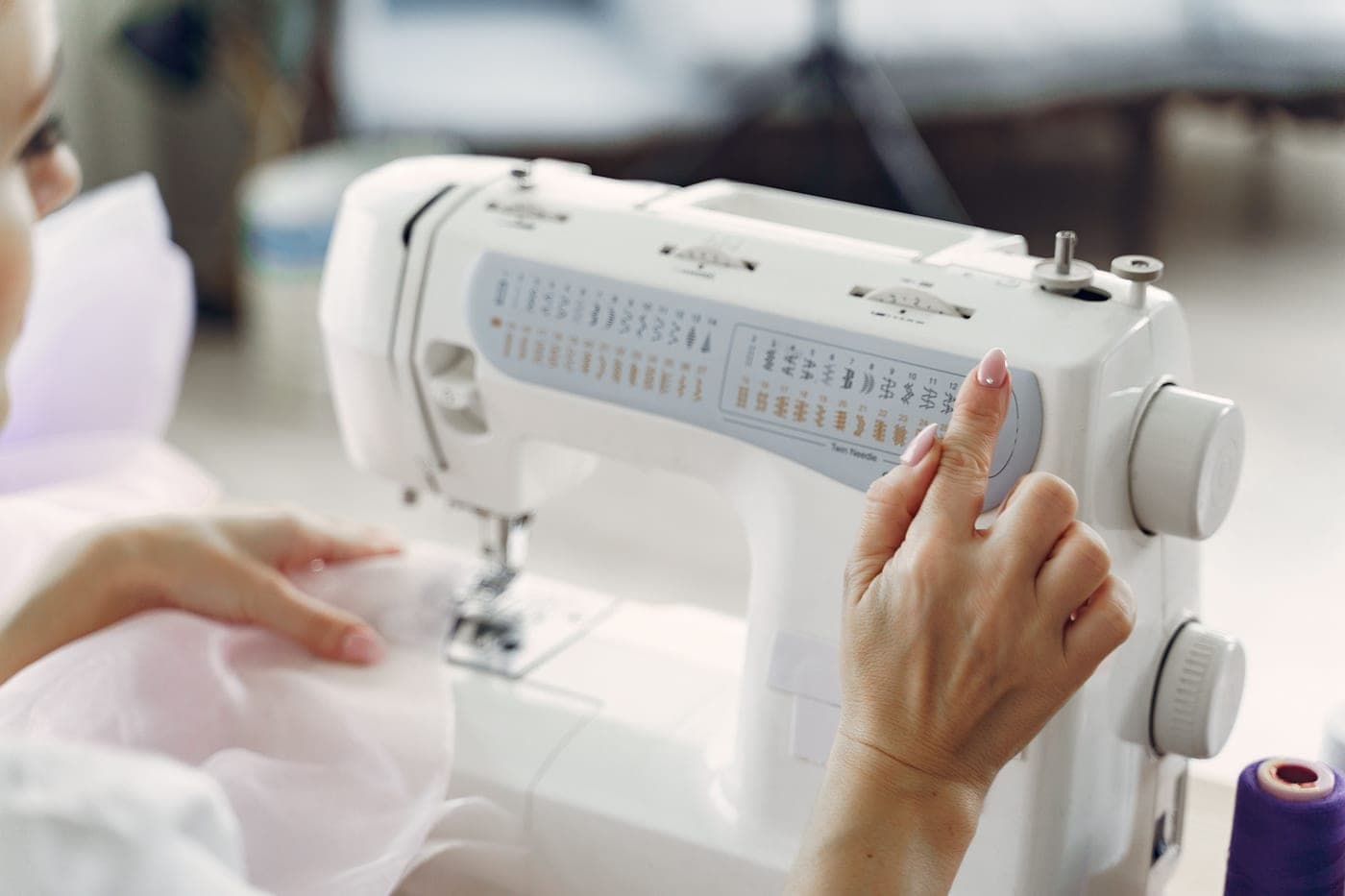
The feature nobody else here has is the flip chart — a stitch reference attached to the front of the machine showing every built-in stitch. On a 185-stitch machine that is not decoration. It is the difference between picking a stitch and scrolling through a menu hoping to recognize it.
The problem is the machine beside it. Brother lists the HC1850 at $299.99 and the CS7205 at $289.99. For ten dollars less, the CS7205 publishes more stitches (205), the same eight buttonhole styles, eleven presser feet to this machine's eight, built-in memory, and — the part that matters for anyone who quilts — both a walking foot and a quarter-inch foot, neither of which is in the HC1850 carton. It also weighs 10.14 lb against this machine's 13.2.
That is the honest shape of the decision. The HC1850 wins on the flip chart and the carry handle; the CS7205 wins on nearly everything you would actually buy separately. And the 'sewing and quilting' label this machine usually travels under is generous: Brother includes a spring-action quilting foot and a wide table, but not the walking foot or quarter-inch foot that make piecing and quilting accurate.
We have not sewn on this machine. Every specification above was read off Brother's own product page on 17 September 2026, where it was listed in stock at $299.99.
What works
- Eight one-step buttonhole styles — the most any machine on this site publishes, shared with the XR9550, CS7205 and CP100X
- A flip chart on the front of the machine showing all 185 stitches, which is the single most useful thing on a machine with this many
- Adjustable sewing speed and a start/stop button, so you can cap the speed and sew without the pedal — a genuine help for beginners and free-motion work
- 55 alphanumeric characters and a monogramming font for names and labels
- A needle position key, an automatic needle threader and a quick-set drop-in bobbin
- A built-in carry handle, and a 25-year limited warranty
What does not
- No walking foot and no quarter-inch foot, despite being widely sold as a 'sewing and quilting' machine — those are the two quilting feet that matter most
- Brother lists it at $299.99, above the [CS7205](/reviews/brother-cs7205) at $289.99, which has eleven feet including both of those, built-in memory, and weighs 10.14 lb
- 13.2 lb — heavier than every other computerized Brother we cover, carry handle or not
- No built-in memory, no automatic thread cutter, and Brother lists adjustable presser foot pressure as 'No'
- No free arm is published on Brother's product page, and no hard case is listed
- Brother's own data is inconsistent on free-motion quilting: a spring-action quilting foot is listed in the box while a separate attribute marks the free-motion foot 'Optional'
The kit it pairs with: A walking foot and a quarter-inch piecing foot if you intend to quilt, since neither is in the box, plus universal needles in 80/12 and 90/14 and extra bobbins.
Why this page exists
At 4,400 searches a month on Google (DataForSEO, measured September 2026), 'brother hc1850' is the most-searched model number we have measured for this site — well ahead of any machine we had already reviewed. When that many people are about to buy a specific machine, the useful thing is not another summary of its feature list. It is a straight answer to whether it is the right Brother to buy at the price. The feature list is below; the answer is in the comparison table.
What the HC1850 genuinely does well
Start with the good, because there is plenty of it and the specification deserves a fair hearing before the comparison.
- Eight one-step buttonhole styles. The most any machine on this site publishes, shared with the XR9550, the CS7205 and the CP100X. A keyhole for a coat button, a rounded one for fine fabric, a stretch construction for knits — garment sewing turns on this line more than on stitch count.
- Adjustable sewing speed. A slider that caps top speed regardless of pedal pressure. It is the single most useful control for a nervous beginner or a child, and it is the specification that decides our roundup for kids.
- A start/stop button. Brother states the machine operates 'with or without included foot controller pedal'. Press start and it sews at the set speed with both your hands on the fabric — which is exactly what free-motion work needs.
- A needle position key, for pivoting cleanly at a corner without reaching for the handwheel.
- An automatic needle threader and a quick-set drop-in bobbin — the two specifications whose absence beginners complain about most.
- A built-in carry handle and a 25-year limited warranty.
The flip chart, which is the feature nothing else here has
Brother attaches a flip chart to the front of the machine showing every built-in stitch. That sounds like a small courtesy and on this machine it is not. With 185 stitches and 170 stitch functions, the practical question is not whether the stitch you want exists — it does — but whether you can find it. A printed chart at eye level lets you choose by sight and punch in the number, instead of stepping through a screen hoping to recognize a pattern from a few pixels.
You will still use about four stitches for most of what you sew: straight, zigzag, a stretch stitch and a buttonhole. But if the decorative range is part of why you are buying a computerized machine, this is the machine that makes it most usable.
The comparison that decides it
Compiled from Brother USA's own product pages for all three machines, all read on 17 September 2026 — same day, so the prices are directly comparable.
Read the top and the bottom of that table together. The HC1850 is the most expensive of the three at Brother's own list prices, and the machine directly below it, the CS7205, publishes more stitches, the same eight buttonhole styles, three more presser feet — including the walking foot and quarter-inch foot — and built-in memory, at ten dollars less and three pounds lighter.
What the HC1850 keeps over the CS7205 is the attached flip chart, the carry handle and a cleanly published adjustable speed control. Those are real. They are not ten dollars plus a walking foot plus a quarter-inch foot's worth of real.
The quilting label, examined
The HC1850 is widely sold as a 'sewing and quilting machine' — that is how its Amazon listing is titled. Brother does include a spring-action quilting foot and a detachable wide table, and describes the machine as able to do free-motion quilting. Those are genuine quilting features.
But the two feet that make ordinary quilting *accurate* are absent. The walking foot adds a second set of feed dogs above the fabric so the top layer of a quilt sandwich cannot outrun the bottom — without it, layers creep and the finished quilt ripples. The quarter-inch foot gives you a physical edge at the quarter-inch seam allowance every quilt pattern is built on. What a walking foot does explains why that one is the expensive one to buy later. If quilting is the reason you are buying, the CS7000X and the CS7205 both include both, for less.
One inconsistency in Brother's own data is worth recording rather than smoothing over: the included-feet list names a spring-action quilting foot — which is the free-motion foot — while a separate specification attribute marks the free-motion quilting foot 'Optional'. Reading the two together, the foot appears to be in the box; we are reporting the conflict rather than silently picking one.
What it does not have
- No walking foot and no quarter-inch foot, as above.
- No built-in memory. Brother lists it as 'No'; the CS7205 has it.
- Adjustable presser foot pressure: Brother lists it as 'No'. Not a denim, canvas or upholstery machine — that roundup is here.
- No automatic thread cutter.
- No free arm is published. Brother does not state one anywhere on the HC1850 product page. Almost every machine in this class has one; we are still not going to tell you it does.
- No hard case is listed in the carton.
- 13.2 lb. Brother calls it 'lightweight and portable' and fits a carry handle, but it is the heaviest computerized Brother we cover — three pounds more than the CS7205.
A small data note for completeness: Brother's product name and features list both describe a detachable wide table, but the carton-contents field on the same page does not list one. We take the product name and feature description as authoritative — they are specific and repeated — and note the omission rather than hide it.
Who should buy it, and who should not
Buy it if you find it cheaper than the CS7205 on the day you look, and you sew garments rather than quilts. Eight buttonhole styles, adjustable speed, a start/stop button and a flip chart of every stitch is a very good garment-and-decorative specification, and retail prices move independently of Brother's list — the button on this page pulls a live figure for exactly that reason. It is also a sensible choice if the flip chart specifically appeals: for someone who wants to use the decorative stitches rather than own them, it genuinely helps.
Do not buy it at list price over the CS7205. At Brother's own figures you pay ten dollars more for three fewer feet, no walking foot, no quarter-inch foot, no memory and three extra pounds.
Do not buy it for quilting — buy a machine that includes the walking foot and quarter-inch foot. And do not buy it for thick fabric: no adjustable presser foot pressure.
We have not sewn on this machine. We do not own it, there is no test bench here, and we are not going to describe a stitch we never made. What we did instead: read the manufacturer's published specification line by line, cite every figure to the page it came from, and price the whole setup — machine and the kit it still needs — so you know what starting actually costs.
Method
How we picked
- Compiled every specification from Brother's own HC1850 product page, checked 17 September 2026 — stitch and stitch-function counts, buttonhole styles, alphanumeric count, threading and bobbin systems, the full presser foot list, carton contents, speed control, start/stop, needle position key, memory, maximum speed, stitch width and length, weight and warranty.
- Read the CS7205 and CS7000X pages on the same day so the three-way table compares same-day list prices, and confirmed all three are currently in stock on Brother's own store.
- Used DataForSEO exact Google volume for the 4,400-searches-a-month figure, and said where it came from.
- Reported two inconsistencies in Brother's own data — the free-motion foot listed as both included and 'Optional', and a wide table named in the product title but missing from the carton-contents field — rather than choosing the more flattering reading.
- Wrote 'Not published' wherever Brother publishes nothing, including the free arm.
- Scored against the published formula on how we pick: first-setup ease 30%, stitch range 15%, presser feet 15%, warranty 10%, portability 10%, price-to-spec 20%. Presser feet and price-to-spec are where it loses ground to its neighbors.
- Pulled the price live from Amazon. The list prices quoted above are Brother's own, dated, and not what a retailer charges today.
We have not sewn on these machines. There is no test bench here, we do not own them, and we do not accept free product. Everything above is compiled from published manufacturer specifications and live retailer data — and we tell you which is which on every claim. Our full method.
Answers
Questions people ask
Is the Brother HC1850 a good sewing machine?
Brother HC1850 or CS7205?
Does the Brother HC1850 come with a walking foot?
Is the Brother HC1850 good for quilting?
Does the Brother HC1850 have speed control?
How much does the Brother HC1850 weigh?
Can the Brother HC1850 sew denim?
Where this came from
Sources
- Brother USA — HC1850 product page, specifications, carton contents, warranty, price and stock status (checked 17 September 2026)
- Brother USA — CS7205 product page, for the same-day specification and price comparison (checked 17 September 2026)
- Brother USA — CS7000X product page, for the same-day specification and price comparison (checked 17 September 2026)
About the author
Scooter M.
An enthusiast who is genuinely into this. I read the manuals, compile the published specs, and do the arithmetic. No lab coat, no test bench, and no machines I am pretending to have used — which is exactly why every claim here carries a source.
Published by Slate Mill Group. Published September 17, 2026; last updated September 17, 2026. Editorial policy.
Keep reading
Read next
Best equipped
Brother CS7205 review: the most loaded carton Brother sells at this price
Eleven presser feet, eight buttonhole styles, a wide table and a start/stop button — the most equipment in one carton at this price.
Our top first machine
Brother CS7000X review: you are buying the presser feet, not the stitches
Ten presser feet, an automatic threader and a drop-in bobbin — the machine we point most first-time buyers at.
Best for clothes
The best sewing machines for making clothes
Buttonhole styles, an overcasting foot and a blind hem foot — the three published specs that decide garment sewing.
Machine type
Mechanical or computerized for a first sewing machine?
What a computerized machine really buys you, and why the answer is mostly presser feet rather than electronics.