Start with the thing most review sites bury: we have not used any of these machines. There is no lab here, no test bench, no stack of units in a spare room, and no free product from a manufacturer. Everyone in this category says they tested a dozen machines. We have tested none, and we say so on every page.
What we do instead is a smaller job done properly. We read the manufacturer's own published specification for every machine — Brother's product pages and Singer's product pages — and we compile it: stitch count, buttonhole type, bobbin system, threading system, presser feet included, published weight, published dimensions, warranty terms and carton contents. Every one of those figures is cited to the page it came from at the foot of the review, with the date we read it.
Why a specification review is worth reading
Because most of what decides whether a beginner keeps sewing is in the specification, not in the feel of the machine. Whether the needle threader is automatic or manual is a published fact. Whether the bobbin drops in or loads from the front is a published fact. Whether the buttonhole is one-step or four-step is a published fact. Whether a walking foot is in the box is a published fact. Those four facts predict a first-year experience better than any amount of subjective impression.
What a specification cannot tell you is how a machine sounds at speed, how the foot pedal modulates, whether the handwheel is smooth, or how it behaves after two years. Those are real questions and we are not going to answer them by guessing. Where a question needs hands on a machine, we say the specification does not cover it.
What is in every review
- A published specification table, with every figure traceable to the manufacturer's page.
- What the carton actually contains — the single most useful line item, because it decides how much kit you still have to buy.
- Who it suits, in concrete terms rather than a personality type.
- Who should skip it, naming the buyer this machine is wrong for.
- The kit it pairs with, because a machine and its kit are one purchase.
- A live price from Amazon, or 'Check price' — never a number from memory.
The scoring, and what it is not
Each review carries an editorial score out of ten, broken into six weighted components: first-setup ease, stitch range relative to what a beginner uses, presser feet included, warranty terms, portability and price-to-spec ratio. The weights are published in full on how we pick, so you can recompute any score on this site and check our arithmetic.
That score is an editorial judgment about a published specification. It is not a test result, and we deliberately do not mark it up as a product review rating in the page's structured data — doing so would tell Google we tested something we did not. Where you see a star rating attributed to Amazon, that is Amazon's aggregate from its own buyers, rendered live and labeled as theirs.
Where to start
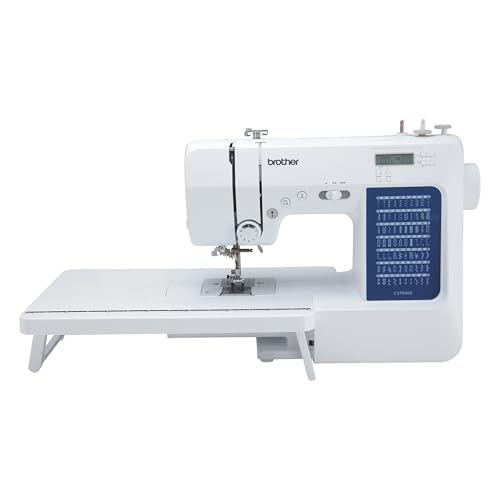
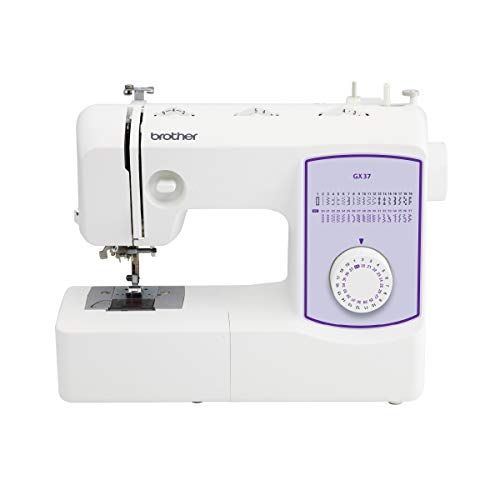
If you want one recommendation, the Brother CS7000X is the machine we point most first-time buyers at, and the reason is the ten presser feet rather than the seventy stitches. If your budget is the binding constraint, read the Brother XM2701 and the Brother LX3817 together — the difference between them is the automatic needle threader, and it is the most consequential fifty dollars in this category. If you are choosing between brands, Brother vs Singer does that comparison on specification alone. At the bottom of the range, the Brother GX37 and Brother XM1010 are separated by ten dollars and by the automatic needle threader. And if thick fabric is the actual reason you are buying, start with the SINGER Heavy Duty 4452 rather than the 4423 — same chassis, more in the box, and the cheaper of the two on Singer's own list prices.
Three reviews were added to answer the questions people actually type. The SINGER Heavy Duty 4432 is the best-known model number in that line and, on Singer's own specification, the same machine as the 4452 with a smaller accessory box and a higher price. The SINGER Heavy Duty 4411 is the cheapest way into the platform and the one that drops the needle threader. And the Brother CS5055 is the least expensive computerized machine we cover that still sews seven styles of one-step buttonhole.
If quilting is the job rather than garments, the Brother XR3774 is the one to read. It is mechanical — a dial, no screen — and Brother puts a walking foot, a quilting foot, a quilt guide and a detachable wide table in the box, which is the CS7000X's whole argument at a lower list price. The catch is one buttonhole style and no quarter-inch foot, so it and the CS5055 split cleanly: buttons or quilts, at roughly the same money.
The Brother ST150HDH is the one that answers thick fabric with 7-point box-feed feed dogs instead of the pressure dial Singer uses. And if what you want is simply the most equipment in one carton, read the Brother CS7205. Brother lists eleven presser feet with it — including the walking foot, the quarter-inch foot and a stitch guide foot nothing else here has — plus eight buttonhole styles, a wide table, a start/stop button and a needle position key, for ten dollars more than the CS7000X on Brother's own list. It ships with no case of any kind, and Brother and Amazon disagree about its stitch count; the review explains both.
Three machines joined the set on 27 September, and together they finish Brother's Strong & Tough line. The ST531HD is the one to buy on a dial — 53 stitches, a metal frame and finger guard, and a rare thing in this category: a manufacturer willing to publish a number, in this case up to six layers of denim. The ST371HD is the same chassis for twenty dollars less with sixteen fewer stitches, and Brother's own store has none left. And the XM3700 is the best stitch-count-per-dollar mechanical Brother sells at $149.99 — though its own product title claims 74 built-in stitches when the specification says 37, and the review explains why that gap matters.
The review that most complicates our own recommendation is the Brother CP100X. Set its specification page beside the CS7000X's and the two describe the same hardware — same 750 stitches a minute, same 7 mm stitch width, same 10.5 lb shell to the decimal, same ten presser feet, same wide table, same hard case, same 25-year warranty — except the CP100X publishes thirty more stitches and an eighth buttonhole style, and Brother lists it twenty dollars lower. We have not moved the top-pick badge, and the review explains the one reason why: its Amazon listing went unbuyable on three separate days this month while Brother's own store held stock, and a pick you cannot buy is not a pick.
The machine most people search for by name is the Brother HC1850 — more than any other model we have measured. It is a capable garment machine with eight buttonhole styles, adjustable speed, a start/stop button and a flip chart of every stitch on the front. It is also listed ten dollars above the CS7205, with three fewer feet and no walking foot or quarter-inch foot, and the review sets the three computerized Brothers side by side so you can see exactly where the money goes.