Stitch & Selvage earns a commission when you buy through the links on this page, at no extra cost to you. It does not change what we recommend, and we publish a skip-this verdict on products we could otherwise earn from. Full disclosure.
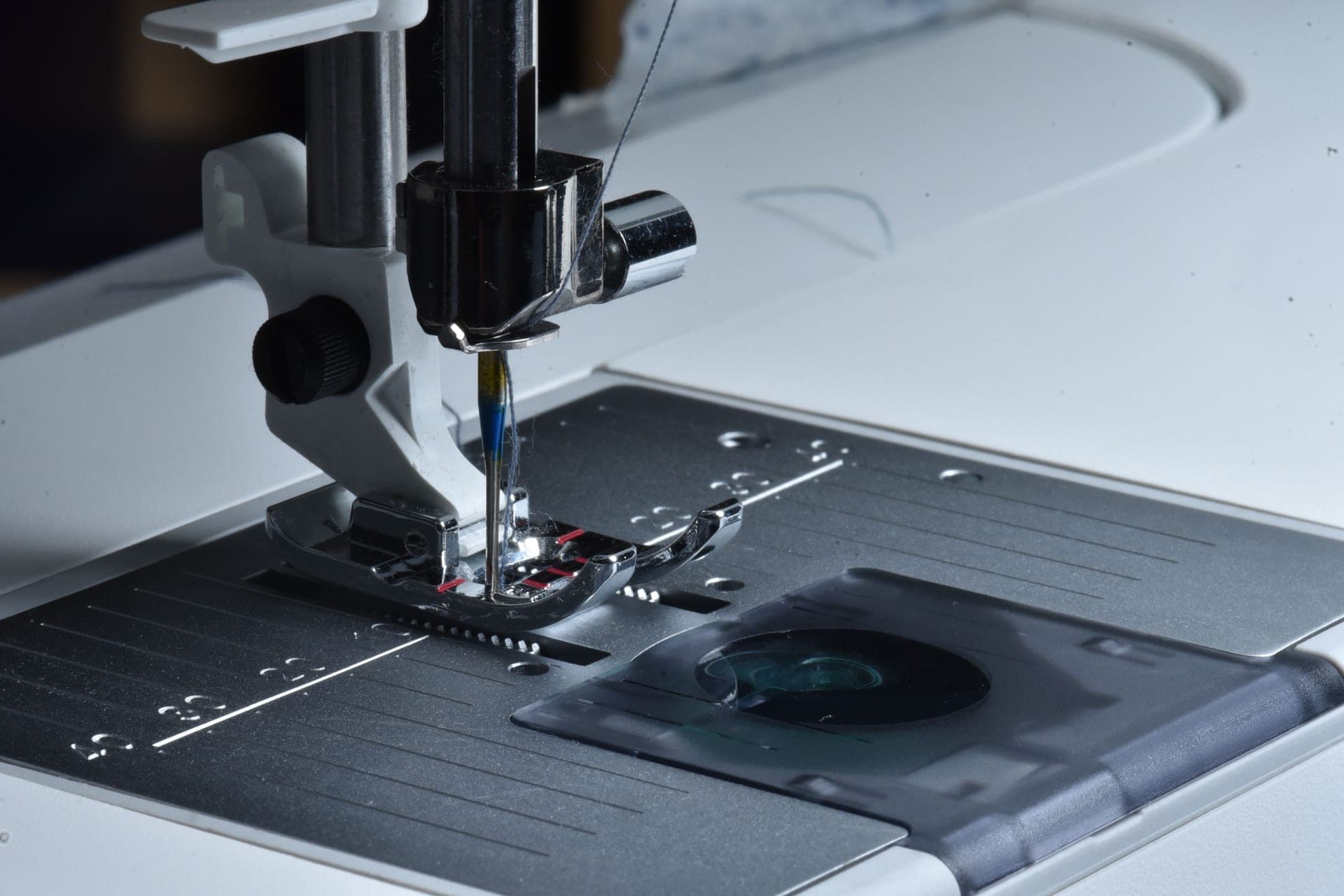
The SINGER Heavy Duty 4452 is a mechanical machine on the same heavy-duty chassis as the 4423 — metal interior frame, adjustable presser foot pressure, 1,100 stitches per minute. What separates it is the carton: a walking foot, a non-stick foot, a clearance plate and heavy duty needles are all included.
The ranking
Quick picks
Ranked against the published criteria below. Tap a row to jump to the full write-up; the price button goes straight to Amazon.
The best-equipped denim machine
SINGER Heavy Duty 4452 Sewing Machine
The same heavy-duty platform as the 4423 with nine more stitches and, more usefully, a walking foot, a non-stick foot and a clearance plate already in the box — the three accessories thick-fabric sewing actually needs.
The 4452 sits on the same platform as the Heavy Duty 4423 — metal interior frame, stainless steel bed plate, a motor Singer states is 60% stronger than standard, 1,100 stitches per minute, adjustable presser foot pressure, drop feed, three needle positions and a 6.25 inch sewing space. On the machine itself the differences are modest: 32 built-in stitches against 23.
The reason it earns its own entry is the box. Singer lists an even feed / walking foot, a non-stick foot, a clearance plate and heavy duty needles as included accessories, and those four items are precisely the kit that thick-fabric sewing demands.
The clearance plate deserves the most attention because it is the least understood. When a hem crosses a flat-felled jeans side seam the fabric goes from four layers to eight in the space of a stitch, the presser foot tips up at the front, and the feed dogs lose the fabric. A clearance plate is a small wedge you slip under the back of the foot so it sits level as it climbs. It is the tool we describe as a hump jumper in our guide to hemming pants, and having one in the box means the single most common thick-fabric failure has an answer on day one.
The walking foot is the other genuinely valuable inclusion. It adds a second set of feed dogs above the fabric so the top layer advances in time with the bottom, which is what stops layers shifting — the full explanation is here. Buying one separately is the most expensive common presser foot purchase, so its presence changes the real cost of the machine rather than just the specification sheet.
The cautions are the same as its stablemate. It weighs 14.6 lb and is meant to stay put. It runs to 1,100 stitches per minute with no speed limiter published, which is a lot of machine under a nervous foot. And the $120 accessory value is Singer's own claim — we quote it as the manufacturer's figure, not as an independently verified one.
We have not sewn on this machine. Every specification above is published by Singer on its own product page, read on 6 September 2026.
What works
- A walking foot is in the box — Singer describes it as evenly feeding multiple layers, eliminating slipping and puckering. On most machines this is the first expensive accessory you buy
- A clearance plate is included — the wedge that levels the presser foot as it climbs a thick seam, which is exactly what stalls a machine at a jeans side seam
- A non-stick foot for leather, vinyl and coated fabric, which grip an ordinary foot and refuse to feed
- Heavy duty needles included, so the machine can sew denim on day one without a second order
- Adjustable presser foot pressure, a metal interior frame and a stainless steel bed plate — the controls that actually make thick layers feed
- Nine more stitches than the 4423 and a lower list price at the time of writing
What does not
- 14.6 lb — a machine that stays on the table, and the heaviest class we cover alongside the 4423
- 1,100 stitches per minute with no speed limiter published; the pedal has a narrow usable band for a beginner
- Thirty-two stitches is a modest library next to the Brother computerized machines
- A dial and no display, so the stitch width and length you have set are not readable as numbers
- Singer's published accessory value of $120 is the manufacturer's own claim, not a figure we can independently verify
The kit it pairs with: Denim needles in 100/16 beyond the included pack, and heavier all-purpose thread for topstitching. The walking foot and clearance plate are already there.
The four accessories that are the entire argument
Singer groups them on its product page under a heading it values at $120. That figure is Singer's own claim and we quote it as the manufacturer's, not as one we checked. What is not a claim is the list itself, and the list is very close to exactly what someone buys in their first year of sewing thick fabric.
Item descriptions are Singer's own wording from the Heavy Duty 4452 product page, checked 7 September 2026.
The clearance plate is the item most first-time buyers have never heard of, and it is the one we would keep. When a hem crosses a flat-felled jeans side seam the fabric goes from four layers to eight in the space of a single stitch. The presser foot tips nose-down off the back of that step, the feed dogs lose contact with the fabric, and the machine stitches on the spot — which is one of the ways you end up with a knot of thread under the fabric. A clearance plate is a small stepped wedge you slip under the back of the foot so it sits level as it climbs. Sewists call it a hump jumper, and our guide to hemming pants covers the technique.
Around those four, Singer lists the ordinary set: general purpose, zipper, buttonhole and button sewing feet, an edge/quilting guide, a pack of needles, bobbins, spool caps, an auxiliary spool pin, spool pin felt, a screwdriver, a seam ripper/lint brush and a soft dust cover. Six sewing and quilting presser feet in total. Four of those six are standard equipment on almost any machine; the walking foot and the non-stick foot are the two that are not.
Ten dollars less than the machine below it
This is the part that makes the 4452 unusual. On singer.com on 7 September 2026 the 4423 is listed at $229.99 and the 4452 at $219.99 — the better-equipped machine is the cheaper one, on the manufacturer's own site, on the same day. Retailers set their own prices and Amazon's may not match either figure, which is why the button on this page pulls a live price instead of printing one. But on published list price there is no version of this comparison where the 4423 wins.
Compiled from Singer's own product pages for both machines, both read on 7 September 2026. 'Not listed' means the item does not appear in that machine's published accessory list.
Nine more stitches is the smaller half of that table. The three accessories are the larger half, because they change what the machine can do on the day it arrives rather than in month six when you have worked out what to order.
The controls that actually make thick fabric feed
People imagine a machine fails on denim because the needle cannot get through it. It can — a 100/16 denim needle goes through eight layers without much drama. What fails is feeding. Feed dogs are small serrated bars that rise through the needle plate and drag the fabric backwards one stitch at a time, and they can only grip fabric that is pressed down onto them.
Singer lists adjustable presser foot pressure on this machine — a dial that presses the layers harder onto those feed dogs so they can hold on. Brother lists 'Adjustable Presser Foot Pressure: No' on the CS7000X, the XM2701 and the LX3817, and on its own heavy-duty ST150HDH, which attacks the same problem with feed dog geometry instead. The denim roundup sets the two approaches side by side.
Three more published specifications exist for the same reason and are easy to skim past:
- An extra-high presser foot lifter. Singer publishes a second, higher lift position specifically to accommodate thick fabrics. Without it you are fighting the fabric under the foot before you have sewn a stitch.
- A metal interior frame and a stainless steel bed plate. Sewing hard means force, and force flexes a plastic chassis. Flex moves the needle relative to the bobbin hook by a fraction of a millimeter, which is enough to miss the loop — why machines skip stitches walks through the mechanism. The steel bed matters for a duller reason: heavy fabric drags on a plastic surface, and fabric that drags feeds unevenly.
- Three variable needle positions and a 6 mm maximum stitch width. Both are for topstitching along a thick edge, where you want the needle somewhere the foot is not.
Thirty-two stitches, 110 applications, and how many you will use
Singer breaks the 32 down as 6 basic, 7 stretch, 18 decorative and one one-step buttonhole, and publishes a separate figure of 110 stitch applications — its own term for techniques you can perform with a selected stitch, not a second count of stitches. It is a marketing number that happens to be honestly labeled.
You will use four. Straight, zigzag, a stretch stitch and the buttonhole cover a first year of sewing, and every machine on this site has all four. So the honest reading of 32 against the 23 on the 4423 is nine stitches you are unlikely to miss either way — and the honest reading of 32 against the 70 on the CS7000X is the same statement in reverse.
Selection is a dial with the stitches printed on the machine: legible at a glance, no state to get lost in, nothing to fail. The trade is that stitch width and length are dial positions rather than numbers, so reproducing a setting next month means remembering where the dial was. Mechanical versus computerized is the longer version of that trade.
The speed is still the warning
Singer publishes up to 1,100 stitches per minute and describes the motor as 60% stronger than a standard sewing machine motor. Both are real capabilities, and both are the thing most likely to catch out a first-time buyer, because a faster machine has a narrower usable band on the foot pedal. The distance between crawling and gone is a smaller movement of your foot than it would be on a slower machine.
Singer does not publish a sewing speed limiter for this machine; Brother publishes one on the CS7000X. If this is your first machine, practice on scrap until the pedal is predictable before you put it anywhere near fabric you have already cut out.
What it does not have
- No speed limiter is published, so the whole 1,100 stitches per minute lives on the foot pedal.
- No display. Stitch width and length are dial positions, not numbers you can read back.
- No wide table. Brother includes one with the CS7000X and the XR9550; what Singer lists here is a soft dust cover.
- No hard case, so this is not a machine that travels well even before you account for the weight.
- No quarter-inch foot in Singer's accessory list — the one piecing accessory a quilter would still have to buy. The quilting roundup covers that.
- 14.6 lb, in a 15.5 x 6.25 x 12 inch footprint. This machine stays on the table, and the weight is part of why it can sew hard: a light machine walks when it is working.
The kit it still needs
Less than most machines here, which is the whole point of the accessory kit. The heavy duty needles are in the box, so it can sew denim on the day it arrives. What runs out first is those needles: treat denim needles in 90/14 and 100/16 as a consumable rather than a one-time purchase. SCHMETZ describes the denim needle as having a reinforced blade for penetrating extra thick woven fabrics with minimum needle deflection and reduced risk of needle breakage and skipped stitches, and a deflected needle is the single most common cause of a machine that suddenly stops behaving. Needle types explained covers the rest.
Beyond that: Class 15 transparent bobbins, because the few in the box run out faster than anyone expects, and a heavier all-purpose thread if you want visible topstitching on denim. That is a genuinely short list, and it is worth pricing against the machines that need a walking foot added. What it costs to start sewing does that arithmetic across three budgets.
Who should buy it, and who should not
Buy it if thick fabric is the actual reason you are buying a machine — jeans hems, canvas totes, curtains, upholstery-weight cotton, vinyl. You get the feeding controls that decide whether heavy layers work at all, plus three accessories that normally arrive as a second and third order. On Singer's own list prices it is also the cheaper of the two heavy-duty machines, which makes the 4423 difficult to argue for unless a retailer has inverted the prices on the day you look.
Do not buy it as a general first machine if what you actually sew is quilting cotton, jersey or light garment fabric. At this price the CS7000X gives you ten presser feet, a wide table, a hard cover, a speed limiter and 70 stitches, and none of the heavy-duty specification here does anything for a quilt. Do not buy it if the machine has to be carried or stored between sessions. And do not buy it expecting a gentle learning curve — 1,100 stitches a minute with no limiter is a lot of machine under a nervous foot.
We have not sewn on this machine. We do not own it, there is no test bench here, and we are not going to describe a stitch we never made. What we did instead: read the manufacturer's published specification line by line, cite every figure to the page it came from, and price the whole setup — machine and the kit it still needs — so you know what starting actually costs.
Method
How we picked
- Compiled every specification from Singer's own Heavy Duty 4452 product page, checked 7 September 2026 — the stitch breakdown, buttonhole type, frame, bed plate, presser foot pressure, presser foot lifter, needle positions, stitch width, sewing space, weight, electrical figures, warranty structure and the complete included-accessory list.
- Confirmed the machine is currently sold and listed as in stock, and read both Singer list prices on the same day, so the ten-dollar gap against the 4423 is a same-day comparison rather than two figures from different weeks.
- Checked the adjustable presser foot pressure claim against Brother's own specification pages, which list it as 'No' on every Brother machine we cover.
- Scored against the published formula on how we pick: first-setup ease 30%, stitch range 15%, presser feet 15%, warranty 10%, portability 10%, price-to-spec 20%. Presser feet included is where this machine earns most of its score.
- Pulled the price live from Amazon. The $219.99 and $229.99 figures above are Singer's own dated list prices, not what any retailer necessarily charges today.
We have not sewn on these machines. There is no test bench here, we do not own them, and we do not accept free product. Everything above is compiled from published manufacturer specifications and live retailer data — and we tell you which is which on every claim. Our full method.
Answers
Questions people ask
Is the SINGER Heavy Duty 4452 better than the 4423?
What accessories come with the SINGER Heavy Duty 4452?
Can the SINGER Heavy Duty 4452 sew denim?
Is the SINGER Heavy Duty 4452 good for beginners?
How many stitches does the SINGER Heavy Duty 4452 have?
How much does the SINGER Heavy Duty 4452 weigh?
What warranty does the SINGER Heavy Duty 4452 have?
Where this came from
Sources
- SINGER — Heavy Duty 4452 product page, specifications, included accessories, price and stock status (checked 7 September 2026)
- SINGER — Heavy Duty 4423 product page, for the same-day price and equipment comparison (checked 7 September 2026)
- SCHMETZ — Sewing Machine Needle Primer, denim needle description (checked 1 September 2026)
- Brother USA — CS7000X product page, for the presser foot pressure comparison (checked 1 September 2026)
About the author
Scooter M.
An enthusiast who is genuinely into this. I read the manuals, compile the published specs, and do the arithmetic. No lab coat, no test bench, and no machines I am pretending to have used — which is exactly why every claim here carries a source.
Published by Slate Mill Group. Published September 7, 2026; last updated September 7, 2026. Editorial policy.
Keep reading
Read next
Best for thick fabric
SINGER Heavy Duty 4423 review: a denim machine that happens to sew everything else
Metal frame, 1,100 stitches a minute and adjustable presser foot pressure — the machine for denim, canvas and layers.
Best for denim
The best sewing machines for denim
Ranked on presser foot pressure, feed dog design and frame material - the three things that actually move thick fabric.
Walking foot
What a walking foot actually does
The one-sentence explanation, the four jobs it fixes, and which machines include one in the box.
Hemming
How to hem pants
The ordinary trouser hem, the jeans version, and the needle that stops you snapping one at the side seam.