Stitch & Selvage earns a commission when you buy through the links on this page, at no extra cost to you. It does not change what we recommend, and we publish a skip-this verdict on products we could otherwise earn from. Full disclosure.
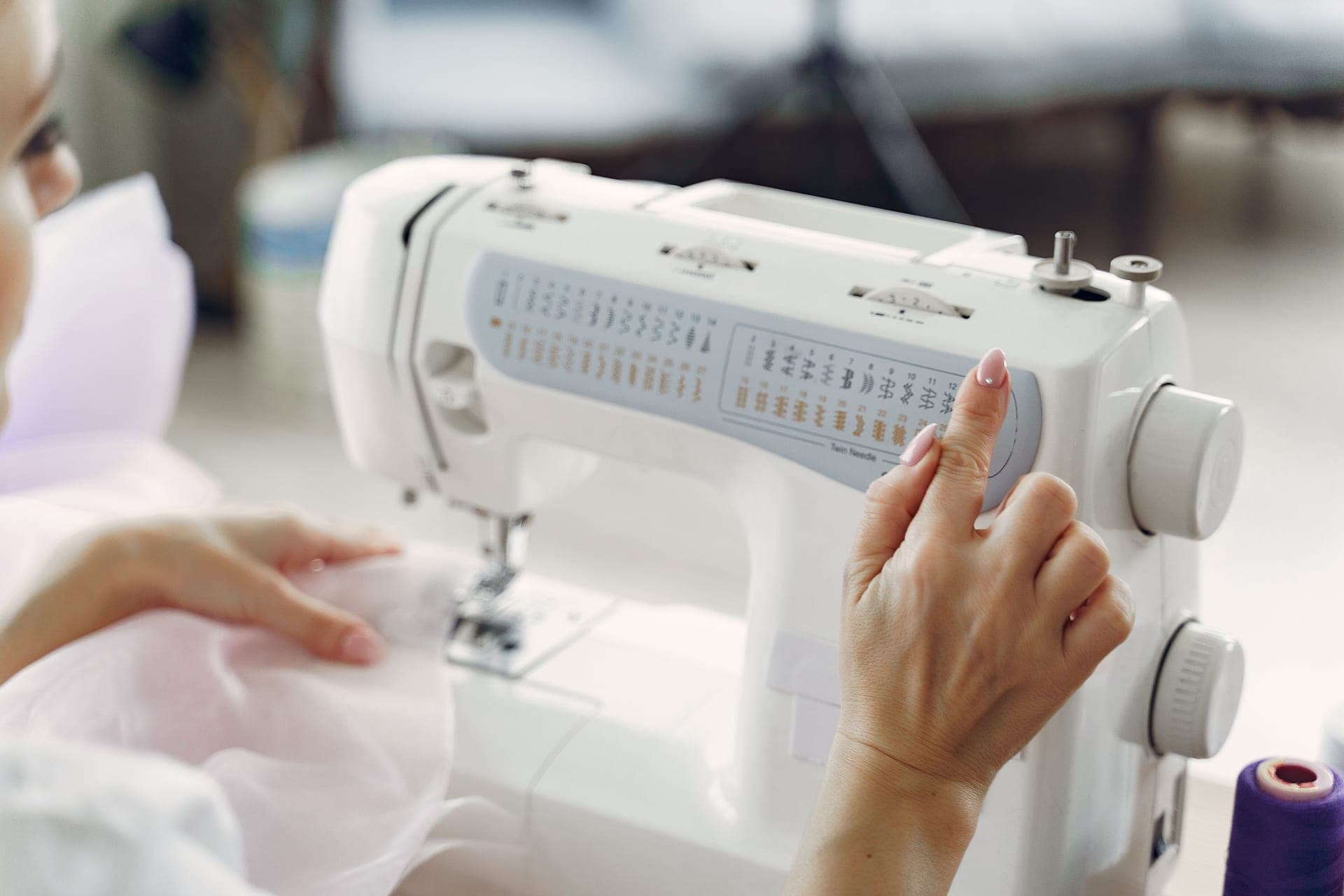
The Brother CS5055 is a computerized machine with 60 built-in stitches, seven styles of one-step auto-size buttonhole, an automatic needle threading system, a quick-set drop-in bobbin and an LCD, at 10.5 lb with a 25-year limited warranty. Brother includes seven presser feet and — the reason it costs less than the CS7000X — no walking foot, quarter-inch foot, wide table or hard cover.
The ranking
Quick picks
Ranked against the published criteria below. Tap a row to jump to the full write-up; the price button goes straight to Amazon.
| # | Product | Best for | Score | Price |
|---|---|---|---|---|
| 1 |  Brother CS5055 Computerized Sewing Machine The most stitches per dollar of any machine here | 60 built-in stitches, 7 buttonhole styles | 8.5/10 |
The most stitches per dollar of any machine here
Brother CS5055 Computerized Sewing Machine
Sixty stitches, seven one-step buttonhole styles and an automatic needle threader on a 10.5 lb computerized machine — the cheapest route to the features that actually make garment sewing pleasant.
The CS5055 is the machine we would point at if someone said 'I want a computerized machine and I do not want to spend CS7000X money.' Brother lists 60 built-in stitches including seven styles of one-step auto-size buttonhole, an automatic needle threading system, a quick-set drop-in bobbin, an LCD with computerized stitch selection, a free arm and an LED-lit work area, on a machine that weighs a published 10.5 lb.
Seven buttonhole styles is the specification worth stopping on. A buttonhole style is not decoration — a keyhole buttonhole is for a thick shanked coat button, a rounded one for fine blouse fabric, a stretch construction for knits, a plain bar-tacked rectangle for shirts. Most machines at this price have one style or, on the mechanical models, a four-step buttonhole you steer by eye. Seven is what the XR9550 has eight of at a considerably higher list price.
Sixty stitches is more than anyone needs and that is fine — you will use four. The reason the number matters here is what comes with it: computerized selection means the stitch width and length are numbers on a screen rather than dial positions you have to remember, which is the practical difference between a mechanical and a computerized machine. We cover that trade in full here.
What Brother leaves out is the accessory package. Seven feet — zigzag, buttonhole, zipper, button sewing, overcasting, blind stitch and monogramming — and no walking foot, no quarter-inch foot, no wide table and no hard cover. Those four items are most of what separates this machine from the CS7000X, and if you intend to quilt they are exactly the four you would want. What a walking foot does explains why it is the one worth buying first.
Two other absences are worth naming because they are easy to assume: Brother lists adjustable presser foot pressure as 'No', so this is not a denim machine, and there is no automatic thread cutter, needle position key or start/stop button. The top speed is 750 stitches per minute, the slowest figure we have on file — gentle for learning, slow if you are sewing curtains.
We have not sewn on this machine. Every specification above was read off Brother's own product page on 13 September 2026, where the machine was listed in stock at $169.99.
What works
- Seven one-step auto-size buttonhole styles — more than the CS7000X's seven-at-a-higher-price and vastly more than any mechanical machine here
- 60 built-in stitches with computerized selection on an LCD, so the stitch you set is a number you can read and repeat
- Automatic needle threading and a quick-set drop-in bobbin: the two specifications that most reduce early frustration
- 10.5 lb, so it can live on a shelf and come down for an hour
- A 7 mm maximum stitch width, wider than the 6 mm the SINGER Heavy Duty machines publish
- 25-year limited warranty, the same term Brother publishes on the CS7000X
What does not
- No walking foot and no quarter-inch foot in the seven — if you intend to quilt, those are two accessories you will buy
- No wide table and no hard cover, both of which the CS7000X includes
- Adjustable presser foot pressure: No, so thick multi-layer seams are not this machine's job
- 750 stitches per minute is the slowest top speed we have on file — fine for learning, limiting for long production seams
- No automatic thread cutter, no needle up/down key and no start/stop button, all of which appear higher up Brother's range
The kit it pairs with: A walking foot and a quarter-inch foot if quilting is on the list, plus universal needles in 80/12 and 90/14 and extra bobbins.
Seven buttonhole styles is the specification to notice
A buttonhole style is not decoration. A keyhole buttonhole has a rounded end that lets a thick shanked coat button sit without distorting the placket. A rounded one suits fine blouse fabric. A stretch construction lets a buttonhole in jersey give instead of tearing. A plain bar-tacked rectangle is the shirt default. Different garments genuinely need different ones.
Brother lists seven styles on the CS5055 — the same count it publishes for the considerably more expensive CS7000X, and one fewer than the XR9550. Most machines at this money publish a single one-step style, and the mechanical models below it have a four-step buttonhole you steer through four dial positions by eye. If you intend to sew clothes with buttons on them, this is the line on the specification sheet that matters most, and it is remarkable this far down the range.
What computerized actually buys you here
Stitch selection is an LCD and a shift key rather than a dial. The practical consequence is that the stitch width and length you set are numbers you can read and write down, so reproducing a setting next month is a matter of reading it rather than remembering roughly where a dial was pointing. That is the real mechanical-versus-computerized trade, and we cover it in full here.
Brother publishes a 7 mm maximum stitch width on this machine, which is wider than the 6 mm the SINGER Heavy Duty line publishes, and a 5 mm maximum stitch length. A wider zigzag is useful for appliqué and for finishing a raw edge properly.
The other two features that decide a first month are both present: an automatic needle threading system, and a quick-set drop-in bobbin that drops under a clear lid rather than loading into a removable case. Those are the specifications whose absence beginners actually complain about.
Sixty stitches, and the honest note about that
You will use four: straight, zigzag, a stretch stitch and the buttonhole. Sixty is a comfortable number rather than a compelling one. It is worth saying plainly because 'more stitches' is how machines at this level are sold, and it is the least predictive number on the sheet — the LX3817 with 17 stitches and the XR9550 with 165 sew the same four stitches you will actually use.
What sixty does buy is that you are unlikely to want for a stitch, and the decorative range is there if you ever go looking for it.
What Brother left out, and whether it matters
Brother lists seven presser feet: zigzag, buttonhole, zipper, button sewing, overcasting, blind stitch and monogramming. That covers ordinary garment sewing completely.
Compiled from Brother USA product pages for both machines, checked 13 September 2026.
Four items, and they are the four that make up most of the price gap: a walking foot, a quarter-inch foot, a wide table and a hard cover. If you intend to quilt, all four are things you would end up buying, and what a walking foot does explains why that one is the expensive purchase. If you intend to sew clothes and repairs, you may never want any of them.
Three absences worth naming
- Adjustable presser foot pressure: Brother lists it as 'No'. That is the control that helps thick multi-layer seams feed, so this is not a denim machine — that roundup is here.
- No adjustable sewing speed control. Brother publishes one on the CS7000X and does not list one here, so the foot pedal is the only limiter. The saving grace is that the machine's own top speed is 750 stitches per minute, the slowest figure we have on file, which makes the pedal less twitchy than on a 1,100 spm heavy-duty machine.
- No automatic thread cutter, needle position key or start/stop button. All three appear further up Brother's range and none is published for this model.
Who should buy it, and who should not
Buy it if you want to sew garments and you do not want to spend CS7000X money. Seven buttonhole styles, an automatic threader, a drop-in bobbin, 60 stitches, a 7 mm zigzag and a 25-year limited warranty at Brother's lowest computerized list price is a genuinely strong package, and the four missing accessories are ones a clothes sewer can live without.
Do not buy it if quilting is the plan. The walking foot and quarter-inch foot you would have to add, plus the wide table, are most of the difference to the CS7000X — buy that instead and get them in the carton. Or buy the XR3774, which lists near this machine and includes a walking foot, a quilting foot and a wide table; the trade is that it is mechanical and publishes one buttonhole style to this machine's seven. Buttons or quilts, at roughly the same money. And do not buy it for denim, canvas or upholstery weight: no adjustable presser foot pressure means thick seams will stall it regardless of the stitch count.
We have not sewn on this machine. We do not own it, there is no test bench here, and we are not going to describe a stitch we never made. What we did instead: read the manufacturer's published specification line by line, cite every figure to the page it came from, and price the whole setup — machine and the kit it still needs — so you know what starting actually costs.
Method
How we picked
- Compiled every specification from Brother's own CS5055 product page, checked 13 September 2026 — stitch count, buttonhole style count, threading system, bobbin, presser foot list, carton contents, maximum speed, stitch width and length, weight, warranty, and the explicit 'No' entries for presser foot pressure and thread cutter.
- Read the CS7000X page on the same day so the comparison table is a same-day one.
- Confirmed the machine is currently sold and listed in stock on Brother's own store before recommending it.
- Scored against the published formula on how we pick: first-setup ease 30%, stitch range 15%, presser feet 15%, warranty 10%, portability 10%, price-to-spec 20%.
- Pulled the price live from Amazon. The $169.99 and $279.99 figures above are Brother's own dated list prices, not what a retailer charges today.
We have not sewn on these machines. There is no test bench here, we do not own them, and we do not accept free product. Everything above is compiled from published manufacturer specifications and live retailer data — and we tell you which is which on every claim. Our full method.
Answers
Questions people ask
How many buttonhole styles does the Brother CS5055 have?
Brother CS5055 or CS7000X?
Is the Brother CS5055 good for beginners?
Can the Brother CS5055 sew denim?
Does the Brother CS5055 come with a walking foot?
How much does the Brother CS5055 weigh?
Where this came from
Sources
- Brother USA — CS5055 product page, specifications, carton contents, price and stock status (checked 13 September 2026)
- Brother USA — CS7000X product page, for the same-day accessory and price comparison (checked 13 September 2026)
- Brother USA — XR9550 product page, for the buttonhole style comparison (checked 1 September 2026)
About the author
Scooter M.
An enthusiast who is genuinely into this. I read the manuals, compile the published specs, and do the arithmetic. No lab coat, no test bench, and no machines I am pretending to have used — which is exactly why every claim here carries a source.
Published by Slate Mill Group. Published September 13, 2026; last updated September 13, 2026. Editorial policy.
Keep reading
Read next
CS5055 vs CS7000X
Brother CS5055 vs CS7000X
The two computerized Brothers, separated by four accessories — and the answer depends entirely on whether you quilt.
Our top first machine
Brother CS7000X review: you are buying the presser feet, not the stitches
Ten presser feet, an automatic threader and a drop-in bobbin — the machine we point most first-time buyers at.
Machine type
Mechanical or computerized for a first sewing machine?
What a computerized machine really buys you, and why the answer is mostly presser feet rather than electronics.
Best for clothes
The best sewing machines for making clothes
Buttonhole styles, an overcasting foot and a blind hem foot — the three published specs that decide garment sewing.