Stitch & Selvage earns a commission when you buy through the links on this page, at no extra cost to you. It does not change what we recommend, and we publish a skip-this verdict on products we could otherwise earn from. Full disclosure.
The Brother GX37 is a mechanical machine with 37 built-in stitches, an automatic needle threader, a one-step buttonhole and a quick-set drop-in bobbin, at a Brother list price of $149.99. It is the cheapest machine in Brother's range with all three of those, and it includes a dust cover — which the XM2701, the LX3817 and the SINGER M1500 do not.
The ranking
Quick picks
Ranked against the published criteria below. Tap a row to jump to the full write-up; the price button goes straight to Amazon.
The cheapest machine that threads itself
Brother GX37 Sewing Machine
An automatic needle threader, a one-step buttonhole and a drop-in bobbin at Brother's lower end, on a 10.14 lb machine that ships with its own dust cover — the three convenience features that decide a beginner's first month, without the price of a computerized model.
The GX37 is the machine that answers a narrow question very well: what is the cheapest Brother that still threads its own needle? Brother's specification lists the needle threading system as automatic and the buttonhole as an automatic one-step, on a machine it lists at $149.99. At the XM1010's $139.99 the threading system is manual, and that ten-dollar gap buys the feature we would protect first.
The rest of the specification is a competent mechanical machine and nothing surprising: 37 utility and decorative stitches selected on a dial, a jam-resistant quick-set drop-in top bobbin, a free arm for cuffs and sleeves, and an LED-lit work area. Brother lists six presser feet — zigzag, buttonhole, zipper, button sewing, blind stitch and narrow hemmer — which covers ordinary garment sewing and stops there.
Two things make it unusually well suited to a young or first-time sewer specifically. It weighs 10.14 lb, which is the lightest figure Brother publishes across the machines we cover, so it can be lifted onto a table and put away by someone small. And Brother includes a dust cover, which sounds trivial until you notice that the XM2701, the LX3817 and the SINGER M1500 all ship without one and a machine stored uncovered collects the lint that later causes tension problems.
What it does not have is a speed limiter. Brother publishes adjustable sewing speed control on the CS7000X and does not list it here, so on this machine the foot pedal is the only thing standing between a nervous beginner and full speed. That is manageable with a bit of practice on scrap and it is the one specification we would trade up for if the budget allowed.
We have not sewn on this machine. Every figure above is from Brother's own product page, read on 3 September 2026, and the price on the button is live from Amazon rather than remembered.
What works
- Automatic needle threading at the bottom of the range — the single feature we would least willingly give up, and one the similarly-priced XM1010 does not have
- A one-step buttonhole rather than a four-step one, which is the difference between placing a button and pressing, and turning a dial through four positions by eye
- Quick-set drop-in top bobbin, so loading it is a lid and a drop
- A dust cover is included — the Brother XM2701, LX3817 and SINGER M1500 all ship without one
- 10.14 lb, tied with the XR9550 as the lightest machine we cover
What does not
- Six presser feet, and none of them a walking foot or a quarter-inch foot
- Stitches are selected on a dial with no display, so the width and length you have actually set are not readable as numbers
- Brother does not publish an adjustable sewing speed control for it — the pedal is the only speed limiter
- 37 decorative stitches is more than a first year needs; you are choosing this machine for the threader, not the library
The kit it pairs with: Universal needles in 80/12 and 90/14, and more bobbins. The dust cover is already in the box, which is one line off the usual starter list.
What ten dollars buys over the machine below it
Brother lists the XM1010 at $139.99 and the GX37 at $149.99. That is the smallest price gap anywhere in the range and it is the most consequential one, because of what changes across it.
Compiled from Brother USA product specification pages, checked 6 September 2026.
Automatic threading, a one-step buttonhole, two more presser feet, twenty-seven more stitches, a dust cover and a slightly lighter machine. There is no dimension on which the cheaper machine wins except the ten dollars, and one of those features alone would usually justify the gap.
The automatic needle threader is the point
An automatic needle threader is a small lever with a hooked wire on it. You lower it, the hook swings through the eye of the needle, you lay the thread into the hook, and you release; the hook pulls a loop of thread back through the eye. It takes about three seconds and no close vision at all.
Without one you are holding a thread end between finger and thumb and pushing it at a hole roughly 0.6 mm across, in the shadow of the machine arm, every time you change color, break a thread or replace a needle. On a real project that is many times an evening.
This is the specification we would protect first on any beginner machine, and it is the reason this machine exists on our lists at all. Brother lists the GX37's needle threading system as automatic, and the XM1010's and the LX3817's as manual.
The buttonhole, and why one-step matters
Brother specifies an automatic one-step buttonhole with a buttonhole foot. You drop the button into the carrier at the back of the foot, press the pedal, and the machine sews a buttonhole sized to that button and stops.
The alternative — a four-step buttonhole, which is what the LX3817 and the SINGER M1500 have — means turning the dial through four positions in sequence and judging the length of each long side by eye. It works. Making seven of them match down a shirt placket is a skill, and it is a skill you have to acquire on fabric you have already cut out.
Brother does not publish a buttonhole *style* count for the GX37 the way it does for the computerized machines — the CS7000X lists seven styles and the XR9550 eight. One well-executed one-step buttonhole covers ordinary garment sewing; multiple styles matter when you want a keyhole for a coat button or a rounded one for fine fabric.
What is in the box
Brother lists six presser feet: zigzag, buttonhole, zipper, button sewing, blind stitch and narrow hemmer. That is the same count as the XM2701 and a different mix — the GX37 swaps in a narrow hemmer, which rolls a tiny double hem on light fabric as it feeds.
What is missing is the same thing missing from most machines at this level: no walking foot and no quarter-inch foot. If you intend to quilt, those two are the accessories you will end up buying, and the CS7000X includes both. What a walking foot does explains why it is the one worth the money.
The genuinely unusual inclusion is the dust cover. Brother lists one with the GX37 and does not list one with the XM2701, the LX3817 or the XM1010, and SINGER does not list one with the M1500. It sounds like packaging trivia and it is not: lint and household dust collecting in the bobbin race and the tension discs is a real cause of the gradual tension problems people cannot explain. More on that here.
Thirty-seven stitches, and how many you will use
Four. Straight, zigzag, buttonhole and a stretch stitch cover a first year of sewing, and every machine we cover has all four. Thirty-seven is a comfortable number rather than a compelling one — enough that you are unlikely to want for a stitch, not so many that the dial becomes a menu.
Selection is a dial with the stitches printed on the machine. That is a genuine advantage for a nervous beginner: legible at a glance, no state to get lost in, nothing to fail. The trade is that you cannot read the stitch width and length as numbers the way you can on the LCD machines, so reproducing a setting next week means remembering where the dial was.
The weight, and who that matters for
Brother publishes a unit weight of 10.14 lb — the lowest figure across every machine we cover, tied with the XR9550 and the ST150HDH. Combined with the included cover, that makes it one of the few machines here that is genuinely practical to store on a shelf and bring down for an hour.
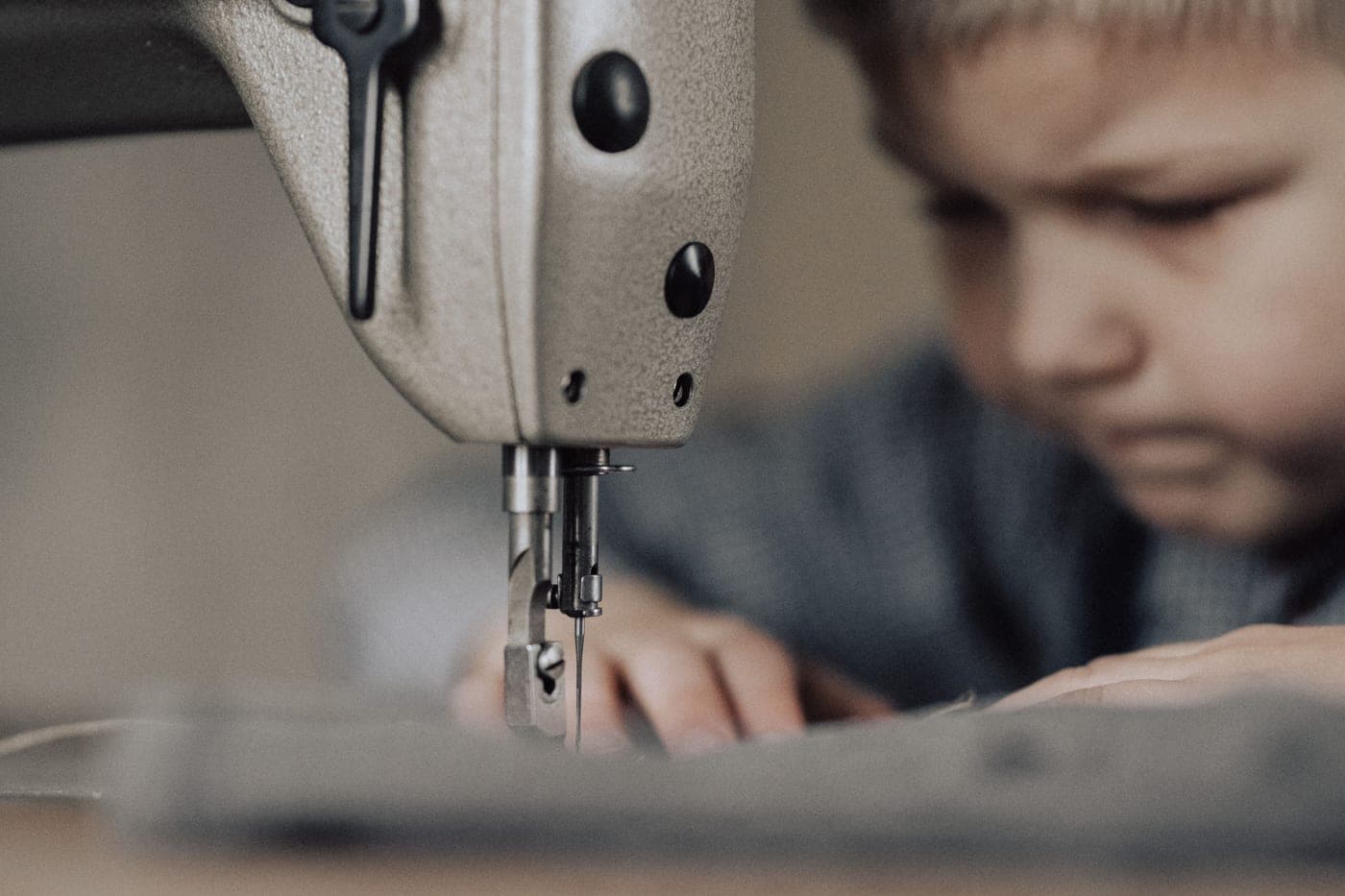
That matters more than it sounds. A machine that lives in a cupboard gets used when you set aside an afternoon; a machine you can retrieve in thirty seconds gets used in ten-minute gaps. It is also why this machine appears on our roundup for kids — light enough for a child to position, with the threading feature that otherwise makes an adult do it for them.
What it does not have
- No adjustable sewing speed control. Brother publishes one on the CS7000X and does not list one here, so the foot pedal is the only speed limiter.
- No adjustable presser foot pressure, which is the control that helps thick multi-layer seams feed. For denim work that points at the heavy-duty machines.
- No walking foot or quarter-inch foot, so quilting means buying at least one accessory.
- No display, so stitch width and length are dial positions rather than numbers.
- No wide table, which the CS7000X and XR9550 both include.
Who should buy it, and who should not
Buy it if you want the cheapest machine that will not fight you. Automatic threading, a one-step buttonhole and a drop-in bobbin are the three features whose absence beginners actually complain about, and this is the least expensive machine in Brother's range that has all three. It is also the machine to buy for a child, or for anyone whose machine has to be stored between sessions.
Do not buy it if you already know you want to quilt — the CS7000X includes the walking foot and quarter-inch foot you would otherwise buy, and a wide table. Do not buy it if you want buttonhole variety for garment sewing; that is the XR9550. And do not buy it for denim and canvas, where adjustable presser foot pressure and a metal frame matter more than anything on this specification.
We have not sewn on this machine. We do not own it, there is no test bench here, and we are not going to describe a stitch we never made. What we did instead: read the manufacturer's published specification line by line, cite every figure to the page it came from, and price the whole setup — machine and the kit it still needs — so you know what starting actually costs.
Method
How we picked
- Compiled every specification from Brother's own GX37 product page, checked 6 September 2026 — stitch count, buttonhole type, presser feet, bobbin system, threading system, weight, dimensions, warranty and carton contents.
- Compared it line by line against the XM1010 below it and the XM2701 beside it, because this machine's entire case is what it keeps at its price.
- Scored against the published formula on how we pick: first-setup ease 30%, stitch range 15%, presser feet 15%, warranty 10%, portability 10%, price-to-spec 20%.
- Pulled the price live from Amazon. The $149.99 figure quoted above is Brother's own published list price, dated, and is not what a retailer necessarily charges.
We have not sewn on these machines. There is no test bench here, we do not own them, and we do not accept free product. Everything above is compiled from published manufacturer specifications and live retailer data — and we tell you which is which on every claim. Our full method.
Answers
Questions people ask
Does the Brother GX37 have an automatic needle threader?
Is the Brother GX37 good for beginners?
How many presser feet come with the Brother GX37?
Does the Brother GX37 come with a cover?
Brother GX37 or XM1010?
Can the Brother GX37 sew denim?
Where this came from
Sources
About the author
Scooter M.
An enthusiast who is genuinely into this. I read the manuals, compile the published specs, and do the arithmetic. No lab coat, no test bench, and no machines I am pretending to have used — which is exactly why every claim here carries a source.
Published by Slate Mill Group. Published September 6, 2026; last updated September 6, 2026. Editorial policy.
Keep reading
Read next
XM2701 vs GX37
Brother XM2701 vs GX37
Two Brother mechanicals at the same list price — decided by weight, stitch count and what is in the box.
Cheapest full-size Brother
Brother XM1010 review: a good mending machine with one real catch
Brother's entry machine: drop-in bobbin, four bobbins in the box, 25-year warranty — and manual needle threading.
Best overall
The best sewing machines for beginners
Six machines ranked on threading, bobbin, buttonhole and included feet — with the one we say not to buy first.
Best for kids
The best sewing machines for kids
Real machines ranked on speed control, weight and threading - and why the mini machine sold for kids is the one to skip.