Stitch & Selvage earns a commission when you buy through the links on this page, at no extra cost to you. It does not change what we recommend, and we publish a skip-this verdict on products we could otherwise earn from. Full disclosure.
Brother lists both the XM2701 and the GX37 at $149.99, and both have an automatic needle threader, a drop-in bobbin and a one-step buttonhole. Take the GX37: it is 2.46 lb lighter, has 37 stitches to the XM2701's 27, and includes a dust cover the XM2701 does not. The XM2701's only edge is its foot mix.
The ranking
Quick picks
Ranked against the published criteria below. Tap a row to jump to the full write-up; the price button goes straight to Amazon.
The cheapest machine that threads itself
Brother GX37 Sewing Machine
An automatic needle threader, a one-step buttonhole and a drop-in bobbin at Brother's lower end, on a 10.14 lb machine that ships with its own dust cover — the three convenience features that decide a beginner's first month, without the price of a computerized model.
The GX37 is the machine that answers a narrow question very well: what is the cheapest Brother that still threads its own needle? Brother's specification lists the needle threading system as automatic and the buttonhole as an automatic one-step, on a machine it lists at $149.99. At the XM1010's $139.99 the threading system is manual, and that ten-dollar gap buys the feature we would protect first.
The rest of the specification is a competent mechanical machine and nothing surprising: 37 utility and decorative stitches selected on a dial, a jam-resistant quick-set drop-in top bobbin, a free arm for cuffs and sleeves, and an LED-lit work area. Brother lists six presser feet — zigzag, buttonhole, zipper, button sewing, blind stitch and narrow hemmer — which covers ordinary garment sewing and stops there.
Two things make it unusually well suited to a young or first-time sewer specifically. It weighs 10.14 lb, which is the lightest figure Brother publishes across the machines we cover, so it can be lifted onto a table and put away by someone small. And Brother includes a dust cover, which sounds trivial until you notice that the XM2701, the LX3817 and the SINGER M1500 all ship without one and a machine stored uncovered collects the lint that later causes tension problems.
What it does not have is a speed limiter. Brother publishes adjustable sewing speed control on the CS7000X and does not list it here, so on this machine the foot pedal is the only thing standing between a nervous beginner and full speed. That is manageable with a bit of practice on scrap and it is the one specification we would trade up for if the budget allowed.
We have not sewn on this machine. Every figure above is from Brother's own product page, read on 3 September 2026, and the price on the button is live from Amazon rather than remembered.
What works
- Automatic needle threading at the bottom of the range — the single feature we would least willingly give up, and one the similarly-priced XM1010 does not have
- A one-step buttonhole rather than a four-step one, which is the difference between placing a button and pressing, and turning a dial through four positions by eye
- Quick-set drop-in top bobbin, so loading it is a lid and a drop
- A dust cover is included — the Brother XM2701, LX3817 and SINGER M1500 all ship without one
- 10.14 lb, tied with the XR9550 as the lightest machine we cover
What does not
- Six presser feet, and none of them a walking foot or a quarter-inch foot
- Stitches are selected on a dial with no display, so the width and length you have actually set are not readable as numbers
- Brother does not publish an adjustable sewing speed control for it — the pedal is the only speed limiter
- 37 decorative stitches is more than a first year needs; you are choosing this machine for the threader, not the library
The kit it pairs with: Universal needles in 80/12 and 90/14, and more bobbins. The dust cover is already in the box, which is one line off the usual starter list.
The cheapest machine that still threads itself
Brother XM2701 Sewing Machine
Brother's entry mechanical keeps the automatic needle threader and the drop-in bobbin and drops almost everything else — which is the right corner to cut if a first machine has to stay under the price of a computerized one.
The XM2701 is the machine that answers the question this site exists to answer: what is the least you can spend and still have a machine that does not make you give up? Brother's specification lists an automatic needle threading system and a jam-resistant quick-set top drop-in bobbin on a machine it lists at $149.99. Those two features are the difference between an evening of sewing and an evening of swearing, and most machines at this price drop at least one of them.
What you give up is breadth. Six presser feet — buttonhole, zipper, zigzag, narrow hemmer, blind stitch and button sewing — cover ordinary garment sewing and nothing beyond it. There is no walking foot, so quilting through batting will fight you, and no quarter-inch foot, so piecing accurately means marking or moving the needle. Both can be bought later; both cost money the CS7000X does not ask for.
Stitch selection is a dial and thread tension is manual. That is not a bad thing for learning. A dial has no menu to get lost in, and manual tension forces you to understand what tension actually does rather than trusting a machine to hide it from you. It is slower to get a perfect stitch and faster to understand why the stitch was wrong.
One number to take seriously: 12.6 lb. That is the heaviest machine in Brother's beginner line here — heavier than the CS7000X at 10.5 lb and the XR9550 at 10.14 lb — and there is no hard case. If the machine is going to live on a shelf and come down for each session, weigh that against the price saving.
We have not sewn on this machine. The specifications above are Brother's own, and the price on the button is live from Amazon.
What works
- Keeps the automatic needle threader — rare at this end of Brother's range
- Jam-resistant quick-set drop-in bobbin, the same system as machines costing far more
- A one-step buttonhole rather than a four-step one, which is a real difference the first time you sew a buttonhole
- 27 stitches is genuinely enough for a first year of sewing
- Brother publishes a 25-year limited warranty on it
What does not
- Six presser feet, and none of them is a walking foot or a quarter-inch foot
- No hard cover in the box, so it needs somewhere to live
- At 12.6 lb it is the heaviest of Brother's beginner machines here, which matters if it gets carried to a class
- Manual thread tension, so uneven stitches are a dial you have to learn rather than something the machine corrects
The kit it pairs with: Budget for a walking foot if you plan to quilt, and for a dust cover — neither is included.
The smallest honest budget
Brother XM1010 Sewing Machine
Ten stitches, four presser feet and manual needle threading — a genuinely capable mending machine at the bottom of Brother's range, and a machine you will thread by eye every time.
Skip this one
Included here only as the reference point below both machines, and it is the one to skip if you are choosing between these two. It sits ten dollars under them on Brother's own list prices and gives up automatic needle threading to get there — the feature both machines in this comparison keep, and the reason either of them is worth the small step up.
Brother describes the XM1010 as a lightweight, affordable machine for everyday sewing and mending, and that is an accurate description rather than marketing. Ten utility and decorative stitches on a dial, a tension control dial, a reverse lever, four presser feet, a free arm and an LED work area. For taking up a hem, fixing a seam and running a curtain, that is the correct amount of machine.
It keeps the part that matters most: a jam-resistant quick-set drop-in top bobbin with a clear-view cover, so you can see how much thread is left without unthreading anything. Brother also puts four bobbins in the box rather than the usual three, along with a darning plate and a 3-piece needle set.
The catch is one line on the specification page: needle threading, manual. You will be pushing a thread end at a hole under the machine arm every time you change color or replace a needle. Some people find that trivial. Many people, particularly anyone whose close vision is not what it was — or a child working without much patience — do not.
That matters more here than usual because of what sits ten dollars above it. Brother lists the GX37 at $149.99 with an automatic needle threader, a one-step buttonhole, six presser feet and a dust cover. On published specification alone that is the better buy, and the gap is the smallest meaningful upgrade anywhere in Brother's range.
We have not sewn on this machine. Every figure above is from Brother's own product page, read on 3 September 2026.
What works
- Keeps the jam-resistant quick-set drop-in bobbin with a clear-view cover — the more consequential of the two convenience features
- Four bobbins in the box rather than the usual three, plus a darning plate and a 3-piece needle set
- An automatic bobbin winding system and a free arm for hems and cuffs
- Brother publishes a 25-year limited warranty on it
- Ten stitches printed on a dial is genuinely hard to get lost in
What does not
- Manual needle threading. Brother's own specification says so, and it is the feature we would least willingly give up
- Ten stitches runs out the moment you move past mending
- Four presser feet, with no blind stitch or narrow hemmer foot
- At $139.99 it sits only ten dollars below the GX37, which adds an automatic threader, a one-step buttonhole, two more feet and a dust cover
The kit it pairs with: A standalone needle threader tool, which is a wire loop on a handle and largely solves this machine's biggest weakness for very little.
Compiled from Brother USA product specification pages. GX37 checked 6 September 2026; XM2701 checked 1 September 2026.
Dimension 1 — weight. The GX37 wins, and by more than it looks.
Brother publishes 12.6 lb for the XM2701 and 10.14 lb for the GX37. Two and a half pounds sounds like nothing written down and is the single biggest practical difference between these machines.
The XM2701 is the heaviest of Brother's beginner machines — heavier than the CS7000X at 10.5 lb and the XR9550 at 10.14 lb, both of which are considerably more capable machines. The GX37 ties for the lightest figure Brother publishes anywhere in the range.
That decides whether the machine lives on a table or in a cupboard, and that in turn decides how often it gets used. It is also why the GX37 and not the XM2701 appears on our roundup for kids.
Dimension 2 — the dust cover. The GX37 wins.
Brother lists a dust cover with the GX37 and does not list one with the XM2701. At identical list prices that is a free accessory on one side of the comparison.
It matters more than packaging trivia suggests. Sewing sheds lint, households shed dust, and both collect in the bobbin race and around the tension discs. That build-up is a real cause of the gradual, unexplainable tension problems people eventually take to a repair shop. A cover is the cheapest preventative maintenance there is, and here one machine includes it. More on why.
Dimension 3 — stitches. The GX37 wins on paper, and it barely matters.
Thirty-seven against twenty-seven. Be honest about what that buys: a beginner uses four stitches — straight, zigzag, buttonhole and a stretch stitch — and both machines have all four.
One number needs care. Brother lists the XM2701 as 27 unique built-in stitches with 63 stitch functions. Those are not the same thing: a stitch function is the same stitch at a different width or length, selected as its own dial position. Twenty-seven is the count that compares with the GX37's thirty-seven.
Dimension 4 — presser feet. A draw.
Brother lists the same six feet for both machines: buttonhole, zipper, zigzag, narrow hemmer, blind stitch and button sewing. Neither includes a walking foot or a quarter-inch foot, so if quilting is the plan both leave you buying the same two accessories — or looking at the CS7000X, which includes both.
Dimension 5 — warranty. A technicality that favours the XM2701.
Brother publishes a flat 25-year limited warranty on the XM2701 and a 1/2/25-year limited structure on the GX37. The tiered structure means different components are covered for different periods rather than everything for 25 years.
We would not let this decide the purchase — the CS7000X carries the flat 25-year structure and the XR9550 the tiered one, and nobody would argue the XR9550 is the flimsier machine. Read Brother's warranty documentation for what each period covers if it matters to you.
The verdict
Buy the GX37. At the same list price it is lighter by two and a half pounds, carries ten more stitches, and comes with a dust cover, while matching the XM2701 on every feature that decides a beginner's first month — automatic threading, drop-in bobbin, one-step buttonhole, free arm, LED lighting and the same six presser feet.
Buy the XM2701 if you specifically prefer the flat 25-year warranty structure, or if you find one meaningfully cheaper than the other on the day — these two are close enough that a live price difference is a legitimate tiebreaker. Check both buttons above; the prices there are live and the list prices quoted here are Brother's own.
Buy neither if you already know your project. Quilting points at the CS7000X, garments at the XR9550, and denim at the heavy-duty machines.
Method
How we picked
- Put both sides' published manufacturer specifications side by side — Brother USA, SINGER and SCHMETZ pages, all checked 1 September 2026 — rather than comparing impressions.
- Resolved each dimension separately and said which side wins it, instead of averaging everything into a tie.
- Named a winner, and named the buyer the other option is right for.
- Priced live from Amazon. No number on this page is remembered.
We have not sewn on these machines. There is no test bench here, we do not own them, and we do not accept free product. Everything above is compiled from published manufacturer specifications and live retailer data — and we tell you which is which on every claim. Our full method.
Answers
Questions people ask
Is the Brother GX37 better than the XM2701?
Do the Brother XM2701 and GX37 have the same presser feet?
What is the difference between built-in stitches and stitch functions?
Which is better for a child, the XM2701 or the GX37?
Where this came from
Sources
About the author
Scooter M.
An enthusiast who is genuinely into this. I read the manuals, compile the published specs, and do the arithmetic. No lab coat, no test bench, and no machines I am pretending to have used — which is exactly why every claim here carries a source.
Published by Slate Mill Group. Published September 6, 2026; last updated September 6, 2026. Editorial policy.
Keep reading
Read next
Best budget mechanical
Brother GX37 review: ten dollars buys the feature that matters
37 stitches, an automatic threader, a one-step buttonhole and a dust cover, on the lightest machine Brother publishes.
Best value mechanical
Brother XM2701 review: the cheapest machine that still threads its own needle
27 stitches, an automatic needle threader and a jam-resistant drop-in bobbin — the value pick of the mechanical machines.
Best entry tier
The best sewing machines under $200
The entry tier, ranked on what the band structurally buys — and the one machine to think twice about.
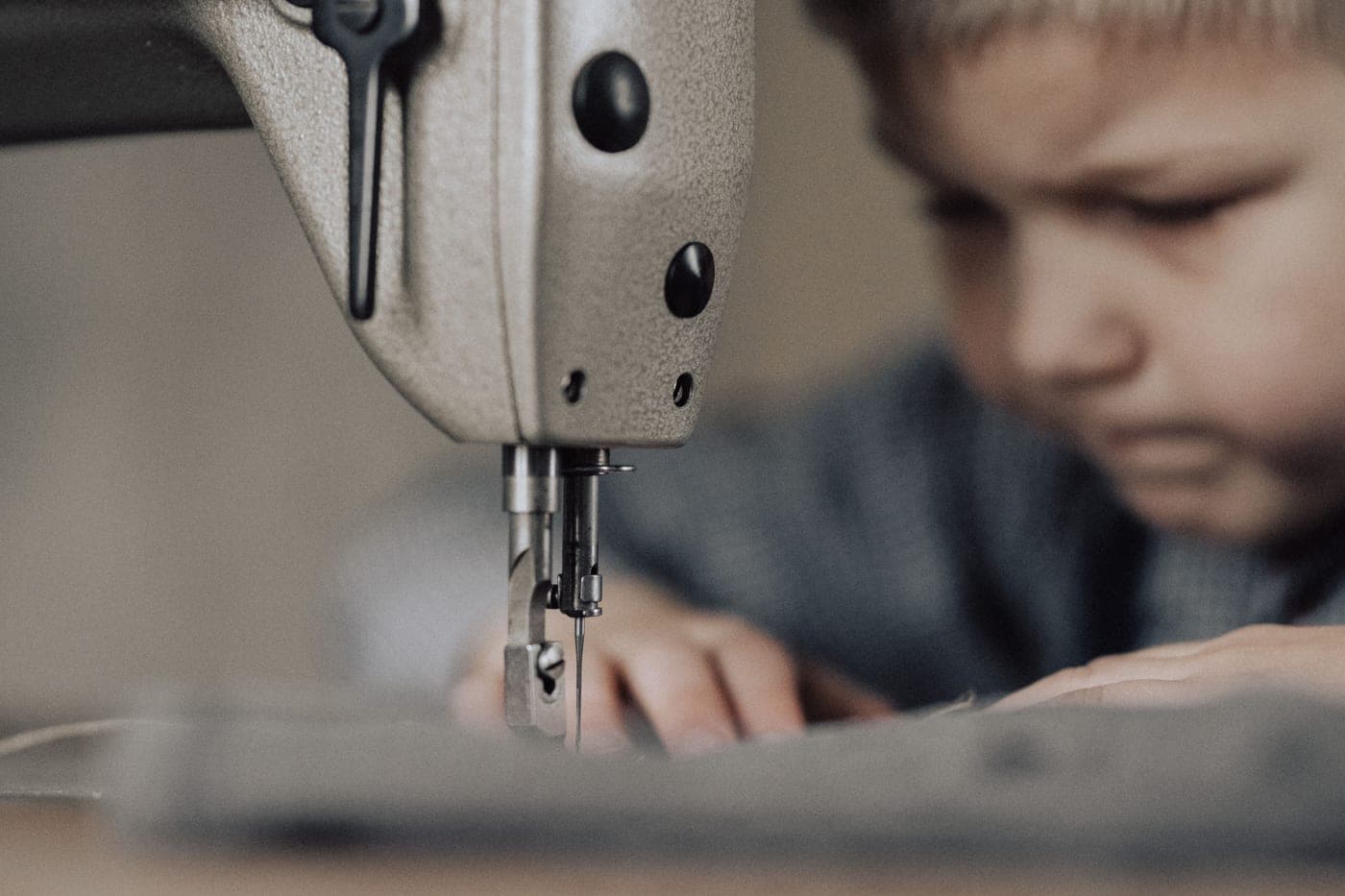
Best for kids
The best sewing machines for kids
Real machines ranked on speed control, weight and threading - and why the mini machine sold for kids is the one to skip.