Stitch & Selvage earns a commission when you buy through the links on this page, at no extra cost to you. It does not change what we recommend, and we publish a skip-this verdict on products we could otherwise earn from. Full disclosure.
For a first machine, Brother wins on published specification and it is not close at the prices beginners actually shop at. Brother puts an automatic needle threader, a drop-in bobbin and a one-step buttonhole on a $149.99 machine; Janome's cheapest machine with a needle threader lists at $409, and its two entry machines publish a threader row that reads None. Best for Brother: anyone buying a first machine on specification. The exception is real: Janome's HD5000 publishes an aluminum body and an adjustable presser foot pressure dial, which Brother publishes on nothing — best for: a metal-framed machine for thick fabric, with a dealer behind it.
The ranking
Quick picks
Ranked against the published criteria below. Tap a row to jump to the full write-up; the price button goes straight to Amazon.
| # | Product | Best for | Score | Price |
|---|---|---|---|---|
| 1 | 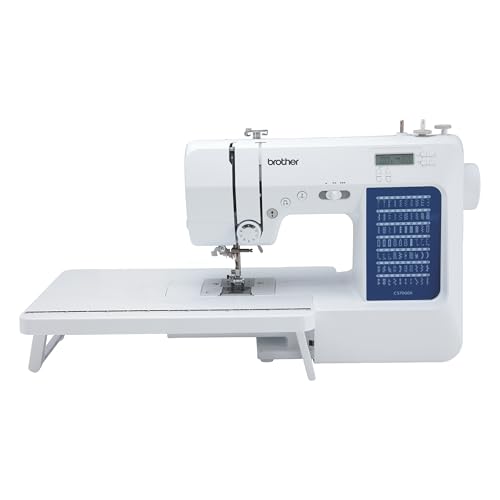 Brother CS7000X Computerized Sewing & Quilting Machine The first machine most beginners should buy | 70 built-in stitches | 9.2/10 | $279.98 on Amazon #ad affiliate link · price as of November 2, 2026 |
| 2 |  Janome HD5000 Heavy Duty Sewing Machine The Janome heavy-duty to actually buy | 18 built-in stitches | 6.3/10 | $499.00 on Amazon #ad affiliate link · price as of November 2, 2026 |
| 3 | 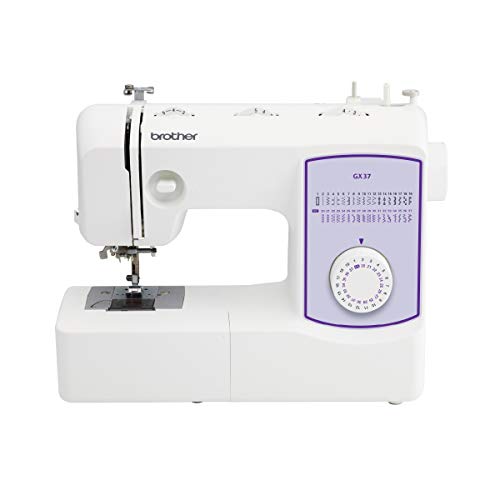 Brother GX37 Sewing Machine The cheapest machine that threads itself | 37 built-in stitches | 8.3/10 | $148.81 on Amazon #ad affiliate link · price as of November 2, 2026 |
| 4 | 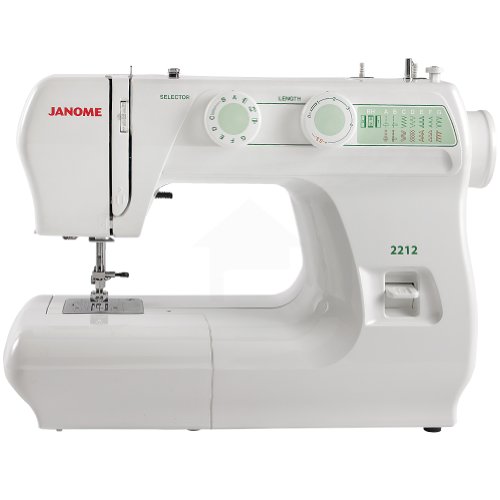 Janome 2212 Sewing Machine A five-piece feed dog on a simple machine Our skip-this pick | 12 built-in stitches | 4.2/10 | $217.00 on Amazon #ad affiliate link · price as of November 2, 2026 |
The first machine most beginners should buy
Brother CS7000X Computerized Sewing & Quilting Machine
The only machine on this page that arrives with the two feet a beginner ends up buying anyway — a walking foot and a quarter-inch foot — plus an automatic needle threader and a drop-in bobbin, so the two jobs that make people quit are the two jobs it makes easy.
The CS7000X is the machine we point a first-time buyer at, and the reason has nothing to do with its stitch count. It is the presser feet. Brother lists ten of them in the box — zigzag, buttonhole, zipper, button sewing, overcasting, blind stitch, monogramming, quarter-inch, quilting and walking — plus a quilt guide. Two of those, the walking foot and the quarter-inch foot, are the exact accessories a beginner ends up ordering three months in, and they are not cheap bought separately.
The second reason is the threading. Brother's published specification lists an automatic needle threading system and a quick-set drop-in top bobbin. Threading the needle and setting the bobbin are the two jobs that make people put a machine back in its box, and this one turns both into a lever pull and a drop. On a front-loading machine you are removing a case, seating a bobbin in a particular orientation, and hoping.
It is a computerized machine, which means stitch selection is a mode key and a shift key against an LCD rather than a dial. That is a genuine trade-off, not a straight upgrade: a dial is legible at a glance and has nothing to fail, while an LCD tells you the stitch width and length the machine has actually selected. For someone learning, seeing the numbers is worth more than the simplicity of a dial.
The extras matter more than they sound. The detachable wide table turns a small free-arm machine into something you can push a quilt across, and the hard protective cover is the difference between a machine that stays out on a table and one that lives in a cupboard collecting dust. Brother also publishes a 25-year limited warranty and free phone and online technical support for the life of the product.
We have not sewn on this machine. Everything above is from Brother's own specification page, and the price on the button is live from Amazon rather than anything we typed. What we can tell you is what the box contains and what that saves you buying — which, for a first machine, is most of the decision.
What works
- Automatic needle threader and a drop-in bobbin — the two setup jobs that defeat most beginners
- Ten presser feet including the walking foot and a quilting foot, which the cheaper machines make you buy separately
- Detachable wide table and a hard cover are in the box, not extras
- Adjustable sewing speed control, so a first seam can be run slowly
- Brother publishes a 25-year limited warranty on it
What does not
- Seventy stitches is far more than a beginner will use; you are paying for decorative stitches you may never touch
- Computerized machines have more to go wrong electronically than a dial-and-lever mechanical
- At 10.5 lb it is light enough to walk across a table at speed unless it is on a firm surface
The kit it pairs with: It already includes the walking foot and quilting foot, so its starter kit is short: needles, bobbins, thread, shears and pins.
The Janome heavy-duty to actually buy
Janome HD5000 Heavy Duty Sewing Machine
The same aluminum chassis, 18 stitches, 6.5 mm stitch and top-loading rotary hook as the HD3000 — with an unambiguous automatic one-step buttonhole and an adjustable presser foot pressure dial, usually for less money.
The HD5000 is the machine that makes the rest of Janome's Heavy Duty line hard to recommend, and almost nobody searches for it by name. Set its specification page beside the HD3000's and the two describe the same hardware: 18 built-in stitches, a 6.5 mm maximum stitch width, a 4 mm maximum stitch length, 15 needle positions, a top-loading full rotary hook, a built-in needle threader, aluminum body construction, an 18.7 lb machine on a 16 x 11.3 x 7.2 inch footprint with a 6.5 x 4.6 inch workspace, and a hard cover. Every one of those figures matches to the decimal.
Then the HD5000 publishes something the HD3000 cannot make up its mind about. Its feature list states an 'Automatic One-step Buttonhole'. The HD3000's specification row says four-step while its own description says one-step, which we flag on that review because at $559 it is the single thing you would most want settled. Here it is settled. You drop the button into the back of the foot, press the pedal, and the machine sizes the buttonhole and stops.
It also adds an adjustable presser foot pressure dial. That is the control that presses the layers down onto the feed dogs so they can grip, and it is the specification that actually separates a heavy-duty machine from a normal one — not motor claims. SINGER publishes it on its whole Heavy Duty line; Brother publishes 'Adjustable Presser Foot Pressure: No' on the CS7000X, XM2701 and LX3817. Janome publishes a dial here and on the HD3000, and nothing on the entry machines.
The third addition is small but real: a stitch selection display panel, so a dial machine tells you which stitch is actually selected. On eighteen stitches that is less critical than it would be on a hundred and eighty, but it removes a guess.
Janome's page has two gaps worth stating plainly. It publishes no list price — the page reads 'Please see Dealer for pricing' where the HD3000 shows $559 and the HD1000 $409 — so there is no manufacturer figure to hold the street price against. And the page contradicts itself on the feed dog, with a specification row reading five-piece and a description reading seven-piece. We report both rather than choosing the better-sounding one.
The carton is thirteen items: an automatic buttonhole foot, a blind hem foot, an overedge foot C, a rolled hem foot, a zigzag foot, a zipper foot E, a quilting guide bar, spool holders, a lint brush, a screwdriver, a seam ripper and a foot control, plus the hard cover. There is no walking foot, which the cheaper HD1000 does include as an even feed foot — the one place the HD5000's carton is the weaker of the two.
Janome positions it for 'home décor, basic sewing, and household repairs'. The honest version is that it is the Heavy Duty Janome to buy: the same machine as the HD3000 with the buttonhole question answered and a pressure dial, and on Amazon today it sells for less than the HD3000 does.
We have not sewn on this machine. Every figure above was read off Janome's own product pages on 23 October 2026.
What works
- An automatic one-step buttonhole, published without ambiguity — which is exactly what the HD3000's page cannot decide about itself
- An adjustable presser foot pressure dial, the control that decides whether thick fabric feeds
- A top-loading full rotary hook, the easier bobbin system, on an aluminum-bodied machine
- 6.5 mm maximum stitch width and a built-in needle threader
- A stitch selection display panel on a dial machine, so the stitch you have chosen is readable
- On street prices today it is cheaper than the HD3000 while publishing a better buttonhole
What does not
- 18.7 lb, tied with the HD3000 as the heaviest machine on this site
- Janome publishes no list price at all for it — the page says 'Please see Dealer for pricing', so there is no manufacturer figure to compare against the street price
- The page contradicts itself on the feed dog: the specification row says five-piece, the description says seven-piece
- 18 stitches and no memory function. This is a mechanical machine at a computerized machine's price
- Janome publishes no warranty terms and no maximum sewing speed
- Thirteen standard accessories and no walking foot — the cheaper HD1000 includes an even feed foot and this carton does not
The kit it pairs with: A walking foot, which this carton does not include and the cheaper HD1000 does, plus denim needles in 90/14 and 100/16. The hard cover and quilting guide bar are in the box.
The cheapest machine that threads itself
Brother GX37 Sewing Machine
An automatic needle threader, a one-step buttonhole and a drop-in bobbin at Brother's lower end, on a 10.14 lb machine that ships with its own dust cover — the three convenience features that decide a beginner's first month, without the price of a computerized model.
The GX37 is the machine that answers a narrow question very well: what is the cheapest Brother that still threads its own needle? Brother's specification lists the needle threading system as automatic and the buttonhole as an automatic one-step, on a machine it lists at $149.99. At the XM1010's $139.99 the threading system is manual, and that ten-dollar gap buys the feature we would protect first.
The rest of the specification is a competent mechanical machine and nothing surprising: 37 utility and decorative stitches selected on a dial, a jam-resistant quick-set drop-in top bobbin, a free arm for cuffs and sleeves, and an LED-lit work area. Brother lists six presser feet — zigzag, buttonhole, zipper, button sewing, blind stitch and narrow hemmer — which covers ordinary garment sewing and stops there.
Two things make it unusually well suited to a young or first-time sewer specifically. It weighs 10.14 lb, which is the lightest figure Brother publishes across the machines we cover, so it can be lifted onto a table and put away by someone small. And Brother includes a dust cover, which sounds trivial until you notice that the XM2701, the LX3817 and the SINGER M1500 all ship without one and a machine stored uncovered collects the lint that later causes tension problems.
What it does not have is a speed limiter. Brother publishes adjustable sewing speed control on the CS7000X and does not list it here, so on this machine the foot pedal is the only thing standing between a nervous beginner and full speed. That is manageable with a bit of practice on scrap and it is the one specification we would trade up for if the budget allowed.
We have not sewn on this machine. Every figure above is from Brother's own product page, read on 3 September 2026, and the price on the button is live from Amazon rather than remembered.
What works
- Automatic needle threading at the bottom of the range — the single feature we would least willingly give up, and one the similarly-priced XM1010 does not have
- A one-step buttonhole rather than a four-step one, which is the difference between placing a button and pressing, and turning a dial through four positions by eye
- Quick-set drop-in top bobbin, so loading it is a lid and a drop
- A dust cover is included — the Brother XM2701, LX3817 and SINGER M1500 all ship without one
- 10.14 lb, tied with the XR9550 as the lightest machine we cover
What does not
- Six presser feet, and none of them a walking foot or a quarter-inch foot
- Stitches are selected on a dial with no display, so the width and length you have actually set are not readable as numbers
- Brother does not publish an adjustable sewing speed control for it — the pedal is the only speed limiter
- 37 decorative stitches is more than a first year needs; you are choosing this machine for the threader, not the library
The kit it pairs with: Universal needles in 80/12 and 90/14, and more bobbins. The dust cover is already in the box, which is one line off the usual starter list.
A five-piece feed dog on a simple machine
Janome 2212 Sewing Machine
Janome's best-known entry model number, with a five-piece feed dog that feeds fabric better than its price suggests — and twelve stitches, no needle threader and a front-loading bobbin, for seventy dollars more than the Arctic Crystal.
Skip this one
Between these four, the 2212 is the one we would not choose as a first machine. At $269 it has no needle threader, a front-loading bobbin and a four-step buttonhole — three of the four beginner-friendliness specifications going the wrong way at once, for $119 more than a Brother GX37 that gets all three right. Janome's own HD5000 fixes all three, which is why it is on this page rather than the brand being written off.
The 2212 is the Janome model number people search for most, and it has been in the catalog long enough to have become the default recommendation in a lot of sewing forums. Janome describes it as 'a quality entry level model offered at a fantastic price' and says 'this is the perfect machine for a beginner and the price is just right'.
The specification is a plain mechanical machine: 12 built-in stitches on a dial, a four-step buttonhole, a 5 mm maximum stitch width, a 4 mm maximum stitch length, a front-loading vertical oscillating hook, a free arm and no needle threader. It weighs 13 lb on a 15.2 x 11.6 x 6 inch footprint, which is the same shell as the Arctic Crystal to the tenth of an inch.
The real difference between the two is one row, and it is a good one: the 2212 has a five-piece feed dog where the Arctic Crystal has three. Feed dogs are the serrated bars that pull fabric under the needle, and more of them means the fabric is gripped over a longer stretch. In practice that is the difference between a straight seam that stays straight on a long run and one that drifts, and it is also what makes the 2212 handle a slippery or a lightweight fabric better than its price band suggests. It also ships with a sliding buttonhole foot and a vinyl dust cover, neither of which the Arctic Crystal has.
What it gives back for that is awkward. Janome publishes 5 needle positions here against the Arctic Crystal's 15, publishes no knee lift where the cheaper machine has one, and lists three fewer stitches — at $70 more on Janome's own prices. Read the two tables side by side and the 2212 is not a straightforward upgrade; it is a different set of trades at a higher price, and which one is right depends on whether you value the feed dog or the knee lift.
Against the rest of this site, the problem is the same one the Arctic Crystal has. At Janome's $269 list you are buying a machine with no needle threader, a front-loading bobbin and a four-step buttonhole. Brother's XM3700 and GX37 both list at $149.99 with 37 stitches, an automatic needle threader, a drop-in bobbin and a one-step buttonhole. The 2212's case is build quality and a dealer network, and Janome publishes no figure for either.
We have not sewn on this machine. Every specification above was read off Janome's own product page on 23 October 2026, and the price on the button is live from Amazon.
What works
- A five-piece feed dog, against the Arctic Crystal's three. More feed teeth means a longer grip on the fabric and less wander on a straight seam, and it is the one specification that justifies the price gap between them
- A vinyl dust cover is in the carton — the Arctic Crystal ships with no cover at all
- A sliding buttonhole foot, which makes the four-step buttonhole considerably more repeatable than a plain foot does
- Twelve stitches is genuinely enough: a first year uses a straight stitch, a zigzag, a buttonhole and a stretch stitch
- 13 lb, and the same small footprint as the Arctic Crystal
What does not
- No needle threader. Janome's specification row reads 'None', at a list price of $269
- Front-loading bobbin and a four-step buttonhole — the same two learning obstacles as the Arctic Crystal, for seventy dollars more
- Five needle positions against the Arctic Crystal's fifteen, and no knee lift, which the cheaper machine has
- Twelve stitches is the lowest count of any machine on this site except the six-stitch SINGER M1500
- Janome publishes no warranty terms, no maximum sewing speed and no frame material for it
- On Janome's own list prices it costs $70 more than the Arctic Crystal and gives back the knee lift, ten needle positions and three stitches to get a better feed dog and a dust cover
The kit it pairs with: Front-loading bobbins and a spare bobbin case, plus universal needles in 80/12 and 90/14. The dust cover is already in the box.
Janome figures from Janome's own product pages, all read 23 October 2026. Brother figures from Brother USA's own product pages on the dates given in each machine's review. 'Not published' means the manufacturer publishes no figure.
Dimension 1 — the needle threader. Brother wins, decisively.
Janome's specification tables for the 2212 and the Arctic Crystal both contain a row headed 'Needle Threader'. Both read None. Those machines list at $269 and $199.
Brother lists an automatic needle threading system on the $149.99 GX37 and the $149.99 XM3700, and on everything above them except the $99 LX3817.
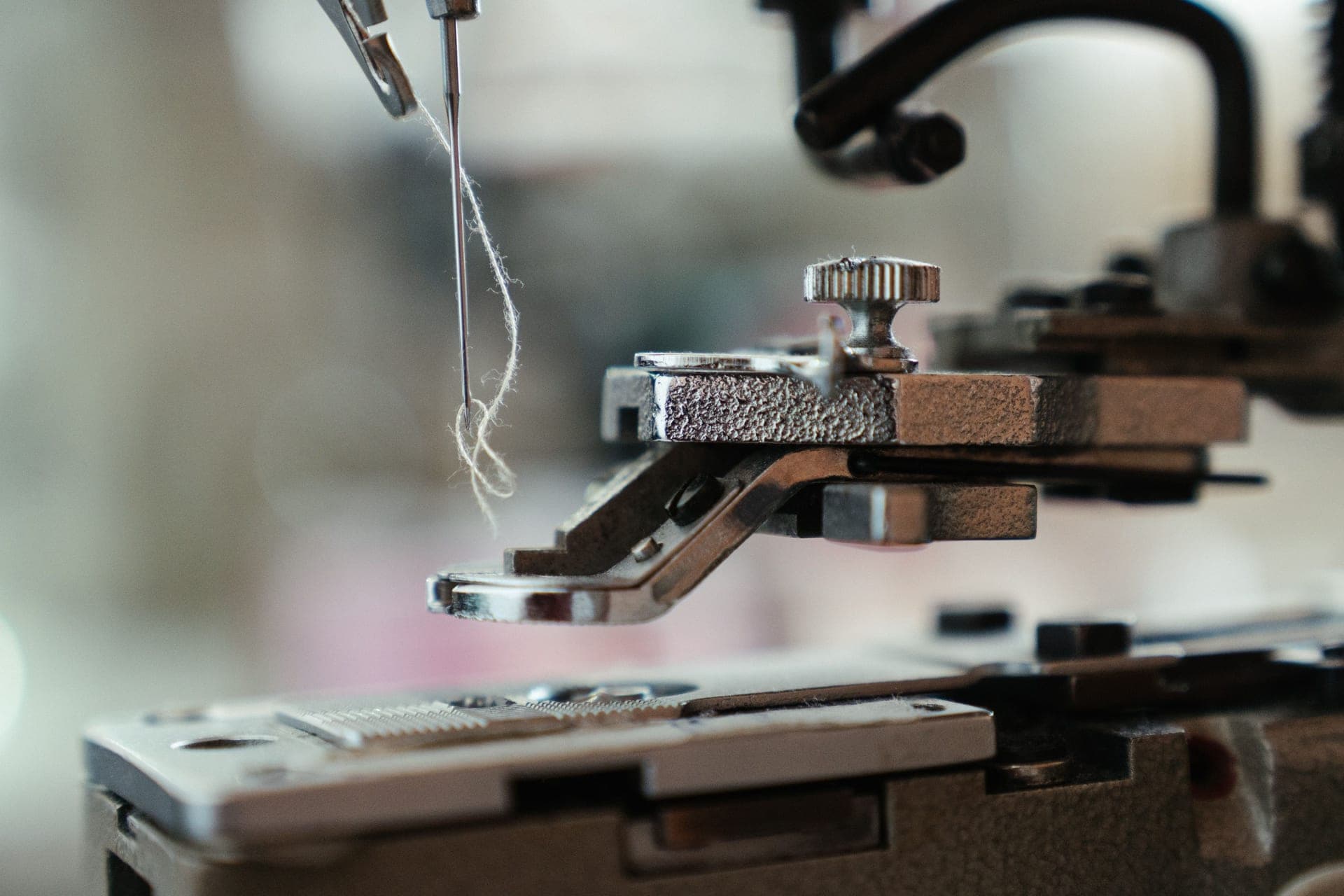
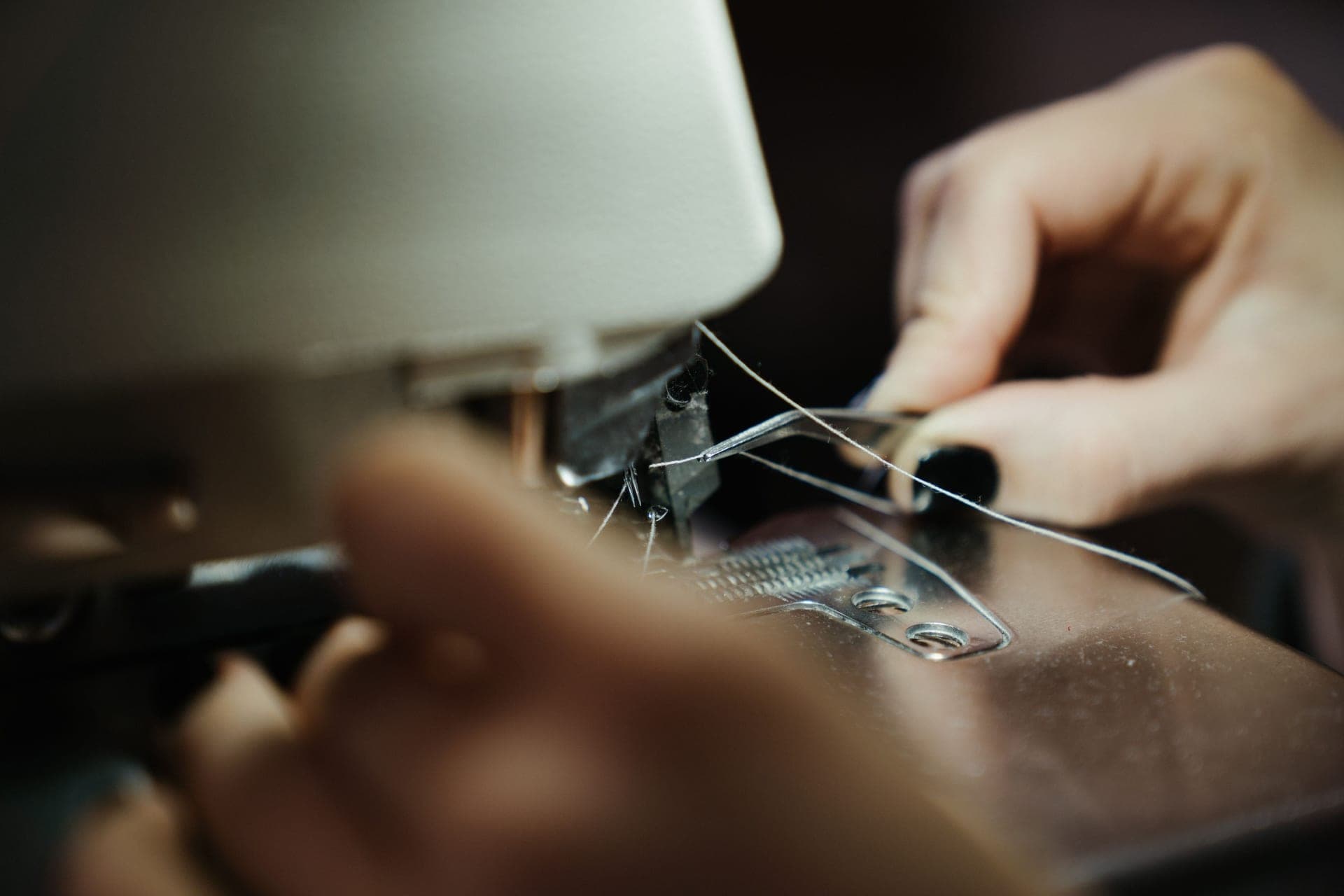
This is the specification this site would least willingly give up. You re-thread the needle every time you change color, break a thread or change a needle — many times an evening on a real project. Doing it by eye under a machine arm is where a great many people quietly stop sewing. It is also not something you can add later: a threader is built into the needle bar or it is not.
Dimension 2 — the bobbin. Brother wins at the entry level.
Every Brother machine on this site uses a drop-in bobbin, including the $99 LX3817. Janome's two entry machines and its cheapest heavy-duty machine all use a front-loading vertical oscillating hook. You have to reach the HD3000 at $559 before Janome gives you a top-loading full rotary hook.
A drop-in bobbin is a lid, a drop and a slot. A front-loading bobbin is a case you remove, load in a particular orientation, thread through a tension spring and re-seat until it clicks. Front-loading is not worse engineering — plenty of excellent machines use it — but it has more steps to get wrong, and getting it wrong produces the nest of loops under the fabric that beginners diagnose as a broken machine. Drop-in versus front-loading counts the steps each system asks of you.
Dimension 3 — the buttonhole. Brother wins on range.
Brother publishes seven styles of one-step auto-size buttonhole on the CS7000X, eight on the XR9550 and CS7205, and one one-step style on its mechanicals. Janome publishes a four-step buttonhole on three of its five machines, an unambiguous automatic one-step on the HD5000, and — on the HD3000 — a specification row that says four-step above a description that says one-step.
One-step versus four-step explains why this decides whether garment sewing is enjoyable. In short: one-step sizes the buttonhole to the button you drop into the foot and stops; four-step asks you to turn a dial through four positions judging each side by eye, and to match the next one.
Dimension 4 — the frame and foot pressure. Janome wins.
This is where the comparison flips, and it is a real flip. Janome publishes 'Aluminum body construction' as a specification row on the HD1000, HD3000 and HD5000. Brother publishes no frame material at all on any machine we cover.
Janome also publishes foot pressure adjustment on the HD3000 and an adjustable presser foot pressure dial on the HD5000. Brother publishes 'Adjustable Presser Foot Pressure: No' on the CS7000X, the XM2701 and the LX3817.
Presser foot pressure is the control that decides whether thick fabric feeds at all — it presses the layers down onto the feed dogs so they can grip. If repeated heavy seams are the reason you are buying a machine, Janome's heavy-duty line wins that dimension on published specification, and Brother's answer is a different one: 7-point box-feed feed dogs on the ST150HDH and a metal needle plate on the ST531HD, both without a pressure dial.
Dimension 5 — what the maker will tell you. Brother wins.
Brother publishes a 25-year limited warranty on most of its range, a maximum sewing speed in stitches per minute on every machine, a full carton contents list, a list price, a stock level and a life-cycle status that will tell you outright when a model is discontinued.
Janome publishes a specification table and an accessory list. No warranty terms. No maximum sewing speed. No stock figure. No frame material on the entry machines. On the HD5000 there is not even a list price — the page says 'Please see Dealer for pricing'. And three of its five pages contradict themselves: the HD3000 on its buttonhole, the HD5000 on its feed dog, and the brand's own 2019 announcement post on the HD3000's stitch count and speed.
None of that means the machines are worse. It means several comparisons simply cannot be made, and a buyer deciding between brands should know which questions Janome will not answer in writing.
Dimension 6 — the controls. Janome wins, unexpectedly.
Janome publishes a knee lift on a $199 machine. A knee lift raises the presser foot with your leg so both hands stay on the fabric while you pivot at a corner, and it is normally a feature of machines several hundred dollars further up. No Brother machine on this site publishes one at any price. Janome also publishes 15 needle positions, last stitch recall and an extra-high presser foot lift on its entry machines, none of which Brother lists on a mechanical.
The verdict
Buy Brother if this is a general first machine. The drop-in bobbin across the whole range, the automatic threader from $149.99 up, the one-step buttonholes, the presser foot counts, the published warranty and the published speed add up to a machine that is measurably easier to start on and better documented. The GX37 is the value pick and the CS7000X is the one we would actually buy.
Buy the Janome HD5000 if the frame is the point. Aluminum body construction, a presser foot pressure dial, a top-loading rotary hook, a 6.5 mm stitch and a one-step buttonhole, plus a dealer who will service it. That is a coherent machine for someone who sews heavy fabric and intends to keep it for twenty years. It costs roughly double a CS7000X and weighs 8 lb more, and both of those are the price of the aluminum.
Do not buy the Janome 2212 or Arctic Crystal as a first machine on specification alone. At $269 and $199 they ask a beginner to learn a front-loading bobbin, a four-step buttonhole and manual needle threading all at once — the same combination that makes the SINGER M1500 our skip in the beginner roundup, at a higher price. The full Janome roundup ranks all five.
Method
How we picked
- Put both sides' published manufacturer specifications side by side — Janome's own product pages against Brother USA's and SINGER's — with every Janome page read on 23 October 2026.
- Named what Janome does not publish, rather than leaving a blank. Janome publishes no maximum sewing speed and no warranty terms on any machine in its range, and no frame material on its entry models. Those gaps are part of the comparison.
- Reported both figures wherever a manufacturer's own page contradicts itself. Three Janome pages do.
- Resolved each dimension separately and said which side wins it, instead of averaging everything into a tie.
- Named a winner, and named the buyer the other option is right for.
- Priced live from Amazon. No number on this page is remembered.
We have not sewn on these machines. There is no test bench here, we do not own them, and we do not accept free product. Everything above is compiled from published manufacturer specifications and live retailer data — and we tell you which is which on every claim. Our full method.
Answers
Questions people ask
Is Janome or Brother better for beginners?
Which brand lasts longer, Janome or Brother?
Does Janome make a machine with a drop-in bobbin?
Why does Janome cost more than Brother?
Which is better for sewing denim, Janome or Brother?
Where this came from
Sources
- Janome — HD-5000 product page, specifications and standard accessories (checked 23 October 2026)
- Janome — HD-3000 product page, specifications and list price (checked 23 October 2026)
- Janome — HD-1000 product page, specifications and list price (checked 23 October 2026)
- Janome — 2212 product page, specifications and list price (checked 23 October 2026)
- Janome — Arctic Crystal product page, specifications and list price (checked 23 October 2026)
- Brother USA — CS7000X product page, specifications and list price (checked 23 October 2026)
- Brother USA — GX37 product page and specifications (checked 3 September 2026)
About the author
Scooter M.
An enthusiast who is genuinely into this. I read the manuals, compile the published specs, and do the arithmetic. No lab coat, no test bench, and no machines I am pretending to have used — which is exactly why every claim here carries a source.
Published by Slate Mill Group. Published October 23, 2026; last updated October 23, 2026. Editorial policy.
Keep reading
Read next
Best Janome
The best Janome sewing machines for beginners
Five Janome machines on one page with same-day list prices — the heavy-duty one to buy, and the two cheap ones to avoid.
Janome vs SINGER
Janome or Singer for a first sewing machine?
Both brands sell a metal-framed heavy-duty line. One of them publishes a warranty, a motor claim and a one-step buttonhole for half the money.
Brother vs Singer
Brother or Singer for a first sewing machine?
Bobbin type and needle threading settle it at the entry level — and Singer's own Heavy Duty machine is the exception.
Best Janome heavy-duty
Janome HD5000 review: the same machine as the HD3000, with the buttonhole answered
The HD3000's chassis and specification with an unambiguous one-step buttonhole and a presser foot pressure dial — and no list price published at all.
Best Brother
The best Brother sewing machines
Fourteen Brother machines on one page, ranked by the job you are buying for — with same-day list prices and the one to skip.