Stitch & Selvage earns a commission when you buy through the links on this page, at no extra cost to you. It does not change what we recommend, and we publish a skip-this verdict on products we could otherwise earn from. Full disclosure.
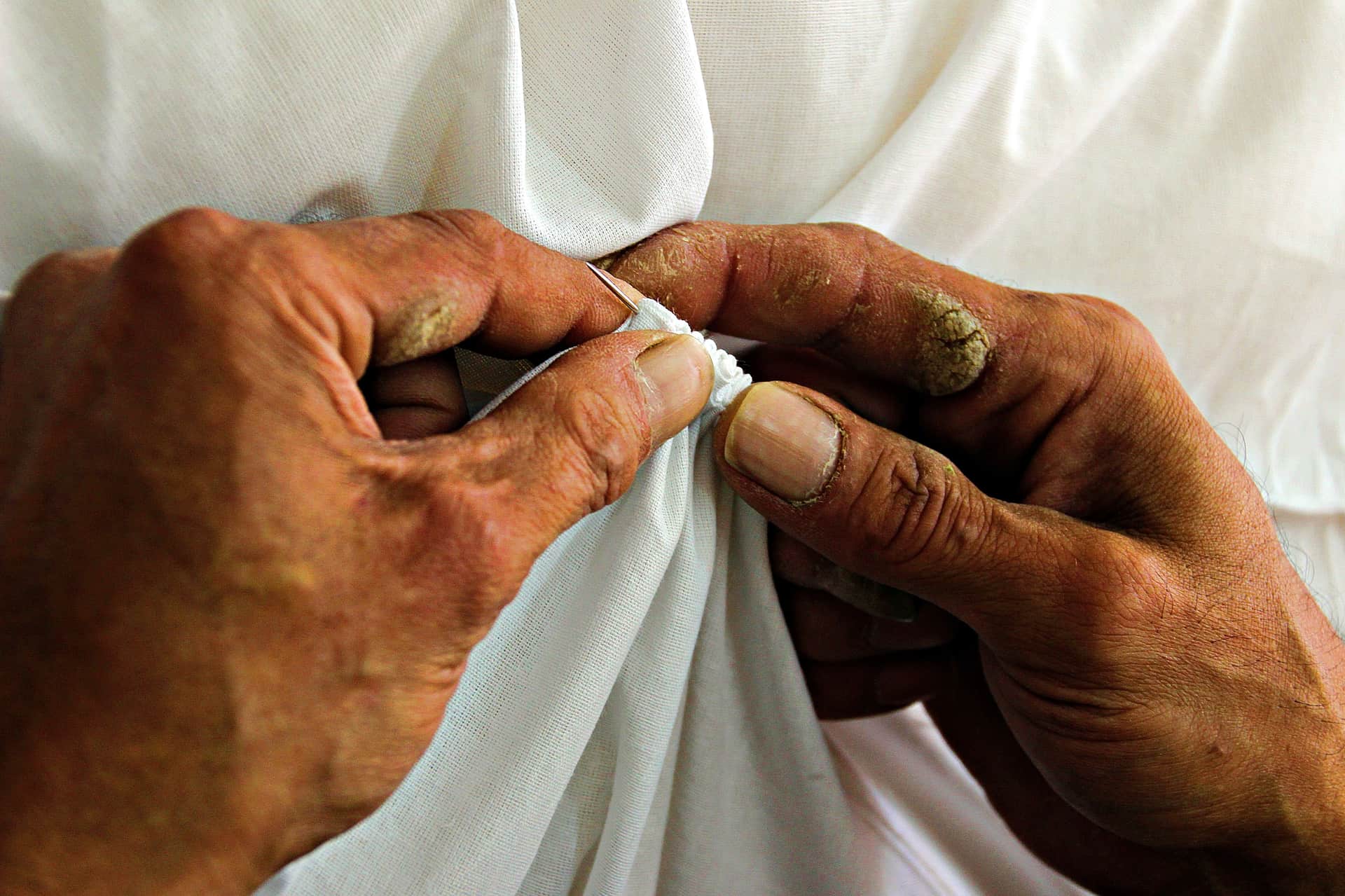
A machine forms a lockstitch: a top thread and a bobbin thread locked together inside the fabric, hundreds of times a minute, in a line. A hand needle carries one thread all the way through and back, slowly, anywhere you can reach. Hand sewing wins on small, hidden and awkward work. A machine wins the moment a seam gets long.
The ranking
Quick picks
Ranked against the published criteria below. Tap a row to jump to the full write-up; the price button goes straight to Amazon.
| # | Product | Best for | Score | Price |
|---|---|---|---|---|
| 1 | 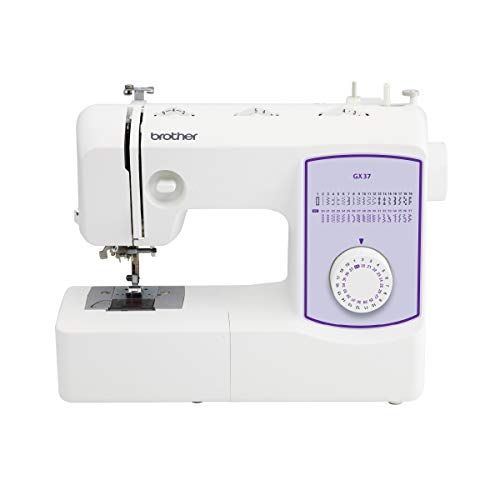 Brother GX37 Sewing Machine The cheapest machine that threads itself | 37 built-in stitches | 8.3/10 | $149.00 on Amazon #ad affiliate link · price as of October 17, 2026 |
| 2 | 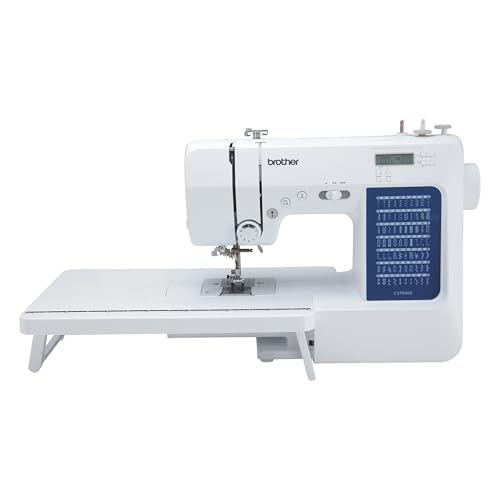 Brother CS7000X Computerized Sewing & Quilting Machine The first machine most beginners should buy | 70 built-in stitches | 9.2/10 | |
| 3 | No photo Brother LX3817 Sewing Machine Mending and hemming on the smallest budget | 17 built-in stitches | 6.3/10 | Check price on Amazon #ad affiliate link · no live price for this item |
| 4 | No photo The battery-powered mini 'kids' sewing machine Nothing we can recommend Our skip-this pick | Our skip-this pick | 2.9/10 | Check price on Amazon #ad affiliate link · no live price for this item |
The cheapest machine that threads itself
Brother GX37 Sewing Machine
An automatic needle threader, a one-step buttonhole and a drop-in bobbin at Brother's lower end, on a 10.14 lb machine that ships with its own dust cover — the three convenience features that decide a beginner's first month, without the price of a computerized model.
The GX37 is the machine that answers a narrow question very well: what is the cheapest Brother that still threads its own needle? Brother's specification lists the needle threading system as automatic and the buttonhole as an automatic one-step, on a machine it lists at $149.99. At the XM1010's $139.99 the threading system is manual, and that ten-dollar gap buys the feature we would protect first.
The rest of the specification is a competent mechanical machine and nothing surprising: 37 utility and decorative stitches selected on a dial, a jam-resistant quick-set drop-in top bobbin, a free arm for cuffs and sleeves, and an LED-lit work area. Brother lists six presser feet — zigzag, buttonhole, zipper, button sewing, blind stitch and narrow hemmer — which covers ordinary garment sewing and stops there.
Two things make it unusually well suited to a young or first-time sewer specifically. It weighs 10.14 lb, which is the lightest figure Brother publishes across the machines we cover, so it can be lifted onto a table and put away by someone small. And Brother includes a dust cover, which sounds trivial until you notice that the XM2701, the LX3817 and the SINGER M1500 all ship without one and a machine stored uncovered collects the lint that later causes tension problems.
What it does not have is a speed limiter. Brother publishes adjustable sewing speed control on the CS7000X and does not list it here, so on this machine the foot pedal is the only thing standing between a nervous beginner and full speed. That is manageable with a bit of practice on scrap and it is the one specification we would trade up for if the budget allowed.
We have not sewn on this machine. Every figure above is from Brother's own product page, read on 3 September 2026, and the price on the button is live from Amazon rather than remembered.
What works
- Automatic needle threading at the bottom of the range — the single feature we would least willingly give up, and one the similarly-priced XM1010 does not have
- A one-step buttonhole rather than a four-step one, which is the difference between placing a button and pressing, and turning a dial through four positions by eye
- Quick-set drop-in top bobbin, so loading it is a lid and a drop
- A dust cover is included — the Brother XM2701, LX3817 and SINGER M1500 all ship without one
- 10.14 lb, tied with the XR9550 as the lightest machine we cover
What does not
- Six presser feet, and none of them a walking foot or a quarter-inch foot
- Stitches are selected on a dial with no display, so the width and length you have actually set are not readable as numbers
- Brother does not publish an adjustable sewing speed control for it — the pedal is the only speed limiter
- 37 decorative stitches is more than a first year needs; you are choosing this machine for the threader, not the library
The kit it pairs with: Universal needles in 80/12 and 90/14, and more bobbins. The dust cover is already in the box, which is one line off the usual starter list.
The first machine most beginners should buy
Brother CS7000X Computerized Sewing & Quilting Machine
The only machine on this page that arrives with the two feet a beginner ends up buying anyway — a walking foot and a quarter-inch foot — plus an automatic needle threader and a drop-in bobbin, so the two jobs that make people quit are the two jobs it makes easy.
The CS7000X is the machine we point a first-time buyer at, and the reason has nothing to do with its stitch count. It is the presser feet. Brother lists ten of them in the box — zigzag, buttonhole, zipper, button sewing, overcasting, blind stitch, monogramming, quarter-inch, quilting and walking — plus a quilt guide. Two of those, the walking foot and the quarter-inch foot, are the exact accessories a beginner ends up ordering three months in, and they are not cheap bought separately.
The second reason is the threading. Brother's published specification lists an automatic needle threading system and a quick-set drop-in top bobbin. Threading the needle and setting the bobbin are the two jobs that make people put a machine back in its box, and this one turns both into a lever pull and a drop. On a front-loading machine you are removing a case, seating a bobbin in a particular orientation, and hoping.
It is a computerized machine, which means stitch selection is a mode key and a shift key against an LCD rather than a dial. That is a genuine trade-off, not a straight upgrade: a dial is legible at a glance and has nothing to fail, while an LCD tells you the stitch width and length the machine has actually selected. For someone learning, seeing the numbers is worth more than the simplicity of a dial.
The extras matter more than they sound. The detachable wide table turns a small free-arm machine into something you can push a quilt across, and the hard protective cover is the difference between a machine that stays out on a table and one that lives in a cupboard collecting dust. Brother also publishes a 25-year limited warranty and free phone and online technical support for the life of the product.
We have not sewn on this machine. Everything above is from Brother's own specification page, and the price on the button is live from Amazon rather than anything we typed. What we can tell you is what the box contains and what that saves you buying — which, for a first machine, is most of the decision.
What works
- Automatic needle threader and a drop-in bobbin — the two setup jobs that defeat most beginners
- Ten presser feet including the walking foot and a quilting foot, which the cheaper machines make you buy separately
- Detachable wide table and a hard cover are in the box, not extras
- Adjustable sewing speed control, so a first seam can be run slowly
- Brother publishes a 25-year limited warranty on it
What does not
- Seventy stitches is far more than a beginner will use; you are paying for decorative stitches you may never touch
- Computerized machines have more to go wrong electronically than a dial-and-lever mechanical
- At 10.5 lb it is light enough to walk across a table at speed unless it is on a firm surface
The kit it pairs with: It already includes the walking foot and quilting foot, so its starter kit is short: needles, bobbins, thread, shears and pins.
Mending and hemming on the smallest budget
Brother LX3817 Sewing Machine
The cheapest machine Brother lists here, and the one where the saving is visible: seventeen stitches, four presser feet, a four-step buttonhole and manual needle threading.
The LX3817 is where the budget line genuinely bites, and it is worth being specific about how. Brother's specification page lists the needle threading system as manual. On the XM2701, fifty dollars higher, it is automatic. That one line is, in our view, the difference between a machine a beginner keeps using and one that gets put away — threading a needle by eye under a machine arm, at the end of a long day, is where a lot of first attempts end.
The buttonhole is the second cut. This machine sews a four-step auto-size buttonhole, which means moving the dial through four positions in the right order for each buttonhole. The XM2701 and the CS7000X sew a one-step buttonhole: place the button, press, done. If you are shortening trousers and taking in seams you will never notice. If you are making a shirt you will notice on the first placket.
What survives the cost-cutting is more interesting than what does not. It keeps the jam-resistant quick-set drop-in top bobbin — Brother has not fitted a front-loading case to save money — and it has an independent bobbin winding motor, so winding does not drive the needle. It has a free arm and an LED-lit work area. At 10.36 lb it is lighter than the XM2701.
The honest use case: this is a mending and hemming machine. If what you actually want is to take up jeans, fix a seam, and run a curtain hem twice a year, seventeen stitches and four feet is not a compromise, it is the correct amount of machine. If you think you might make a garment, the next machine up buys back the two features you will miss.
We have not sewn on this machine. Every specification above is from Brother's own product page, and the price on the button is live.
What works
- Brother lists it at $99.00, the lowest entry point in this line-up
- Keeps the jam-resistant drop-in bobbin, which is the more important of the two convenience features
- Independent bobbin winding motor, so winding a bobbin does not fight the needle drive
- Free arm for hems, cuffs and sleeves — the jobs most people buy a first machine for
- 10.36 lb, the second-lightest machine here
What does not
- Manual needle threading. Brother's own specification says so, and it is the single feature we would not give up
- A four-step buttonhole rather than a one-step, so every buttonhole is four dial positions you have to get right
- Four presser feet, with no overcasting or blind stitch foot
- Seventeen stitches runs out quickly once you move past mending
The kit it pairs with: Add a needle threader tool, a blind stitch foot and an overcasting foot if you intend to sew garments rather than mend them.
Nothing we can recommend
The battery-powered mini 'kids' sewing machine
Sold as a child's first machine and priced like a toy, but it is the category most likely to convince a child that sewing does not work — usually within an hour of opening it.
Skip this one
The small battery-powered mini machines are marketed as exactly the middle ground this page is about — a gentle step between a needle and a real machine. They are not one. A needle always works; a machine that cannot reliably pull fabric through is worse than a needle, because it teaches a beginner that *they* cannot sew. If a full-size machine is genuinely out of budget, hand-sew the first project and buy the machine later.
Every roundup on this site names one pick we tell you not to buy. On this page it is a whole category, because the mini machine marketed as a child's first sewing machine is the most commonly bought wrong thing in it.
Start with what we cannot tell you about it, because that is the argument. There is no manufacturer product page to cite. Stitch count, motor rating, weight, bobbin class and warranty vary by seller and are frequently absent altogether. On every other product on this site we link the maker's own specification and the date we read it; here there is nothing to link, and a product nobody will publish a specification for is a product nobody is standing behind.
Compare that with what the same money buys. Brother lists the XM1010 at $139.99 and the GX37 at $149.99. Both publish a full specification, a jam-resistant quick-set drop-in bobbin, a free arm, an LED-lit work area, a foot controller and a limited warranty measured in decades. The GX37 adds an automatic needle threader and a one-step buttonhole.
The practical failure is feeding. A sewing machine moves fabric with feed dogs that have to press it firmly enough to grip, and a very light machine with a small motor struggles the moment the fabric is thicker than a single layer of quilting cotton. What a child experiences is the machine stitching on the spot, bunching thread underneath, and stopping. What they conclude is that they cannot sew.
If the honest constraint is money rather than storage, the better answer is not a smaller machine. It is a full-size machine at the bottom of a real manufacturer's range, or a hand-sewing project first — a felt pouch or a simple cushion teaches running stitch, backstitch and finishing, costs almost nothing, and does not jam.
What works
- Genuinely light and small, which is the one real argument for it
- Cheap enough to be an impulse purchase, which is also how it goes wrong
What does not
- No published specification from a named manufacturer, so there is nothing to verify and no warranty to rely on
- A straight stitch and little else — no buttonhole, often no reverse, so a seam cannot be locked at the ends
- Proprietary bobbins that are not a standard class, so replacements are tied to one seller
- Fabric feeding is the usual failure: light machines with weak feed cannot pull anything thicker than quilting cotton
- A child who fights a machine for an hour concludes they cannot sew, when what actually happened is the machine could not sew
The two stitches are not the same stitch
This is the part that usually gets skipped, and it explains everything below it. A sewing machine cannot pass a needle all the way through fabric and bring it back — the needle is clamped to a bar that only goes up and down. So it does something else entirely. It pushes a loop of top thread through the fabric, and a hook underneath catches that loop and carries it around a second thread coming off the bobbin. The two threads lock together in the middle of the fabric layers.
That is a lockstitch, and it is the reason every machine on this site has a bobbin at all. It is also why bobbin problems are the most common beginner failure — half the stitch lives down there. How a bobbin is wound and loaded covers the mechanism, and why the thread bunches underneath covers what it looks like when the lock does not happen.
A hand needle has no such constraint. It goes all the way through and comes back, carrying one continuous thread, and it can approach the fabric from any angle your hand can hold. A running stitch, a backstitch, a whipstitch and a slip stitch are all single-thread constructions. One mechanical difference, and every trade-off below falls out of it.
Where the needle genuinely wins
- Anything that will not go under the presser foot. A machine needs the fabric to lie flat beneath a foot, with clearance for the machine's arm. A button on a finished cuff, a seam inside a lined bag, a repair reached through a gap you are about to close — those are hand jobs, and no amount of money spent on a machine buys you out of them.
- Truly invisible finishing. A slip stitch worked by hand puts almost nothing on the outside of the garment. Most machines we cover do have a blind stitch setting and a blind stitch foot, and it is far faster — but it leaves a small visible bite at intervals. On a wool coat hem that is the difference people notice.
- Buttons, hooks, snaps and thread shanks. A machine sews a flat button with a button sewing foot, and every machine we cover includes one. It cannot make a thread shank so a button stands off a thick coat, and it cannot sew a hook and eye at all.
- Basting and fitting. Long loose tacking stitches to hold a garment together for a fitting, then pulled straight out. Threading a machine for that takes longer than the job.
- No setup, no socket, no noise. A needle needs a thread and a light. The lightest machine we cover is a published 10 lb, and it needs a table and a power outlet.
Where the machine wins, and it is not close
Speed is the headline and it is the least interesting part of the answer. SINGER publishes up to 1,100 stitches per minute on its Heavy Duty machines and Brother publishes 850 on the ST150HDH; nobody hand sews at those rates. But raw speed is not really the argument. Consistency is.
A machine's stitch length is set on a dial and then executed by feed dogs that advance the fabric by the same amount on every single stitch, under the same thread tension. Every stitch in the seam is identical. A hand-sewn seam is exactly as even as the person sewing it, and evenness by hand is a skill that takes real practice to acquire. On a topstitched hem that anyone can see, that difference shows immediately.
Then there is the work that is simply impractical by hand:
- Long straight seams. The side seams of a pair of curtains, or the rows on a quilt top. This is where all the hours are, and it is the entire case for owning a machine.
- Edge finishing. A zigzag or overcast stitch stops a raw edge fraying in the wash. By hand that is an overcast stitch worked along every inch of every seam allowance in the garment.
- Knit and stretch fabric. A seam in jersey has to stretch with the fabric or the thread snaps the first time it is pulled over a shoulder. Machines have stretch stitch settings for exactly this — sewing knit fabrics is a machine job almost by definition.
- Buttonholes. A hand-worked buttonhole is a genuine craft skill with a real learning curve. A machine with a one-step buttonhole sews one sized to the button you dropped into the foot, in a single pass — see one-step vs four-step for what varies between machines.
- Seams that take strain, by default. A hand backstitch is genuinely strong. The running stitch most beginners default to is not. A machine gives you the locked two-thread construction on every stitch without you having to know to choose it.
Side by side
Machine figures are manufacturer-published specifications from Brother USA and SINGER product pages. Everything else describes the two methods — none of it is a test result, because we have not run one.
So when does a machine start paying for itself?
The honest test is not your skill level. It is seam length multiplied by repetition.
If what you actually do is sew a button back on twice a year, take up one pair of trousers and close a split seam when something tears, then a packet of hand needles, a reel of thread and a decent pair of fabric scissors will do all of it. That is not a compromise or a stopgap — for that workload it is the correct tool, and buying a machine for it is buying an object that lives in a cupboard.
What changes the answer is a project with length in it, or one you want to make twice. A tote bag, a cushion cover, a simple skirt — our first projects guide is built around exactly these — each contain more straight seam than anyone wants to backstitch by hand. The second one you make is usually where the machine has already repaid the evening you spent learning it.
The other trigger is fabric. If you want to sew jersey, sweatshirting or anything with stretch in it, hand sewing fights you the whole way, because the seam has to give with the fabric and a plain hand seam does not.
What it costs to find out
Both sides have a real number attached, and the useful thing about the hand-sewing side is that none of it is wasted. Hand needles, thread, pins, a tape measure and fabric scissors sit on the list you need anyway the day a machine arrives. Starting with a needle is not money spent on the wrong path; it is the first few lines of the same shopping list. What you actually need to start sewing separates those must-haves from the things merely sold as must-haves.
On the machine side, the sticker is not the number. Brother's own list prices on 9 September 2026 were $99 for the [LX3817](/reviews/brother-lx3817), $149.99 for the [GX37](/reviews/brother-gx37) and $279.99 for the [CS7000X](/reviews/brother-cs7000x) — but a machine arrives needing bobbins, needles in the right sizes and thread before it sews anything at all. What it actually costs to start sewing runs that arithmetic across three budgets rather than quoting the machine alone.
The verdict
Learn both, and buy the machine second. Hand sewing is not the beginner version of machine sewing — it is a different set of operations you will keep using for as long as you sew. The buttons, the hems you want to be invisible, the repair inside a finished bag: all of that stays hand work permanently, on every machine ever made.
Buy a machine when your projects have length in them. If you can name a thing you want to *make* rather than fix, that is the signal. The cheapest machine we would put in front of anyone is the Brother GX37, because it is the least expensive one that threads its own needle and sews a one-step buttonhole. If you already know you will keep going, the CS7000X includes the walking foot and quarter-inch foot you would otherwise buy separately later, and the under-$200 roundup covers what the money buys at the bottom of the range.
Do not buy a machine in order to avoid learning to hand sew. Threading a needle, tying off a thread and working a straight backstitch take one afternoon, and you need every one of those skills to operate a machine anyway — including the one nobody warns you about, which is unpicking a seam you got wrong.
Method
How we picked
- Compared the two mechanisms rather than the two reputations — what a lockstitch physically is, what a hand stitch physically is, and what each one therefore cannot do.
- Took every machine figure on this page from manufacturer-published specifications on Brother USA and SINGER product pages, and quoted no number for hand sewing that we could not stand behind.
- Verified availability before recommending. Each machine picked here was confirmed orderable on the manufacturer's own store on 9 September 2026.
- Named the buyer each side is right for rather than declaring an overall winner, because for a real share of readers the correct answer to 'which machine' is 'none yet'.
- Priced live from Amazon. The list prices quoted above are the manufacturer's own, dated, and not what a retailer necessarily charges today.
We have not sewn on these machines. There is no test bench here, we do not own them, and we do not accept free product. Everything above is compiled from published manufacturer specifications and live retailer data — and we tell you which is which on every claim. Our full method.
Answers
Questions people ask
Do I need a sewing machine to start sewing?
Is hand sewing stronger than machine sewing?
What can a sewing machine not do?
Is hand sewing much slower than a machine?
What should a complete beginner learn first?
Is a mini sewing machine a good middle ground?
Where this came from
Sources
- Brother USA — CS7000X product page, specifications, list price and stock status (checked 9 September 2026)
- Brother USA — GX37 product page, specifications, list price and stock status (checked 9 September 2026)
- Brother USA — LX3817 product page, specifications, list price and stock status (checked 9 September 2026)
- Brother USA — ST150HDH product page, for the 850 stitches-per-minute figure (checked 9 September 2026)
- SINGER — Heavy Duty 4452 product page, for the 1,100 stitches-per-minute figure (checked 7 September 2026)
About the author
Scooter M.
An enthusiast who is genuinely into this. I read the manuals, compile the published specs, and do the arithmetic. No lab coat, no test bench, and no machines I am pretending to have used — which is exactly why every claim here carries a source.
Published by Slate Mill Group. Published September 9, 2026; last updated September 9, 2026. Editorial policy.
Keep reading
Read next
The checklist
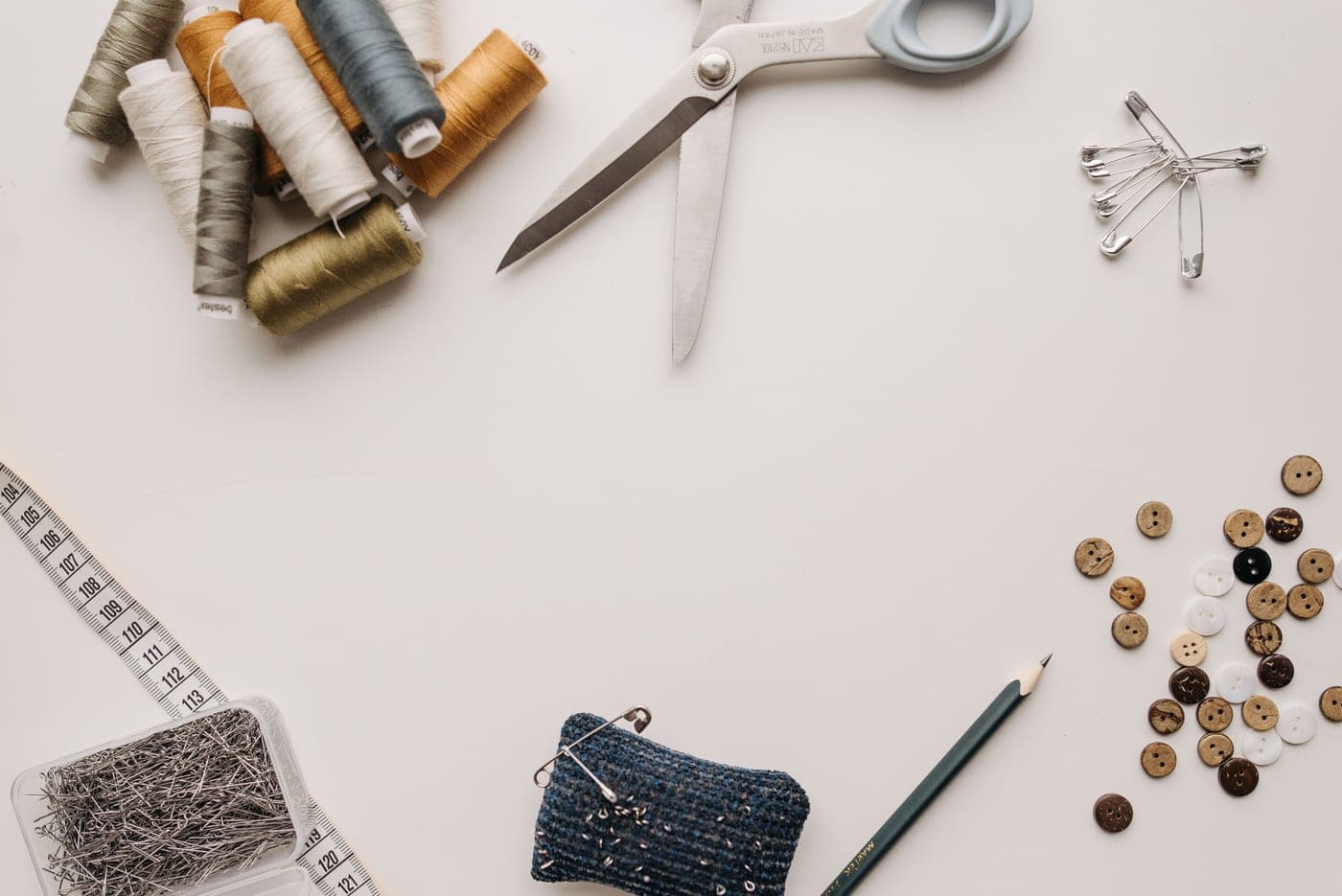
What you actually need to start sewing
Must-have, can-wait and skip — with the items your machine already includes removed from the list.
The cost guide
What it actually costs to start sewing
The signature guide: machine plus kit equals total, at three budgets, with your carton contents subtracted first.
First projects
Four first sewing projects worth making
Four rectangle projects in order, each teaching one skill — and none of them needs a pattern.
Best entry tier
The best sewing machines under $200
The entry tier, ranked on what the band structurally buys — and the one machine to think twice about.