Stitch & Selvage earns a commission when you buy through the links on this page, at no extra cost to you. It does not change what we recommend, and we publish a skip-this verdict on products we could otherwise earn from. Full disclosure.
For alterations, prioritize a free arm, a blind hem foot, one-step buttonholes and the ability to climb a thick seam — not stitch count. The Brother CS5055 covers the first three at the lowest list price of anything we cover with seven buttonhole styles. For jeans and coat work where the seams are genuinely thick, a SINGER Heavy Duty and its pressure dial matter more.
Why alterations rank differently
A beginner roundup ranks on how gentle a machine is to learn. An alterations list has to rank on something else, because the work is a different shape. Alteration jobs are short, tubular, already-constructed and frequently thick — you are sewing a finished garment rather than flat pieces, and you cannot lay a trouser leg out flat to do it.
- A free arm is not optional. Slide the storage compartment off and the machine's arm becomes narrow enough to thread a trouser leg or a sleeve cuff over. Without it you cannot hem a finished tube at all. Every machine on this page has one — but check, because it is the specification to verify first on anything you are considering.
- A blind hem foot and a blind stitch. The machine takes several straight stitches then one bite to the left that catches a single thread of the outer fabric. It is how a hem stays invisible from the right side, and it is dramatically faster than hand slip-stitching a pair of trousers.
- One-step buttonholes, ideally several styles. Replacing or adding a button means matching an existing buttonhole. A four-step buttonhole you steer by eye makes matching an existing one much harder.
- A zipper foot, because replacing a zip is one of the most requested alterations there is.
- Thick-seam feeding, which is what actually separates machines here — see below.
How we judged these
Method
How we picked
- Compiled the full published specification for every machine from the manufacturer's own product page — Brother USA and SINGER — on 1 September 2026. Every stitch count, presser foot list, weight, warranty and carton content on this page is cited to one of those pages at the foot of the article.
- Scored against the formula published on how we pick: first-setup ease 30%, stitch range relative to beginner use 15%, presser feet included 15%, warranty 10%, portability 10%, price-to-spec ratio 20%.
- Excluded any machine we could not verify was currently purchasable with a published manufacturer specification. A pick whose buy button cannot exist is not a pick.
- Pulled every price live from Amazon at page load. Where no live figure is available the button reads 'Check price' — we never print a remembered number.
- Named one machine to skip, and said why. We could earn from it either way.
We have not sewn on these machines. There is no test bench here, we do not own them, and we do not accept free product. Everything above is compiled from published manufacturer specifications and live retailer data — and we tell you which is which on every claim. Our full method.
The ranking
Quick picks
Ranked against the published criteria below. Tap a row to jump to the full write-up; the price button goes straight to Amazon.
| # | Product | Best for | Score | Price |
|---|---|---|---|---|
| 1 |  Brother CS5055 Computerized Sewing Machine The most stitches per dollar of any machine here | 60 built-in stitches, 7 buttonhole styles | 8.5/10 | |
| 2 |  Brother XR9550 Computerized Sewing & Quilting Machine Beginners who already know they want to make clothes | 165 built-in stitches | 8.9/10 | $269.99 on Amazon #ad affiliate link · price as of October 16, 2026 |
| 3 | No photo SINGER Heavy Duty 4452 Sewing Machine The best-equipped denim machine | 32 built-in stitches, 1,100 stitches per minute | 8.0/10 | Check price on Amazon #ad affiliate link · no live price for this item |
| 4 | 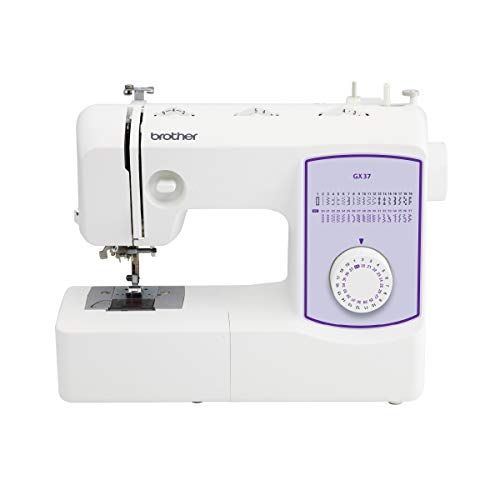 Brother GX37 Sewing Machine The cheapest machine that threads itself | 37 built-in stitches | 8.3/10 | $149.00 on Amazon #ad affiliate link · price as of October 16, 2026 |
| 5 | No photo The battery-powered mini 'kids' sewing machine Nothing we can recommend Our skip-this pick | Our skip-this pick | 2.9/10 | Check price on Amazon #ad affiliate link · no live price for this item |
The most stitches per dollar of any machine here
Brother CS5055 Computerized Sewing Machine
Sixty stitches, seven one-step buttonhole styles and an automatic needle threader on a 10.5 lb computerized machine — the cheapest route to the features that actually make garment sewing pleasant.
The CS5055 is the machine we would point at if someone said 'I want a computerized machine and I do not want to spend CS7000X money.' Brother lists 60 built-in stitches including seven styles of one-step auto-size buttonhole, an automatic needle threading system, a quick-set drop-in bobbin, an LCD with computerized stitch selection, a free arm and an LED-lit work area, on a machine that weighs a published 10.5 lb.
Seven buttonhole styles is the specification worth stopping on. A buttonhole style is not decoration — a keyhole buttonhole is for a thick shanked coat button, a rounded one for fine blouse fabric, a stretch construction for knits, a plain bar-tacked rectangle for shirts. Most machines at this price have one style or, on the mechanical models, a four-step buttonhole you steer by eye. Seven is what the XR9550 has eight of at a considerably higher list price.
Sixty stitches is more than anyone needs and that is fine — you will use four. The reason the number matters here is what comes with it: computerized selection means the stitch width and length are numbers on a screen rather than dial positions you have to remember, which is the practical difference between a mechanical and a computerized machine. We cover that trade in full here.
What Brother leaves out is the accessory package. Seven feet — zigzag, buttonhole, zipper, button sewing, overcasting, blind stitch and monogramming — and no walking foot, no quarter-inch foot, no wide table and no hard cover. Those four items are most of what separates this machine from the CS7000X, and if you intend to quilt they are exactly the four you would want. What a walking foot does explains why it is the one worth buying first.
Two other absences are worth naming because they are easy to assume: Brother lists adjustable presser foot pressure as 'No', so this is not a denim machine, and there is no automatic thread cutter, needle position key or start/stop button. The top speed is 750 stitches per minute, the slowest figure we have on file — gentle for learning, slow if you are sewing curtains.
We have not sewn on this machine. Every specification above was read off Brother's own product page on 13 September 2026, where the machine was listed in stock at $169.99.
What works
- Seven one-step auto-size buttonhole styles — more than the CS7000X's seven-at-a-higher-price and vastly more than any mechanical machine here
- 60 built-in stitches with computerized selection on an LCD, so the stitch you set is a number you can read and repeat
- Automatic needle threading and a quick-set drop-in bobbin: the two specifications that most reduce early frustration
- 10.5 lb, so it can live on a shelf and come down for an hour
- A 7 mm maximum stitch width, wider than the 6 mm the SINGER Heavy Duty machines publish
- 25-year limited warranty, the same term Brother publishes on the CS7000X
What does not
- No walking foot and no quarter-inch foot in the seven — if you intend to quilt, those are two accessories you will buy
- No wide table and no hard cover, both of which the CS7000X includes
- Adjustable presser foot pressure: No, so thick multi-layer seams are not this machine's job
- 750 stitches per minute is the slowest top speed we have on file — fine for learning, limiting for long production seams
- No automatic thread cutter, no needle up/down key and no start/stop button, all of which appear higher up Brother's range
The kit it pairs with: A walking foot and a quarter-inch foot if quilting is on the list, plus universal needles in 80/12 and 90/14 and extra bobbins.
Beginners who already know they want to make clothes
Brother XR9550 Computerized Sewing & Quilting Machine
The stitch library and the buttonhole range are the point here: 165 stitches, eight one-step buttonhole styles and 55 alphanumeric characters, on the lightest machine in this line-up.
The XR9550 and the CS7000X sit at almost the same list price on Brother's own site — $269.99 against $279.99 — and they are not the same machine. The XR9550 spends its budget on the stitch library and the electronics; the CS7000X spends it on presser feet. Which is right for you comes down to one question: are you making clothes, or are you quilting?
For clothes, the XR9550 wins on buttonholes. Brother lists eight one-step auto-size buttonhole styles, against seven on the CS7000X and one on the XM2701. Buttonhole style matters more than it sounds — a keyhole buttonhole for a jacket, a rounded one for a blouse, a bar-tacked one for heavy cotton. It also carries an upper thread sensor, which stops you sewing eighteen inches of nothing before you notice the spool ran out, and a needle position key, which lets you shift the needle to sew an accurate narrow seam without owning a quarter-inch foot.
For quilting, the CS7000X wins, and it wins on one part: the walking foot. The XR9550 includes a spring-action quilting foot, which is a free-motion foot — it hops, and you move the fabric yourself. A walking foot is a different thing entirely: it feeds the top layer at the same rate as the feed dogs move the bottom layer, which is what stops a quilt sandwich shifting. The XR9550 does not include one.
The eight feet it does include cover garment work properly — an overcasting foot for finishing raw edges, a blind hem foot for invisible hems, a monogramming foot. Brother also puts a wide table and a hard case in the box, and at 10.14 lb it is the lightest machine on this site.
We have not sewn on this machine. The specifications are Brother's, and the price on the button is live from Amazon rather than remembered.
What works
- Eight one-step buttonhole styles — the widest buttonhole range of any machine here, and buttonholes are what garment sewing turns on
- An upper thread sensor: the machine tells you the top thread has broken instead of letting you sew an empty seam
- A needle position key, which is how you sew an accurate quarter-inch seam without a quarter-inch foot
- Wide table and hard case both included
- 10.14 lb, the lightest machine in this line-up
What does not
- No walking foot in the box, which the CS7000X does include for a similar list price
- 165 stitches is a menu to scroll, and a beginner will use perhaps eight of them
- 55 alphanumeric characters is a monogramming feature most first-time buyers will never open
- A backlit LCD and a thread sensor are more electronics to fail than a mechanical machine has
The kit it pairs with: Add a walking foot if you intend to quilt; the spring-action quilting foot in the box is for free-motion work, not for feeding batting evenly.
The best-equipped denim machine
SINGER Heavy Duty 4452 Sewing Machine
The same heavy-duty platform as the 4423 with nine more stitches and, more usefully, a walking foot, a non-stick foot and a clearance plate already in the box — the three accessories thick-fabric sewing actually needs.
The 4452 sits on the same platform as the Heavy Duty 4423 — metal interior frame, stainless steel bed plate, a motor Singer states is 60% stronger than standard, 1,100 stitches per minute, adjustable presser foot pressure, drop feed, three needle positions and a 6.25 inch sewing space. On the machine itself the differences are modest: 32 built-in stitches against 23.
The reason it earns its own entry is the box. Singer lists an even feed / walking foot, a non-stick foot, a clearance plate and heavy duty needles as included accessories, and those four items are precisely the kit that thick-fabric sewing demands.
The clearance plate deserves the most attention because it is the least understood. When a hem crosses a flat-felled jeans side seam the fabric goes from four layers to eight in the space of a stitch, the presser foot tips up at the front, and the feed dogs lose the fabric. A clearance plate is a small wedge you slip under the back of the foot so it sits level as it climbs. It is the tool we describe as a hump jumper in our guide to hemming pants, and having one in the box means the single most common thick-fabric failure has an answer on day one.
The walking foot is the other genuinely valuable inclusion. It adds a second set of feed dogs above the fabric so the top layer advances in time with the bottom, which is what stops layers shifting — the full explanation is here. Buying one separately is the most expensive common presser foot purchase, so its presence changes the real cost of the machine rather than just the specification sheet.
The cautions are the same as its stablemate. It weighs 14.6 lb and is meant to stay put. It runs to 1,100 stitches per minute with no speed limiter published, which is a lot of machine under a nervous foot. And the $120 accessory value is Singer's own claim — we quote it as the manufacturer's figure, not as an independently verified one.
We have not sewn on this machine. Every specification above is published by Singer on its own product page, read on 6 September 2026.
What works
- A walking foot is in the box — Singer describes it as evenly feeding multiple layers, eliminating slipping and puckering. On most machines this is the first expensive accessory you buy
- A clearance plate is included — the wedge that levels the presser foot as it climbs a thick seam, which is exactly what stalls a machine at a jeans side seam
- A non-stick foot for leather, vinyl and coated fabric, which grip an ordinary foot and refuse to feed
- Heavy duty needles included, so the machine can sew denim on day one without a second order
- Adjustable presser foot pressure, a metal interior frame and a stainless steel bed plate — the controls that actually make thick layers feed
- Nine more stitches than the 4423 and a lower list price at the time of writing
What does not
- 14.6 lb — a machine that stays on the table, and the heaviest class we cover alongside the 4423
- 1,100 stitches per minute with no speed limiter published; the pedal has a narrow usable band for a beginner
- Thirty-two stitches is a modest library next to the Brother computerized machines
- A dial and no display, so the stitch width and length you have set are not readable as numbers
- Singer's published accessory value of $120 is the manufacturer's own claim, not a figure we can independently verify
The kit it pairs with: Denim needles in 100/16 beyond the included pack, and heavier all-purpose thread for topstitching. The walking foot and clearance plate are already there.
The cheapest machine that threads itself
Brother GX37 Sewing Machine
An automatic needle threader, a one-step buttonhole and a drop-in bobbin at Brother's lower end, on a 10.14 lb machine that ships with its own dust cover — the three convenience features that decide a beginner's first month, without the price of a computerized model.
The GX37 is the machine that answers a narrow question very well: what is the cheapest Brother that still threads its own needle? Brother's specification lists the needle threading system as automatic and the buttonhole as an automatic one-step, on a machine it lists at $149.99. At the XM1010's $139.99 the threading system is manual, and that ten-dollar gap buys the feature we would protect first.
The rest of the specification is a competent mechanical machine and nothing surprising: 37 utility and decorative stitches selected on a dial, a jam-resistant quick-set drop-in top bobbin, a free arm for cuffs and sleeves, and an LED-lit work area. Brother lists six presser feet — zigzag, buttonhole, zipper, button sewing, blind stitch and narrow hemmer — which covers ordinary garment sewing and stops there.
Two things make it unusually well suited to a young or first-time sewer specifically. It weighs 10.14 lb, which is the lightest figure Brother publishes across the machines we cover, so it can be lifted onto a table and put away by someone small. And Brother includes a dust cover, which sounds trivial until you notice that the XM2701, the LX3817 and the SINGER M1500 all ship without one and a machine stored uncovered collects the lint that later causes tension problems.
What it does not have is a speed limiter. Brother publishes adjustable sewing speed control on the CS7000X and does not list it here, so on this machine the foot pedal is the only thing standing between a nervous beginner and full speed. That is manageable with a bit of practice on scrap and it is the one specification we would trade up for if the budget allowed.
We have not sewn on this machine. Every figure above is from Brother's own product page, read on 3 September 2026, and the price on the button is live from Amazon rather than remembered.
What works
- Automatic needle threading at the bottom of the range — the single feature we would least willingly give up, and one the similarly-priced XM1010 does not have
- A one-step buttonhole rather than a four-step one, which is the difference between placing a button and pressing, and turning a dial through four positions by eye
- Quick-set drop-in top bobbin, so loading it is a lid and a drop
- A dust cover is included — the Brother XM2701, LX3817 and SINGER M1500 all ship without one
- 10.14 lb, tied with the XR9550 as the lightest machine we cover
What does not
- Six presser feet, and none of them a walking foot or a quarter-inch foot
- Stitches are selected on a dial with no display, so the width and length you have actually set are not readable as numbers
- Brother does not publish an adjustable sewing speed control for it — the pedal is the only speed limiter
- 37 decorative stitches is more than a first year needs; you are choosing this machine for the threader, not the library
The kit it pairs with: Universal needles in 80/12 and 90/14, and more bobbins. The dust cover is already in the box, which is one line off the usual starter list.
Nothing we can recommend
The battery-powered mini 'kids' sewing machine
Sold as a child's first machine and priced like a toy, but it is the category most likely to convince a child that sewing does not work — usually within an hour of opening it.
Skip this one
Alterations look like the ideal use for a tiny machine — short seams, quick jobs, no need for a big table — and that reasoning is exactly the trap. Alteration work is disproportionately thick: waistband seams, jeans hems, coat cuffs, doubled-over facings. A light machine with weak feed cannot pull those through, which is the one failure that makes the whole purchase pointless. The job that looks smallest is the one that needs the most feed.
Every roundup on this site names one pick we tell you not to buy. On this page it is a whole category, because the mini machine marketed as a child's first sewing machine is the most commonly bought wrong thing in it.
Start with what we cannot tell you about it, because that is the argument. There is no manufacturer product page to cite. Stitch count, motor rating, weight, bobbin class and warranty vary by seller and are frequently absent altogether. On every other product on this site we link the maker's own specification and the date we read it; here there is nothing to link, and a product nobody will publish a specification for is a product nobody is standing behind.
Compare that with what the same money buys. Brother lists the XM1010 at $139.99 and the GX37 at $149.99. Both publish a full specification, a jam-resistant quick-set drop-in bobbin, a free arm, an LED-lit work area, a foot controller and a limited warranty measured in decades. The GX37 adds an automatic needle threader and a one-step buttonhole.
The practical failure is feeding. A sewing machine moves fabric with feed dogs that have to press it firmly enough to grip, and a very light machine with a small motor struggles the moment the fabric is thicker than a single layer of quilting cotton. What a child experiences is the machine stitching on the spot, bunching thread underneath, and stopping. What they conclude is that they cannot sew.
If the honest constraint is money rather than storage, the better answer is not a smaller machine. It is a full-size machine at the bottom of a real manufacturer's range, or a hand-sewing project first — a felt pouch or a simple cushion teaches running stitch, backstitch and finishing, costs almost nothing, and does not jam.
What works
- Genuinely light and small, which is the one real argument for it
- Cheap enough to be an impulse purchase, which is also how it goes wrong
What does not
- No published specification from a named manufacturer, so there is nothing to verify and no warranty to rely on
- A straight stitch and little else — no buttonhole, often no reverse, so a seam cannot be locked at the ends
- Proprietary bobbins that are not a standard class, so replacements are tied to one seller
- Fabric feeding is the usual failure: light machines with weak feed cannot pull anything thicker than quilting cotton
- A child who fights a machine for an hour concludes they cannot sew, when what actually happened is the machine could not sew
The thick-seam problem, and the split in this list
This is where an alterations list divides in two, and which half you belong in depends on what people bring you.
Hemming a pair of suit trousers, taking in a dress, shortening sleeves on a blouse — that is ordinary fabric and any machine on this page handles it comfortably. The CS5055 is the value pick for exactly this work: a free arm, seven one-step buttonhole styles, a blind stitch foot, a zipper foot, an automatic threader and a drop-in bobbin at Brother's lowest computerized list price.
Hemming jeans, shortening a coat, or anything that crosses a flat-felled seam is a different job. At that seam the fabric goes from four layers to eight in the space of one stitch. The presser foot tips nose-down off the back of the step, the feed dogs lose contact and the machine stitches on the spot. Brother lists 'Adjustable Presser Foot Pressure: No' on every Brother machine we cover; Singer publishes an adjustable pressure dial on every Heavy Duty. If jeans hems are a regular part of the work, that dial is the specification to buy — and the denim roundup goes into the mechanism properly.
There is also a two-dollar answer to the same problem worth knowing before you spend two hundred: a clearance plate, also sold as a hump jumper — a small stepped wedge you slip under the back of the presser foot so it sits level as it climbs. Our guide to hemming pants walks through using one.
The needle matters more than usual
Alteration work throws a wider range of fabric at one machine than any other kind of sewing, often in a single afternoon, and the needle has to change with it. This is the single most common reason an alteration job goes wrong on a machine that is perfectly capable.
- Jersey, T-shirts, anything that stretches — a ball point needle. A universal needle cuts the knit loops and the seam ladders.
- Jeans, canvas, coat weight — a denim needle in 100/16. A universal needle deflects in thick layers, misses the bobbin hook and skips or snaps.
- Fine blouse fabric, lining, silk — a microtex sharp. A universal point skates across a dense weave and wanders off a straight line.
- Everything else — a universal in 80/12 or 90/14.
Needle types explained covers the full set. Keep the four above in the drawer and swap between them; it costs very little and it removes most of the frustration in this kind of work.
What you do not need
A large stitch library. Alterations use straight stitch, zigzag, a stretch stitch, blind hem and buttonhole. Every machine here has all five, whether it publishes 37 stitches or 165.
A wide table. Those exist so a quilt has somewhere to rest. Alteration work is small and tubular, and a wide table gets in the way of a free arm more often than it helps.
An embroidery function. Different machine, different job — we cover why here.
Answers
Questions people ask
What is the best sewing machine for alterations?
Do I need a free arm for alterations?
Why does my machine jam when hemming jeans?
Can a mini sewing machine do alterations?
What needle should I use for alterations?
Do I need a blind hem foot?
Where this came from
Sources
- Brother USA — CS5055 product page, free arm, buttonhole styles and included feet (checked 13 September 2026)
- Brother USA — XR9550 product page, 8 buttonhole styles and included feet (checked 1 September 2026)
- SINGER — Heavy Duty 4452 product page, adjustable presser foot pressure and clearance plate (checked 13 September 2026)
- SCHMETZ — Sewing Machine Needle Primer, needle types by fabric (checked 1 September 2026)
About the author
Scooter M.
An enthusiast who is genuinely into this. I read the manuals, compile the published specs, and do the arithmetic. No lab coat, no test bench, and no machines I am pretending to have used — which is exactly why every claim here carries a source.
Published by Slate Mill Group. Published September 13, 2026; last updated September 13, 2026. Editorial policy.
Keep reading
Read next
Hemming
How to hem pants
The ordinary trouser hem, the jeans version, and the needle that stops you snapping one at the side seam.
Most stitches per dollar
Brother CS5055 review: the cheapest computerized machine that sews a proper buttonhole
60 stitches, seven one-step buttonhole styles and an automatic threader — the cheapest computerized machine we cover.
Needles
Sewing machine needles explained
What the two numbers mean, which needle each fabric wants, and the eight-hour rule for changing them.
Best for denim
The best sewing machines for denim
Ranked on presser foot pressure, feed dog design and frame material - the three things that actually move thick fabric.