Stitch & Selvage earns a commission when you buy through the links on this page, at no extra cost to you. It does not change what we recommend, and we publish a skip-this verdict on products we could otherwise earn from. Full disclosure.
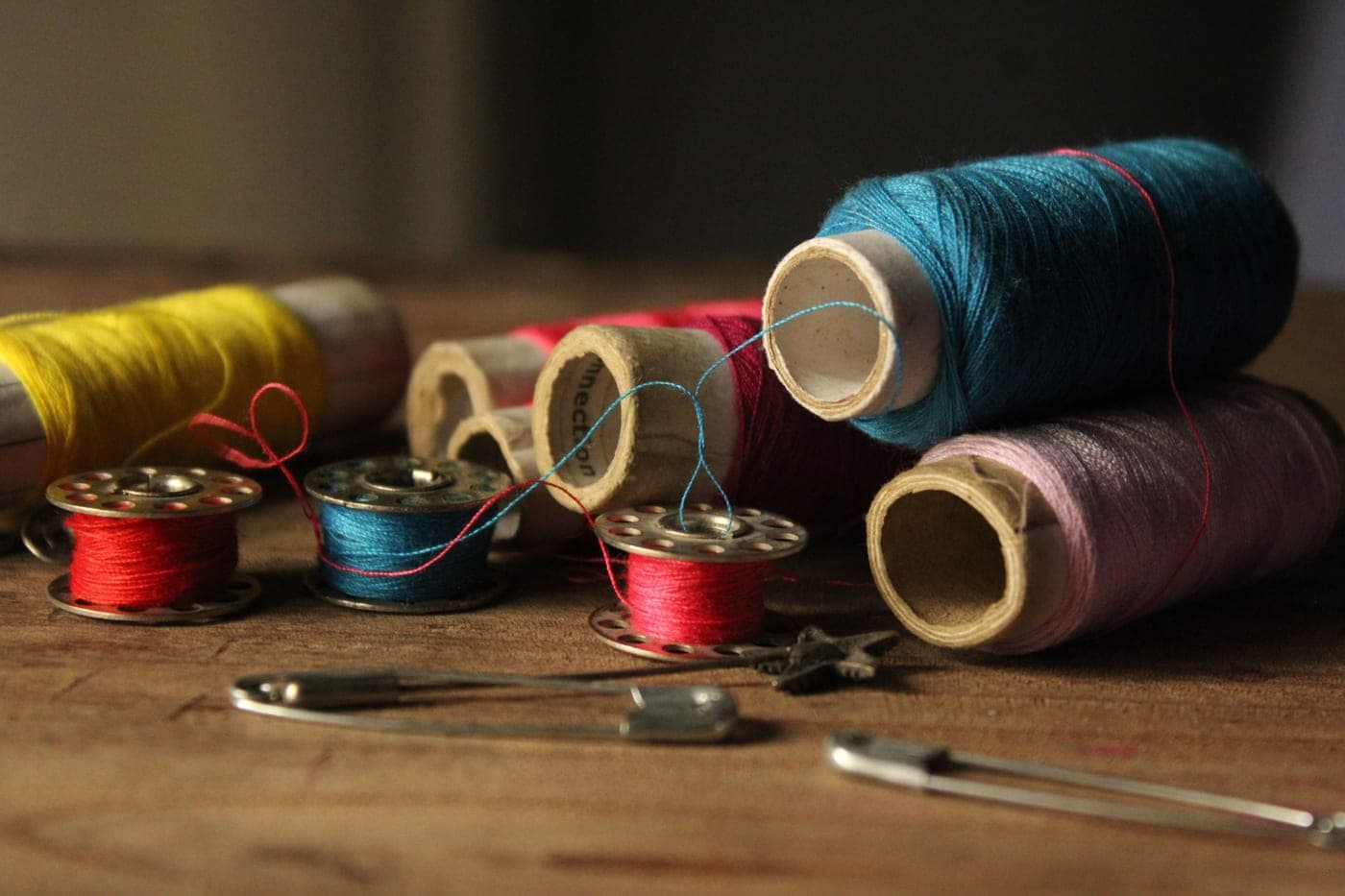
Buy all-purpose polyester thread in two or three colors you will actually use. It is strong, it has slight give, it does not rot, and it will sew every fabric a beginner meets. Do not buy a rainbow multipack of forty small spools — that is a small amount of thread in colors you did not choose, and cheap thread causes real problems.
What all-purpose thread means
'All-purpose' is a weight, not a brand: a medium-weight thread intended for general construction sewing. It is what a pattern means when it says 'matching thread', and it is what your machine's default tension setting is calibrated around.
Polyester all-purpose is the default and the right first choice. It is strong, it has a little stretch — which matters, because a thread with no give snaps when a seam is stressed — and it does not weaken with age or damp.
Cotton all-purpose has no stretch and a matte finish. Quilters often prefer it because it presses flatter and, if a seam is ever stressed, cotton thread will break before it tears the cotton fabric — which sounds bad and is actually the preferred failure. For a beginner sewing garments and household items, polyester is the safer default.
Cotton-wrapped polyester is a polyester core with a cotton skin: the strength of one with the handle of the other. Also a perfectly good all-purpose choice.
Why cheap thread misbehaves
This is the part beginners are not told, and it produces symptoms that look like a broken machine.
Thread is spun from fibers. In good thread those fibers are long, twisted evenly and finished smooth. In bad thread they are short, unevenly twisted, and the surface is fuzzy — you can often see the fuzz by holding a length up to a window. That fuzz is loose fiber ends, and every one of them is dragged through the tension discs, the needle eye and the fabric on every stitch.
Three consequences. It sheds lint, which builds up in the tension discs and the bobbin race and changes how the machine feeds thread. It breaks, because a thin spot in an unevenly spun thread is a weak point. And it produces uneven stitches, because the diameter of the thread varies along its length, so the tension the discs apply varies too.
The specific test: unwind a length and run it between your fingers. Good thread is smooth. If it feels fibrous or you can see a halo of fuzz against the light, it will cause problems, and the problems will look like machine faults.
Old thread has the same problem for a different reason: cotton thread in particular degrades over years, and thread inherited in a sewing box can be decades old. If it snaps when you tug a length firmly between your hands, do not sew with it.
Thread weight and the needle
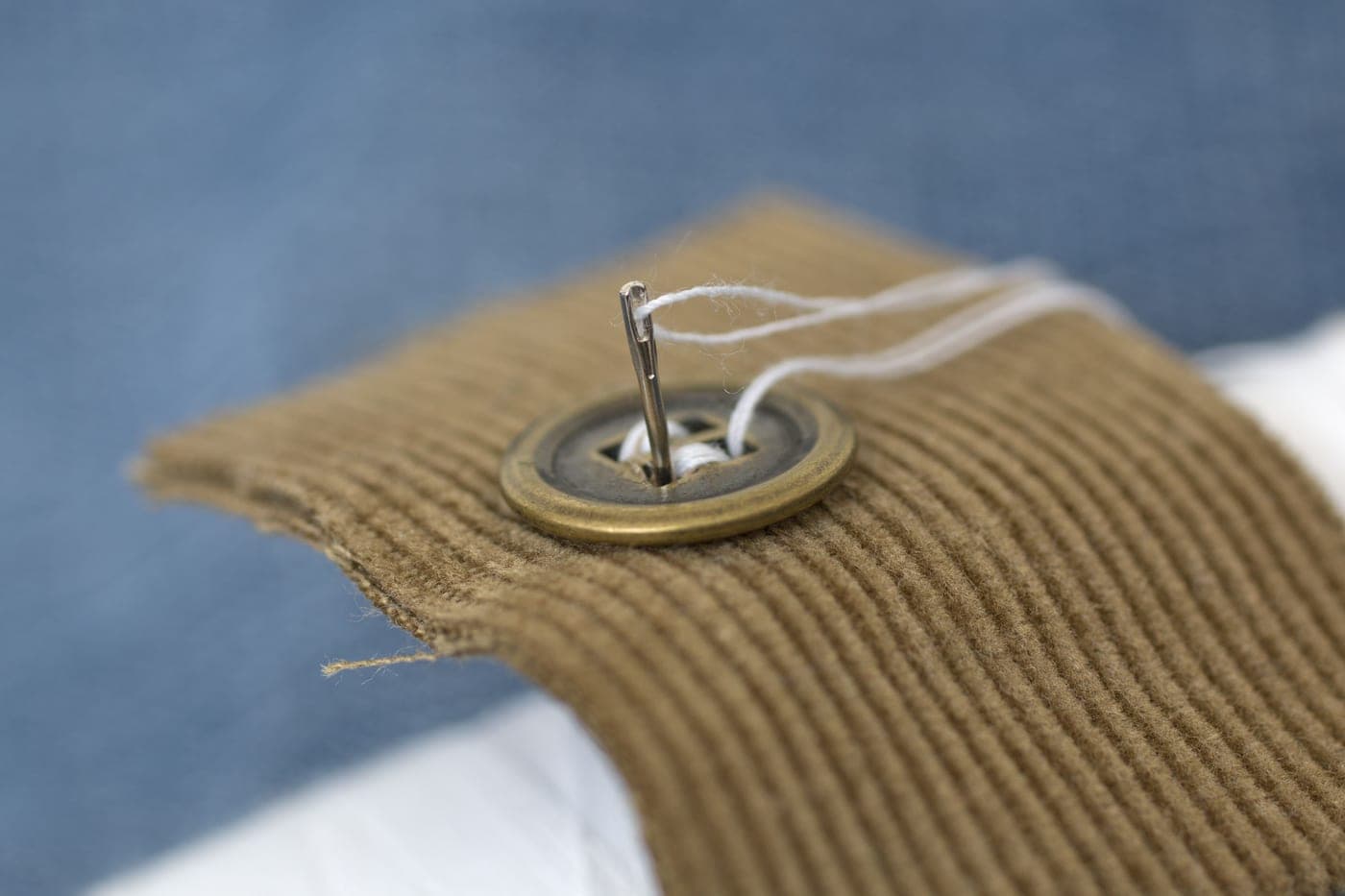
Thread and needle are a pair, and this is the connection most beginners miss. The needle has a groove running down the front of the blade whose job is to shelter the thread as it passes through fabric. If the thread is too thick for the groove it rides proud, gets scraped between steel and cloth on every stitch, abrades and eventually parts.
That is exactly why SCHMETZ makes a topstitch needle with 'an enlarged groove to accommodate large diameter threads and dense fabrics', and a metallic needle with 'an enlarged polished eye to accommodate specialty threads by preventing shredding'. If heavy or specialty thread keeps shredding, the fix is the needle, not the tension dial.
The ranking
Quick picks
Ranked against the published criteria below. Tap a row to jump to the full write-up; the price button goes straight to Amazon.
| # | Product | Best for | Score | Price |
|---|---|---|---|---|
| 1 |  Universal machine needles, 80/12 and 90/14 The needle you should already own two packs of | Sizes 60/8 to 120/19 | 9.3/10 | $19.95 on Amazon #ad affiliate link · price as of October 16, 2026 |
| 2 |  Topstitch needles Thick decorative thread that keeps shredding | Sizes 80/12 to 100/16 | 6.1/10 | $23.48 on Amazon #ad affiliate link · price as of October 16, 2026 |
| 3 |  Class 15 transparent bobbins Not stopping mid-seam to wind another one | Class 15, transparent | 8.9/10 | $14.83 on Amazon #ad affiliate link · price as of October 16, 2026 |
The needle you should already own two packs of
Universal machine needles, 80/12 and 90/14
A slight ball point that sews both knit and woven fabric, which is why it is the only needle a first project actually requires — and the one most people never replace often enough.
SCHMETZ describes the universal needle in seven words: 'General sewing of knit and woven fabrics. Slight ball point.' That slight ball point is the whole design. A perfectly sharp point pierces the yarns of a woven cloth cleanly and cuts through the loops of a knit, causing runs. A full ball point pushes knit loops aside but struggles to pierce a dense woven. The universal splits the difference, badly enough that a specialist needle beats it on any one fabric, and well enough that it is the only needle a first project needs.
Buy sizes 80/12 and 90/14, and understand what the two numbers mean: they are the same measurement in two systems, metric (NM) and imperial (Singer). An 80/12 is 0.8 mm across the blade. Lighter fabric wants a smaller number; heavier fabric wants a bigger one. Quilting cotton and shirting sew happily on an 80/12. Denim-weight woven, canvas and multiple layers want a 90/14.
The mistake almost every beginner makes is not buying the wrong needle, it is keeping the right one too long. A needle blunts from the friction of passing through fabric thousands of times, and a blunt needle is a leading cause of skipped stitches, snagged fabric and thread that keeps breaking — the exact symptoms people diagnose as a broken machine. Change it when you start a significant project, and change it after roughly eight hours of sewing.
SCHMETZ publishes universal needles from 60/8 up to 120/19, plus assorted packs, twin needles and triple needles. An assorted pack is the right first purchase because it lets you find out which size your fabric actually likes without buying five packs.
What works
- Sews knit and woven fabric acceptably, which no other needle type does
- The widest size range SCHMETZ publishes for any home needle — 60/8 through 120/19
- An assorted pack covers a beginner's first year of fabrics for the price of a coffee
- Sold as a twin and a triple needle for hems and decorative topstitching
What does not
- A compromise by design — for a stretchy knit a jersey needle skips fewer stitches, and for heavy denim a denim needle deflects less
- Blunts long before it looks blunt; a needle that has sewn eight hours is due for replacement
- Twin needles are not compatible with every stitch on every machine — check your manual first
Thick decorative thread that keeps shredding
Topstitch needles
An enlarged groove for large-diameter thread, which is the actual reason topstitching thread shreds and breaks on a normal needle.
If you have tried to sew visible topstitching in heavy thread and watched it fray and snap every few inches, the needle is almost certainly the cause. SCHMETZ describes the topstitch needle as 'extra sharp with an enlarged groove to accommodate large diameter threads and dense fabrics'.
The groove is the long channel down the front of the needle blade. Its job is to shelter the thread as the needle passes through fabric, so the thread is not scraped between steel and cloth on every stitch. A groove sized for all-purpose thread is too shallow for topstitching thread, so the thread rides proud, abrades, and eventually parts.
This is a genuinely narrow tool and we would rather say so than pad a list. If you are sewing with ordinary all-purpose polyester thread you will notice no benefit at all — a universal needle's groove is already the right size. Buy it the day you buy a spool of heavy topstitching thread, and not before.
SCHMETZ publishes it in 80/12, 90/14 and 100/16 only, which tells you what it is for: nothing light.
What works
- Solves shredding thread at the cause rather than by lowering tension
- Extra sharp, so a decorative line stays exactly where you steered it
- The same needle that makes gold jeans topstitching thread behave
What does not
- Pointless with ordinary all-purpose thread — you will notice no difference
- Only three sizes published, all on the heavier side
- Sharp point makes it unsuitable for knits
Not stopping mid-seam to wind another one
Class 15 transparent bobbins
Both Singer machines on this site take a Class 15 transparent bobbin, and three is not enough — a transparent bobbin also lets you see the thread running out before it does.
Start with the warning, because it is the one that costs people an evening: bobbin class is not universal, and a nearly-right bobbin is worse than no bobbin. A bobbin that is fractionally too tall, too wide or made of the wrong material will sit at a slight angle in the case, feed thread unevenly, and produce exactly the nest of loops underneath your fabric that people diagnose as a broken machine. Singer publishes the bobbin class for both machines on this site as Class 15 transparent, and recommends SINGER or INSPIRA branded bobbins for best results. Your manual states yours.
Assuming you have the right class, the reason to buy more is simple arithmetic. Brother ships three bobbins with the CS7000X, the XM2701 and the LX3817, and four with the XR9550. A single garment in two thread colors plus a basting color uses three. The moment you run out mid-seam you have to unthread the machine, wind a bobbin, and re-thread — and re-threading is where the next problem starts.
Transparent rather than metal, for a beginner, for one reason: you can see how much thread is left. Running the bobbin dry in the middle of a topstitch line is a specific kind of annoying, because the top thread keeps stitching and you do not notice until you turn the work over.
Wind one bobbin per color you use regularly and keep them on a bobbin ring. It is the cheapest quality-of-life improvement in this whole list.
What works
- Transparent, so you can see the thread level without unthreading the machine
- Cheap enough to wind one per thread color and stop re-winding
- Class 15 is the most widely used home bobbin class, so replacements are easy to find
What does not
- Bobbin class is not universal. Check your manual — the wrong class will seat badly and cause bunching, and some machines specify a plastic or a metal bobbin, not both
- Singer explicitly recommends its own or INSPIRA-branded bobbins for best results
- A cheap out-of-spec bobbin is a common cause of the tension problems people blame on their machine
Practical rules
- Use the same thread top and bobbin for ordinary sewing. Different threads have different thicknesses and behaviors, and mixing them makes tension impossible to balance.
- Match thread color to the darker fabric when joining two colors. Thread sinks visually into a darker cloth.
- Buy a full-size spool of the colors you use most — black, white or cream, and one neutral mid-gray, which disappears into more fabrics than you would expect.
- Wind bobbins from the same spool you are sewing with.
- Store thread out of direct sunlight. Ultraviolet weakens fibers and fades color, and thread on a sunny windowsill degrades faster than thread in a drawer.
How thread causes tension problems
If you have loops under the fabric, thread is rarely the primary cause — that is nearly always a threading fault, and the fix is here. But thread contributes in three ways worth knowing about.
A loosely wound bobbin feeds unevenly. This happens when the thread was not taken around the bobbin winder's separate tension disc while winding. Lint from cheap thread in the tension discs changes their grip over time. And a spool that catches as it unwinds — often on a nick in the spool's own end notch — produces intermittent tight stitches that come and go for no apparent reason.
That last one has a simple test: hold the spool loosely in your hand while sewing a few inches. If the problem disappears, the spool was catching on the pin. For the underlying mechanism, tension explained shows how to read a stitch and tell which thread is at fault.
Answers
Questions people ask
What thread should a beginner use?
Is cheap sewing thread bad?
Should the bobbin thread be the same as the top thread?
Why does my thread keep breaking?
Can I use old thread from an inherited sewing box?
Where this came from
Sources
About the author
Scooter M.
An enthusiast who is genuinely into this. I read the manuals, compile the published specs, and do the arithmetic. No lab coat, no test bench, and no machines I am pretending to have used — which is exactly why every claim here carries a source.
Published by Slate Mill Group. Published September 1, 2026; last updated September 1, 2026. Editorial policy.
Keep reading
Read next
Needles
Sewing machine needles explained
What the two numbers mean, which needle each fabric wants, and the eight-hour rule for changing them.
The bunching fix
Bobbin thread bunching up underneath
The nest of loops underneath is a top-thread fault. Four checks, in order, and the fix is free.
The checklist
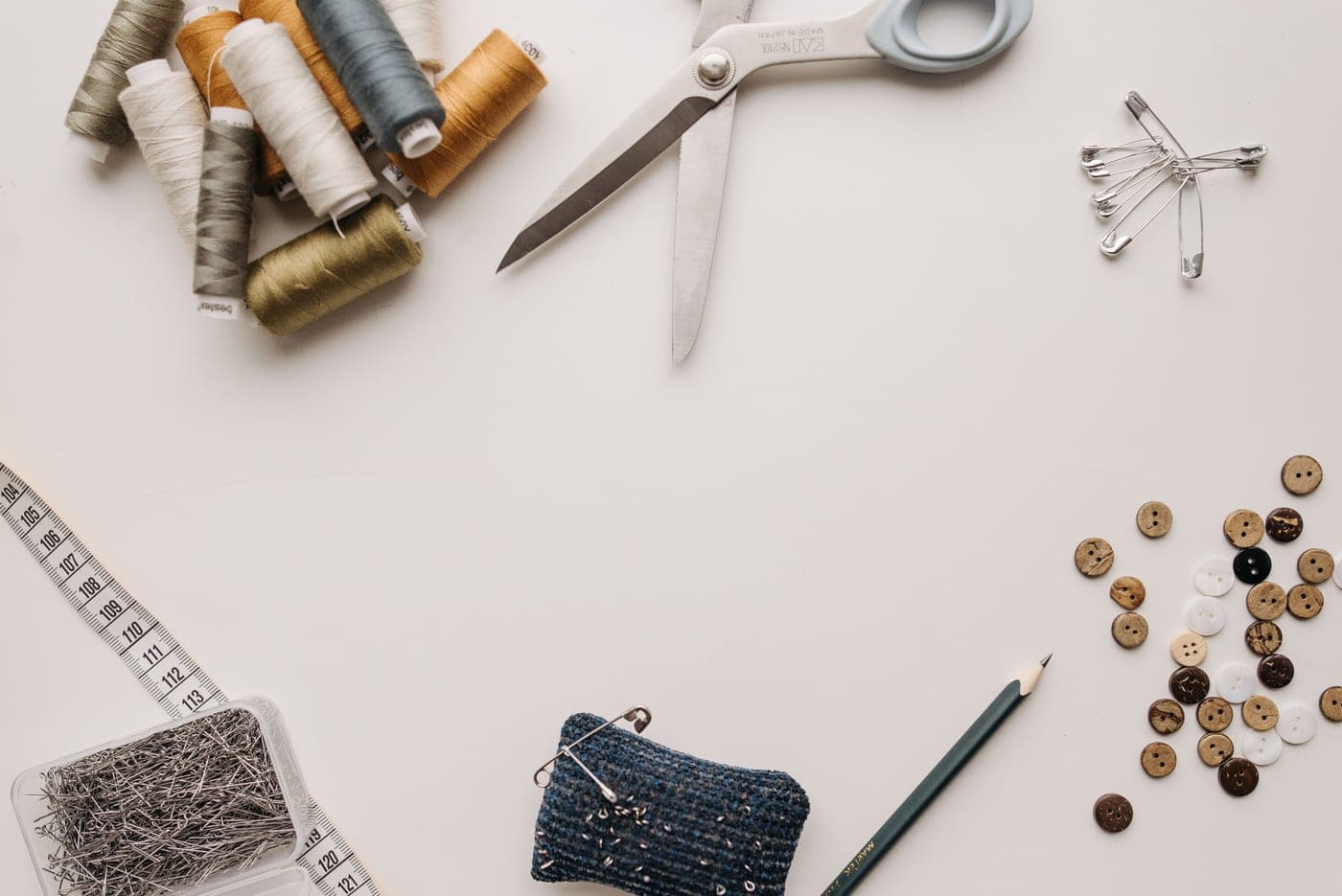
What you actually need to start sewing
Must-have, can-wait and skip — with the items your machine already includes removed from the list.
Maintenance
Sewing machine maintenance
The lint routine, the needle rule, and the two popular habits that do more harm than good.