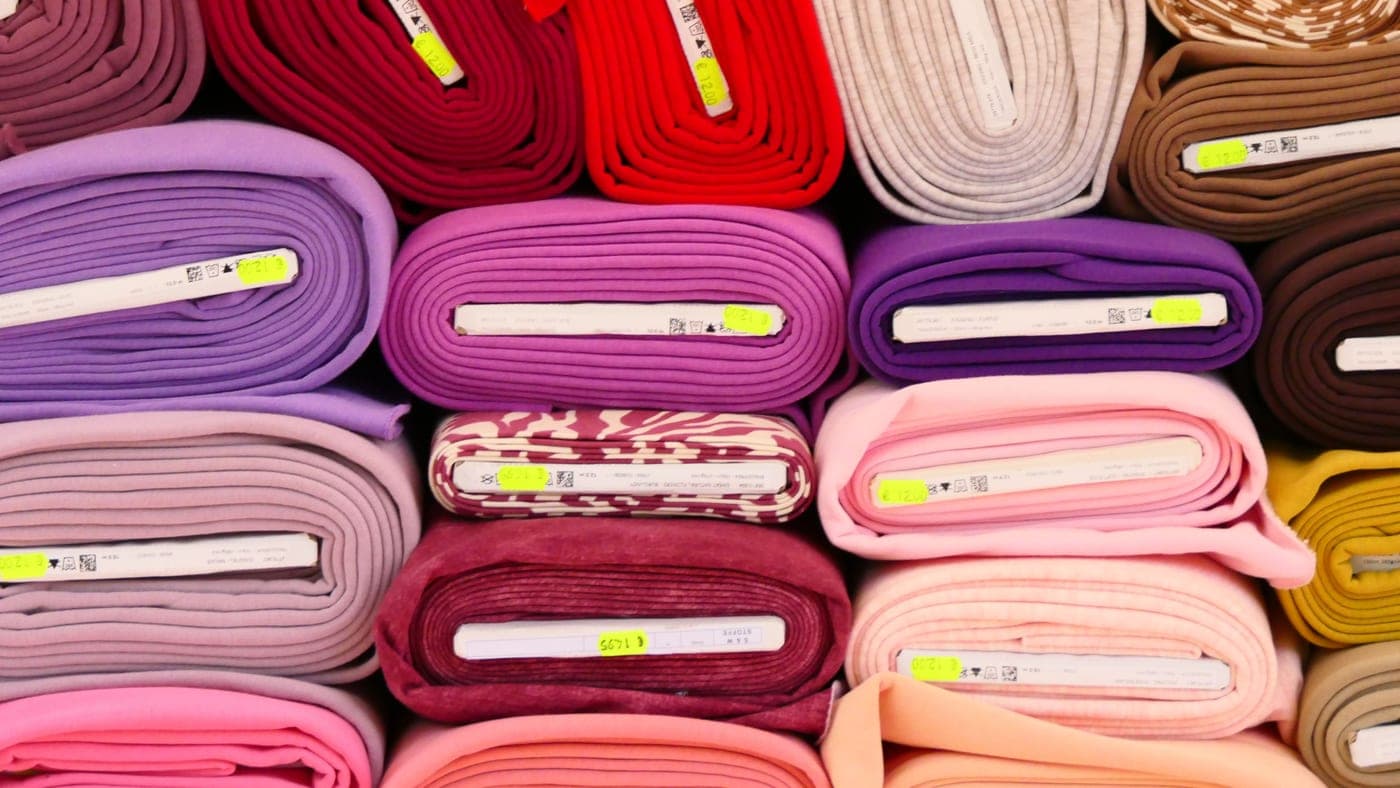
Start with quilting cotton. It is stable, so it does not stretch or slide as you feed it; it presses crisply, so your seams look finished; it is woven tightly enough to show a stitch clearly, so you can see what you did; and it is cheap enough that ruining half a meter costs nothing. Almost every frustrating first project is a fabric problem wearing a sewing problem's clothes.
The four properties that decide whether a fabric is forgiving
Fabric is usually described by what it is made of. For a beginner the useful description is how it behaves under a presser foot, and that comes down to four things.
Stability. Does it stretch when the feed dogs pull it? A woven cotton barely moves. A jersey knit stretches as it feeds, so the seam comes out longer than the piece you cut and the hem ripples.
Grip. Does it stay where you put it? Cotton has enough surface texture to sit still under the foot. Satin, lining and coated fabrics slide against themselves, so two pinned layers arrive at the needle offset from each other.
Press response. Does a crease hold? Cotton takes a press and remembers it, which is what makes hems and seam allowances stay folded while you sew them. Many synthetics will not hold a crease at a safe iron temperature, so you fight the fabric with pins instead.
Visibility. Can you see your stitch line? A matte, mid-tone, plain fabric shows exactly what your seam did. Black fabric, busy prints and shiny surfaces hide it, which means you cannot learn from the result.
Start here
Fabrics that behave predictably under a domestic machine. Needle sizes per the SCHMETZ needle primer.
Leave these until later, and why
None of these is beyond a beginner permanently. Each one adds a specific difficulty on top of the sewing, and adding them all at once is how a first project goes wrong for reasons you cannot diagnose.
- Jersey and other knits — stretch as they feed, so hems ripple and seams pop if sewn with a straight stitch. Genuinely doable early with the right needle and stitch: sewing knits.
- Satin, charmeuse and slippery synthetics — slide against themselves and against the machine bed, so nothing stays aligned. They also show every needle hole permanently.
- Chiffon, voile and very fine fabrics — get pushed down into the needle plate hole at the start of a seam and fray as you look at them.
- Velvet, corduroy and anything with a nap — the pile makes layers creep against each other, and all pieces must be cut facing the same direction or the color reads differently.
- Directional and large-repeat prints — add a matching problem on top of a construction problem. Also, you need more fabric than the pattern states.
- Vinyl, oilcloth and coated fabric — grip the presser foot and refuse to feed, and pin holes are permanent.
- Heavy multi-layer denim and upholstery — a machine problem more than a skill problem: see the denim roundup.
Grain and selvage: the two words on every pattern
Woven fabric is a grid of threads running in two directions, and which way you cut relative to that grid changes how the finished piece behaves. Patterns assume you know this, and it is the thing most often got wrong on a first garment.
The selvage is the finished edge running down both sides of the fabric as it comes off the bolt — woven so it will not fray. It is the reference edge for everything else, and it is where this publication gets its name.
The lengthwise grain runs parallel to the selvage. It has almost no give, and it is the direction most pattern pieces are aligned to — the long double-headed arrow printed on a pattern piece is the grainline, and it should sit parallel to the selvage. The crosswise grain runs selvage to selvage and has a little more give. The bias is 45 degrees to both, and it stretches considerably — which is useful deliberately, for bias binding and draped garments, and a problem accidentally, because a piece cut off-grain will twist and hang badly no matter how well it was sewn.
For rectangle projects like the first four we recommend, aligning your cuts with the selvage is enough. It matters far more once you cut a garment.
Prewashing, and when it matters
Natural fibers shrink the first time they are washed — cotton and linen noticeably. If the finished item will be washed and needs to keep its size, wash and dry the fabric the way you will wash the finished thing, then press it before cutting.
That means garments, anything for a bed or a bathroom, and quilts: prewash. It also stops a dark fabric bleeding onto a light one in a pieced project. For a tote bag or a cushion cover that will rarely be washed, you can skip it. The rule is simple — if it will be laundered, prewash it; if not, do not bother.
Matching the needle to the fabric
The fabric decides the needle, and the wrong needle produces problems that look like machine faults. Two numbers, one system: an 80/12 needle is 0.8 mm across the blade in metric and size 12 in the Singer system. Bigger number, thicker needle, bigger hole.
Size follows fabric weight — 70/10 for fine fabric, 80/12 for quilting cotton and shirting, 90/14 for denim-weight woven and multiple layers. Type follows fabric structure: SCHMETZ publishes the universal needle for 'general sewing of knit and woven fabrics' with a slight ball point, the jersey / ball point needle as 'designed for sewing on knits', and the microtex / sharp needle with a 'sharp point for straight stitches on delicate and microfiber fabrics'.
The ranking
Quick picks
Ranked against the published criteria below. Tap a row to jump to the full write-up; the price button goes straight to Amazon.
The needle you should already own two packs of
Universal machine needles, 80/12 and 90/14
A slight ball point that sews both knit and woven fabric, which is why it is the only needle a first project actually requires — and the one most people never replace often enough.
SCHMETZ describes the universal needle in seven words: 'General sewing of knit and woven fabrics. Slight ball point.' That slight ball point is the whole design. A perfectly sharp point pierces the yarns of a woven cloth cleanly and cuts through the loops of a knit, causing runs. A full ball point pushes knit loops aside but struggles to pierce a dense woven. The universal splits the difference, badly enough that a specialist needle beats it on any one fabric, and well enough that it is the only needle a first project needs.
Buy sizes 80/12 and 90/14, and understand what the two numbers mean: they are the same measurement in two systems, metric (NM) and imperial (Singer). An 80/12 is 0.8 mm across the blade. Lighter fabric wants a smaller number; heavier fabric wants a bigger one. Quilting cotton and shirting sew happily on an 80/12. Denim-weight woven, canvas and multiple layers want a 90/14.
The mistake almost every beginner makes is not buying the wrong needle, it is keeping the right one too long. A needle blunts from the friction of passing through fabric thousands of times, and a blunt needle is a leading cause of skipped stitches, snagged fabric and thread that keeps breaking — the exact symptoms people diagnose as a broken machine. Change it when you start a significant project, and change it after roughly eight hours of sewing.
SCHMETZ publishes universal needles from 60/8 up to 120/19, plus assorted packs, twin needles and triple needles. An assorted pack is the right first purchase because it lets you find out which size your fabric actually likes without buying five packs.
What works
- Sews knit and woven fabric acceptably, which no other needle type does
- The widest size range SCHMETZ publishes for any home needle — 60/8 through 120/19
- An assorted pack covers a beginner's first year of fabrics for the price of a coffee
- Sold as a twin and a triple needle for hems and decorative topstitching
What does not
- A compromise by design — for a stretchy knit a jersey needle skips fewer stitches, and for heavy denim a denim needle deflects less
- Blunts long before it looks blunt; a needle that has sewn eight hours is due for replacement
- Twin needles are not compatible with every stitch on every machine — check your manual first
T-shirt fabric and anything that stretches
Jersey / ball point needles
The needle that stops a knit from laddering — the difference between a T-shirt seam that holds and one that runs the first time it is stretched.
A knit fabric is made of loops, not a grid. Push a sharp needle through a loop and you sever it, and a severed loop unravels — that is what a run in a T-shirt is, and it is why a first attempt at hemming a jersey top so often produces a line of small holes along the stitching.
SCHMETZ describes the jersey / ball point needle as 'designed for sewing on knits and some stretch fabrics' and publishes it in 70/10, 80/12, 90/14 and 100/16, plus an assorted pack. The rounded tip slips between the loops rather than through them.
There is a second needle worth knowing about, because people buy the wrong one of the pair. SCHMETZ also publishes a stretch needle, 'designed for synthetic suede or elastic knitwear' with 'a deep scarf to prevent skipped stitches'. The scarf is the groove above the eye where the bobbin hook passes. On a very elastic fabric the material moves as the needle enters, the hook misses the loop of top thread and you get a skipped stitch; a deeper scarf gives the hook more room. So: jersey needle for ordinary T-shirt knits, stretch needle for swimwear, activewear and anything with elastane.
If your machine has been skipping stitches on knit fabric, change the needle before you change anything else. It is the cheapest fix on the list and it is right more often than any tension adjustment.
What works
- Pushes knit loops aside instead of cutting them, which is what prevents runs and holes
- Fixes most 'my machine skips stitches on T-shirt fabric' problems without touching a setting
- Cheap enough that there is no reason not to own a pack before you sew your first knit
What does not
- Wrong needle for woven fabric — the rounded point struggles to pierce a dense weave
- SCHMETZ lists a separate stretch needle with a deeper scarf for elastic knitwear and synthetic suede; for very stretchy fabric that is the better tool
- Not a substitute for a walking foot or a stretch stitch — it solves the needle half of the problem only
Fine fabric and dead-straight topstitching
Microtex / sharp needles
A genuinely sharp point for delicate and microfibre fabrics — the needle to reach for when a universal is puckering silk or wandering off a straight line.
SCHMETZ specifies the microtex needle as a 'sharp point for straight stitches on delicate and microfiber fabrics', in sizes from 60/8 up to 90/14. It is the opposite design decision to the universal: where a universal compromises with a slight ball point, this one commits to being sharp.
The situation where it earns its place is dense, fine cloth — microfibre, lining, cotton lawn, silk. Those fabrics are woven tightly enough that a slightly rounded point can slide sideways along the surface before it finds a gap to enter, which is what puts a barely visible waver in a topstitch line and what puckers a seam.
The 60/8 is the smallest home needle SCHMETZ publishes in any type, and that is the point of it. In fine fabric, hole size is the whole game — a needle too large leaves a permanent perforation line you can see against the light, and no amount of pressing removes it.
Do not use it on jersey. A sharp point through a knit loop cuts the loop, and a cut loop runs. If your project is a mix, that is what the universal needle exists for.
What works
- The smallest sizes SCHMETZ publishes for a sharp needle — a 60/8 leaves almost no hole in fine fabric
- Straight stitching is visibly straighter, because a sharp point does not skate along a dense weave before entering
- Fixes puckered seams on lining and lightweight cotton more reliably than tension fiddling does
What does not
- Wrong needle for knits — a sharp point cuts loops and causes runs
- The fine sizes bend and break more readily than a universal of the same size
- A specialist purchase; not a first-pack buy
Buying fabric without wasting money
- Buy cheap for practice, deliberately. Half a meter of plain quilting cotton is the cheapest sewing lesson available. Sew straight lines on it, sew curves, sew a hem, throw it away.
- Buy a plain mid-tone color first. Not black, not white, not a busy print — you need to see your stitches to learn from them.
- Buy more than the pattern says for your first attempt at anything fitted. A cutting mistake on a first garment is normal and cheap fabric makes it survivable.
- Check the width before you calculate. Fabric comes in different widths, commonly around 44 inches for quilting cotton and wider for dressmaking fabric; a pattern's yardage assumes a specific width.
- Feel it before you buy it, if you can. Scrunch a corner. If it springs back and holds a crease, it will behave. If it slithers, it will not.
- Do not buy the fabric you love yet. Save it for after your first ten seams. It will still be there, and you will do it justice.
The short version
Plain quilting cotton, a mid-tone color, a universal 80/12 needle, and half a meter more than you think you need. Every difficulty you meet after that will be a sewing difficulty you can actually learn from, rather than the fabric quietly working against you. Then pick something to make: four first projects, all cut from rectangles.
Answers
Questions people ask
What fabric should a beginner start with?
What fabrics should beginners avoid?
What is the selvage on fabric?
Do I need to prewash fabric before sewing?
What needle do I use for cotton?
How much fabric should I buy for a first project?
Where this came from
Sources
About the author
Scooter M.
An enthusiast who is genuinely into this. I read the manuals, compile the published specs, and do the arithmetic. No lab coat, no test bench, and no machines I am pretending to have used — which is exactly why every claim here carries a source.
Published by Slate Mill Group. Published September 6, 2026; last updated September 6, 2026. Editorial policy.
Keep reading
Read next
First projects
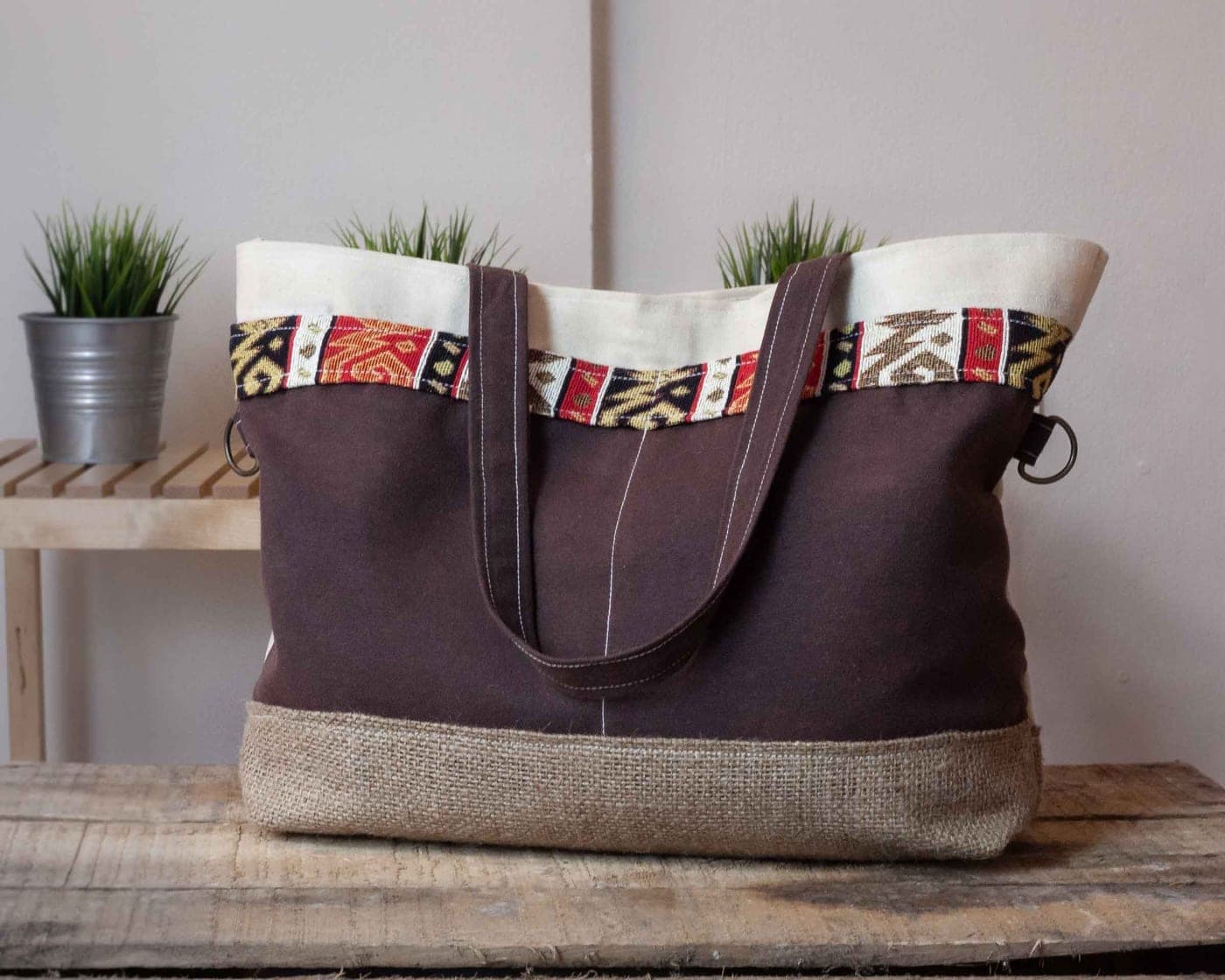
Four first sewing projects worth making
Four rectangle projects in order, each teaching one skill — and none of them needs a pattern.
Sewing knits
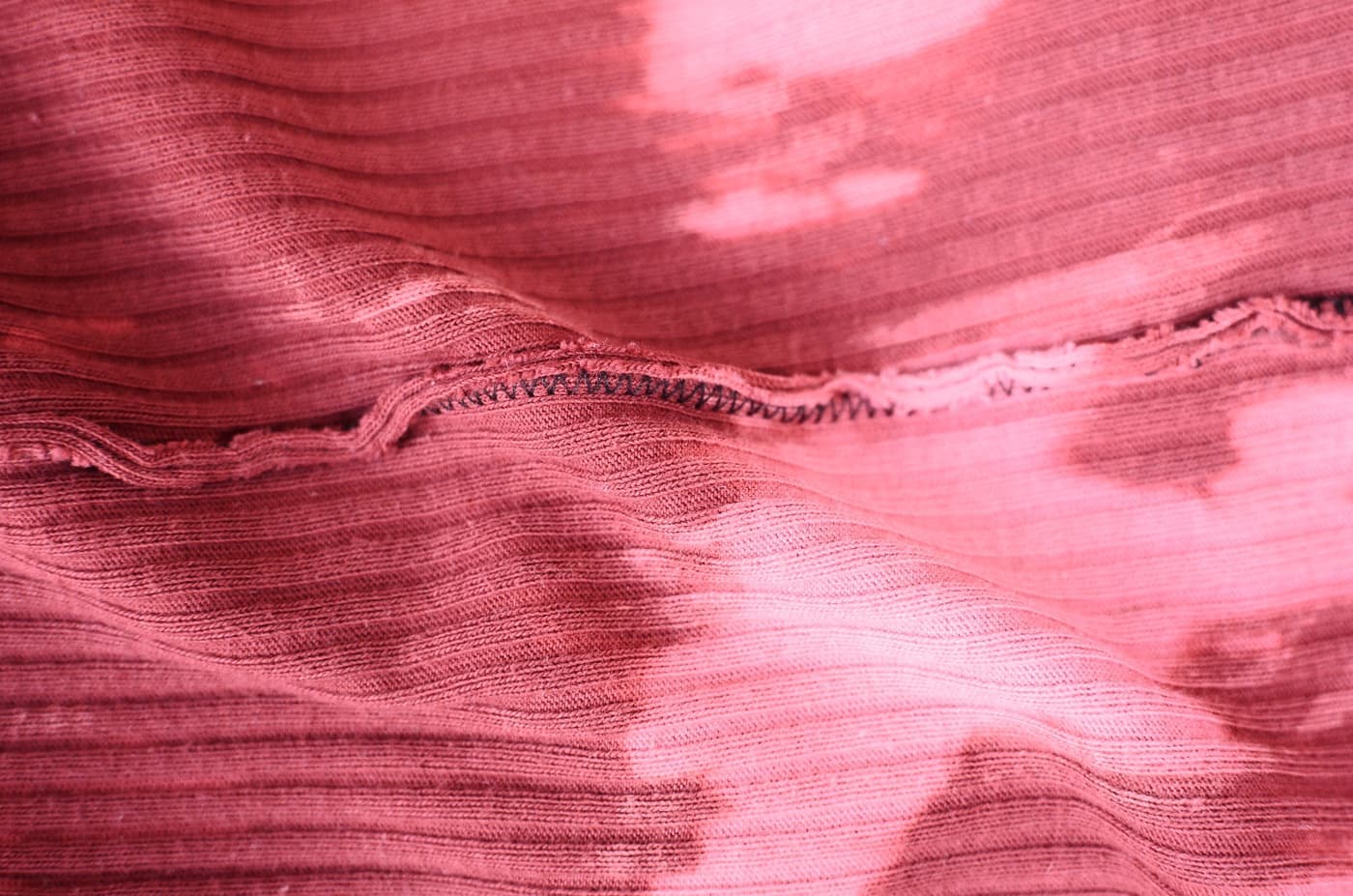
Sewing knit fabrics without a serger
Ball point needle, a stitch with give, and a walking foot — the three fixes for knits on an ordinary machine.
Needles
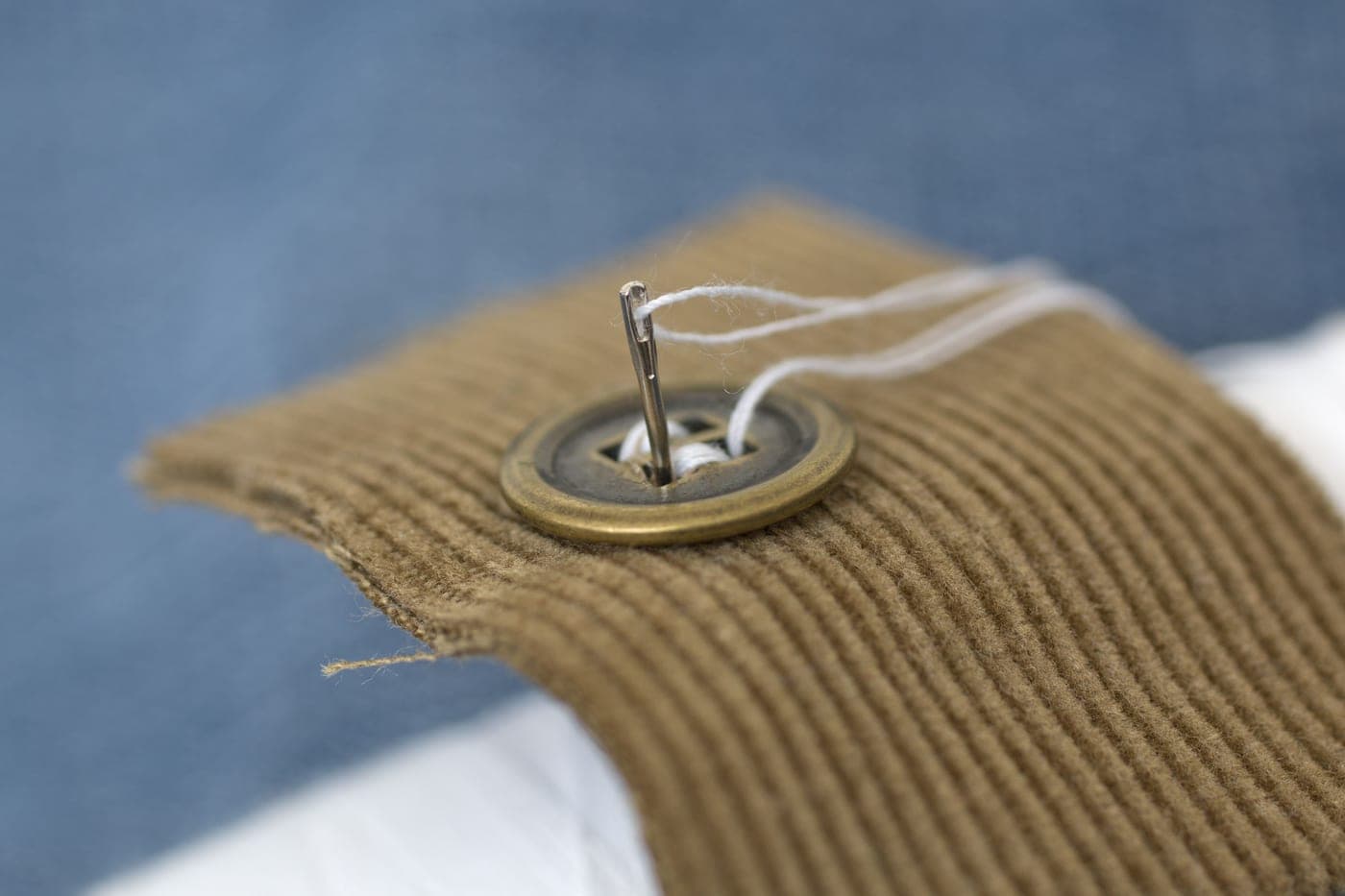
Sewing machine needles explained
What the two numbers mean, which needle each fabric wants, and the eight-hour rule for changing them.
The checklist
What you actually need to start sewing
Must-have, can-wait and skip — with the items your machine already includes removed from the list.