Stitch & Selvage earns a commission when you buy through the links on this page, at no extra cost to you. It does not change what we recommend, and we publish a skip-this verdict on products we could otherwise earn from. Full disclosure.
A 'quilting machine' in the domestic price range is a regular sewing machine with four things: a walking foot, a quarter-inch seam guide, drop feed for free-motion work, and a detachable wide table. Three of the four can be bought as accessories. Only throat space cannot, and no domestic machine has enough of it for a large quilt.
The ranking
Quick picks
Ranked against the published criteria below. Tap a row to jump to the full write-up; the price button goes straight to Amazon.
| # | Product | Best for | Score | Price |
|---|---|---|---|---|
| 1 | 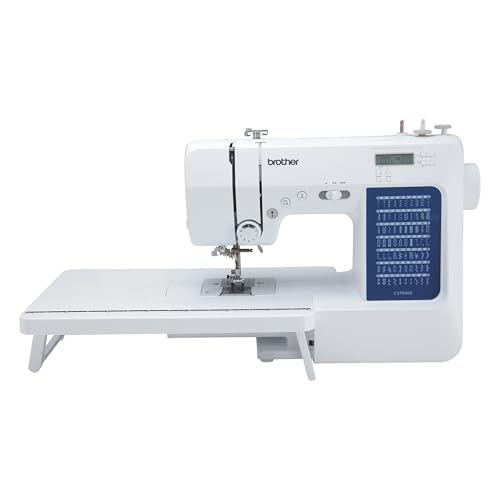 Brother CS7000X Computerized Sewing & Quilting Machine The first machine most beginners should buy | 70 built-in stitches | 9.2/10 | |
| 2 | No photo Walking foot (even feed foot) Quilts, knits and anything with layers that shift | The one foot worth buying first | 7.7/10 | Check price on Amazon #ad affiliate link · no live price for this item |
| 3 | No photo Quarter-inch (piecing) foot Quilt blocks that come out the right size | The accuracy foot | 7.5/10 | Check price on Amazon #ad affiliate link · no live price for this item |
| 4 |  Quilting needles, 75/11 and 90/14 Piecing and quilting through batting | Sizes 75/11 and 90/14 | 6.7/10 | $17.33 on Amazon #ad affiliate link · price as of October 16, 2026 |
The first machine most beginners should buy
Brother CS7000X Computerized Sewing & Quilting Machine
The only machine on this page that arrives with the two feet a beginner ends up buying anyway — a walking foot and a quarter-inch foot — plus an automatic needle threader and a drop-in bobbin, so the two jobs that make people quit are the two jobs it makes easy.
The CS7000X is the machine we point a first-time buyer at, and the reason has nothing to do with its stitch count. It is the presser feet. Brother lists ten of them in the box — zigzag, buttonhole, zipper, button sewing, overcasting, blind stitch, monogramming, quarter-inch, quilting and walking — plus a quilt guide. Two of those, the walking foot and the quarter-inch foot, are the exact accessories a beginner ends up ordering three months in, and they are not cheap bought separately.
The second reason is the threading. Brother's published specification lists an automatic needle threading system and a quick-set drop-in top bobbin. Threading the needle and setting the bobbin are the two jobs that make people put a machine back in its box, and this one turns both into a lever pull and a drop. On a front-loading machine you are removing a case, seating a bobbin in a particular orientation, and hoping.
It is a computerized machine, which means stitch selection is a mode key and a shift key against an LCD rather than a dial. That is a genuine trade-off, not a straight upgrade: a dial is legible at a glance and has nothing to fail, while an LCD tells you the stitch width and length the machine has actually selected. For someone learning, seeing the numbers is worth more than the simplicity of a dial.
The extras matter more than they sound. The detachable wide table turns a small free-arm machine into something you can push a quilt across, and the hard protective cover is the difference between a machine that stays out on a table and one that lives in a cupboard collecting dust. Brother also publishes a 25-year limited warranty and free phone and online technical support for the life of the product.
We have not sewn on this machine. Everything above is from Brother's own specification page, and the price on the button is live from Amazon rather than anything we typed. What we can tell you is what the box contains and what that saves you buying — which, for a first machine, is most of the decision.
What works
- Automatic needle threader and a drop-in bobbin — the two setup jobs that defeat most beginners
- Ten presser feet including the walking foot and a quilting foot, which the cheaper machines make you buy separately
- Detachable wide table and a hard cover are in the box, not extras
- Adjustable sewing speed control, so a first seam can be run slowly
- Brother publishes a 25-year limited warranty on it
What does not
- Seventy stitches is far more than a beginner will use; you are paying for decorative stitches you may never touch
- Computerized machines have more to go wrong electronically than a dial-and-lever mechanical
- At 10.5 lb it is light enough to walk across a table at speed unless it is on a firm surface
The kit it pairs with: It already includes the walking foot and quilting foot, so its starter kit is short: needles, bobbins, thread, shears and pins.
Quilts, knits and anything with layers that shift
Walking foot (even feed foot)
Feeds the top layer at the same rate the feed dogs move the bottom one — the single accessory that turns a rippling quilt sandwich into a flat one.
Every sewing machine has feed dogs — the little serrated bars that rise through the needle plate and pull the fabric backwards a stitch at a time. They only touch the bottom layer. When you sew two layers together, the bottom one is being actively pulled and the top one is being dragged along by friction, so the top layer travels a fraction less far on every stitch. Over a two-foot seam that fraction adds up to an inch, and that inch is why the ends do not line up.
A walking foot is a second set of feed dogs mounted in the presser foot, driven off the needle bar so they move in time with the ones underneath. Both layers get gripped and both travel the same distance. That is the entire idea, and it is why it fixes quilt sandwiches, wavy knit hems and plaids that refuse to match.
Where it matters most is quilting, because a quilt is three layers with a compressible one in the middle. Without a walking foot, batting compresses unevenly under the foot and squirts forward, and you finish a quilting line with a fold pushed up ahead of the needle.
Two buying notes. First, shank type: home machines are mostly low-shank, but not all, and a walking foot for the wrong shank will not sit at the right height. Your manual says which yours is. Second, this is the one accessory where the machine manufacturer's own version is usually worth the premium — a walking foot has moving parts, and a cheap one develops play that shows up as an uneven stitch.
Brother includes a walking foot with the CS7000X. It does not include one with the XM2701, the LX3817 or the XR9550, and Singer does not list one with the M1500 or the Heavy Duty 4423. If you are comparing prices between machines, this is the accessory that changes the arithmetic.
What works
- Solves the layer-shift problem mechanically, which no amount of pinning fully does
- Also the best fix for wavy hems on knit fabric
- Makes plaids and stripes match across a seam instead of drifting
- The Brother CS7000X includes one, which is a large part of why it is our top pick
What does not
- The most expensive common presser foot, and the one most often bought in the wrong shank type
- Bulky, noisy and slow — it is not a foot to leave on for ordinary seams
- Generic 'universal' walking feet vary in quality; the machine maker's own is the safer buy
Quilt blocks that come out the right size
Quarter-inch (piecing) foot
Quilting is built on a quarter-inch seam allowance, and this foot makes it a physical edge to follow instead of a line you are trying to eyeball.
Almost every quilting pattern ever written assumes a quarter-inch seam allowance. That is not a style choice, it is a unit: block sizes, sashing widths and final quilt dimensions are all calculated from it. Sew at five-sixteenths instead and every block finishes small, and the error compounds with every seam.
A quarter-inch foot solves it by geometry. The foot is manufactured so that its right-hand edge, or a small metal flange on it, sits exactly a quarter inch from the needle. You align the raw edge of the fabric with that edge and stop thinking about it. Accuracy becomes a matter of feeding straight rather than of judging distance.
There is a free alternative on some machines. Brother lists a needle position key on the XR9550: instead of moving the guide to the needle, you move the needle relative to the standard foot edge, then measure once and note the setting. It takes five minutes to calibrate and costs nothing. Machines without that key — the XM2701, the LX3817, the M1500 — need the foot.
Brother includes a 1/4 in foot with the CS7000X. None of the other machines on this site includes one. If quilting is why you are buying a machine, that is worth about the price of two feet in the comparison.
What works
- Turns an accuracy problem into a mechanical one — you follow an edge instead of watching a mark
- Errors in piecing compound: a sixteenth of an inch out over twelve seams is three-quarters of an inch of finished block
- Cheap, small, and it is the foot quilting patterns assume you own
What does not
- Useless outside quilting and precise piecing
- Versions with a metal flange can catch on thick seam allowances
- If your machine has a needle position key you can achieve the same result without buying anything
Piecing and quilting through batting
Quilting needles, 75/11 and 90/14
A tapered shaft and a slightly rounded point designed not to damage layered material — the needle for the moment a quilt stops being two pieces of cotton and becomes a sandwich.
SCHMETZ describes the quilting needle as having a 'special taper to shaft and slightly rounded point to prevent damage to material sewn in layers'. Both halves of that sentence are doing work.
The taper first. When you quilt, the needle is not going through one thickness of cotton — it is going through a top, batting, a backing, and wherever seams cross, four or six thicknesses of pieced seam allowance. A parallel-sided needle drags all of that with it. A tapered shaft narrows behind the point, so the hole it makes closes behind it and the layers stay put rather than being pushed down into the needle plate.
The rounded point is the same logic as the ball point on a universal needle, applied to a different problem: quilting cotton is finely woven and a sharp point cuts fibers. Over a whole quilt, thousands of cut fibers is a visibly weaker seam.
Two sizes cover it. Use 75/11 for piecing flat blocks, where you want the smallest hole possible, and 90/14 once the batting is in. If you are quilting something heavy — a denim quilt, or a top with dense wadding — SCHMETZ's denim needle is the better tool, because at that point stiffness matters more than taper.
What works
- The tapered shaft is what lets it pass through pieced seam allowances without pushing the layers apart
- Sold in exactly two useful sizes, so there is no decision to get wrong
- Cheaper than the walking foot people buy first for the same problem
What does not
- Only two sizes published, so heavy quilts with dense batting may still want a denim needle
- Solves the needle problem, not the feeding problem — a walking foot is the other half
- Unnecessary for flat piecing on quilting cotton, where an 80/12 universal is fine
Compiled from Brother USA and SINGER specification pages, 1 September 2026.
The feature you cannot buy afterwards
Throat space — the distance from the needle to the machine's upright body — determines how much rolled-up quilt you can physically fit to the right of the needle. SINGER publishes 6.25 inches for the Heavy Duty 4423 and 5.6 for the M1500. A long-arm quilting machine has twenty or more.
This is the honest limit of domestic quilting and no accessory changes it. What it means practically: piecing a quilt top is comfortable on any machine here, and quilting the finished sandwich is a wrestling match on all of them once you go past a lap quilt. The correct response is to choose your first project to the machine rather than expecting the machine to fix it — start here.
The three you can buy afterwards
A walking foot, matched to your machine's shank type — low-shank on most domestic machines, but check your manual. This is the important one and the most expensive common presser foot.
A quarter-inch foot, or a needle position key if your machine has one. The XR9550 has the key, which makes the foot unnecessary; the XM2701, LX3817 and M1500 have neither, so the foot is the answer.
A wide table, either the manufacturer's own or a generic acrylic extension table. Without one, a quilt hangs off the free arm and its weight drags the fabric, which pulls your stitching line off course.
Where a dedicated quilting machine earns its price
Above this price range, quilting-specific domestic machines add things that are genuinely not accessories: a longer arm, a larger bobbin so you stop mid-quilt less often, a knee lift so both hands stay on the fabric, a needle up/down button, an automatic thread cutter and a stitch regulator that keeps stitch length even while you free-motion at variable speed.
Every one of those is a real quality-of-life improvement for someone who quilts regularly. None of them is something a first-time quilter should buy before finishing a first quilt.
The verdict
Buy a regular machine that already includes the quilting accessories, which in this set means the Brother CS7000X — walking foot, quarter-inch foot, quilting foot, quilt guide, drop feed and wide table, in one box.
If you already own a machine, buy a walking foot before you buy anything else, and add quilting needles in 75/11 for piecing and 90/14 for quilting through batting. That is a fraction of the cost of a new machine and it covers most of the gap.
Method
How we picked
- Put both sides' published manufacturer specifications side by side — Brother USA, SINGER and SCHMETZ pages, all checked 1 September 2026 — rather than comparing impressions.
- Resolved each dimension separately and said which side wins it, instead of averaging everything into a tie.
- Named a winner, and named the buyer the other option is right for.
- Priced live from Amazon. No number on this page is remembered.
We have not sewn on these machines. There is no test bench here, we do not own them, and we do not accept free product. Everything above is compiled from published manufacturer specifications and live retailer data — and we tell you which is which on every claim. Our full method.
Answers
Questions people ask
Do I need a special machine for quilting?
Can I quilt on a regular sewing machine?
What is throat space on a sewing machine?
What is the difference between a quilting foot and a walking foot?
Where this came from
Sources
- Brother USA — CS7000X specifications, presser feet and drop feed (checked 1 September 2026)
- SINGER — Heavy Duty 4423 sewing space and drop feed (checked 1 September 2026)
- SINGER — M1500 sewing space and darning plate (checked 1 September 2026)
- SCHMETZ — Sewing Machine Needle Primer, quilting needle (checked 1 September 2026)
About the author
Scooter M.
An enthusiast who is genuinely into this. I read the manuals, compile the published specs, and do the arithmetic. No lab coat, no test bench, and no machines I am pretending to have used — which is exactly why every claim here carries a source.
Published by Slate Mill Group. Published September 1, 2026; last updated September 1, 2026. Editorial policy.
Keep reading
Read next
Best for quilting
The best sewing machines for quilting beginners
The three specifications that decide quilting, and the two machines plus three accessories that satisfy them.
Walking foot
What a walking foot actually does
The one-sentence explanation, the four jobs it fixes, and which machines include one in the box.
Quilting supplies
Quilting supplies for beginners
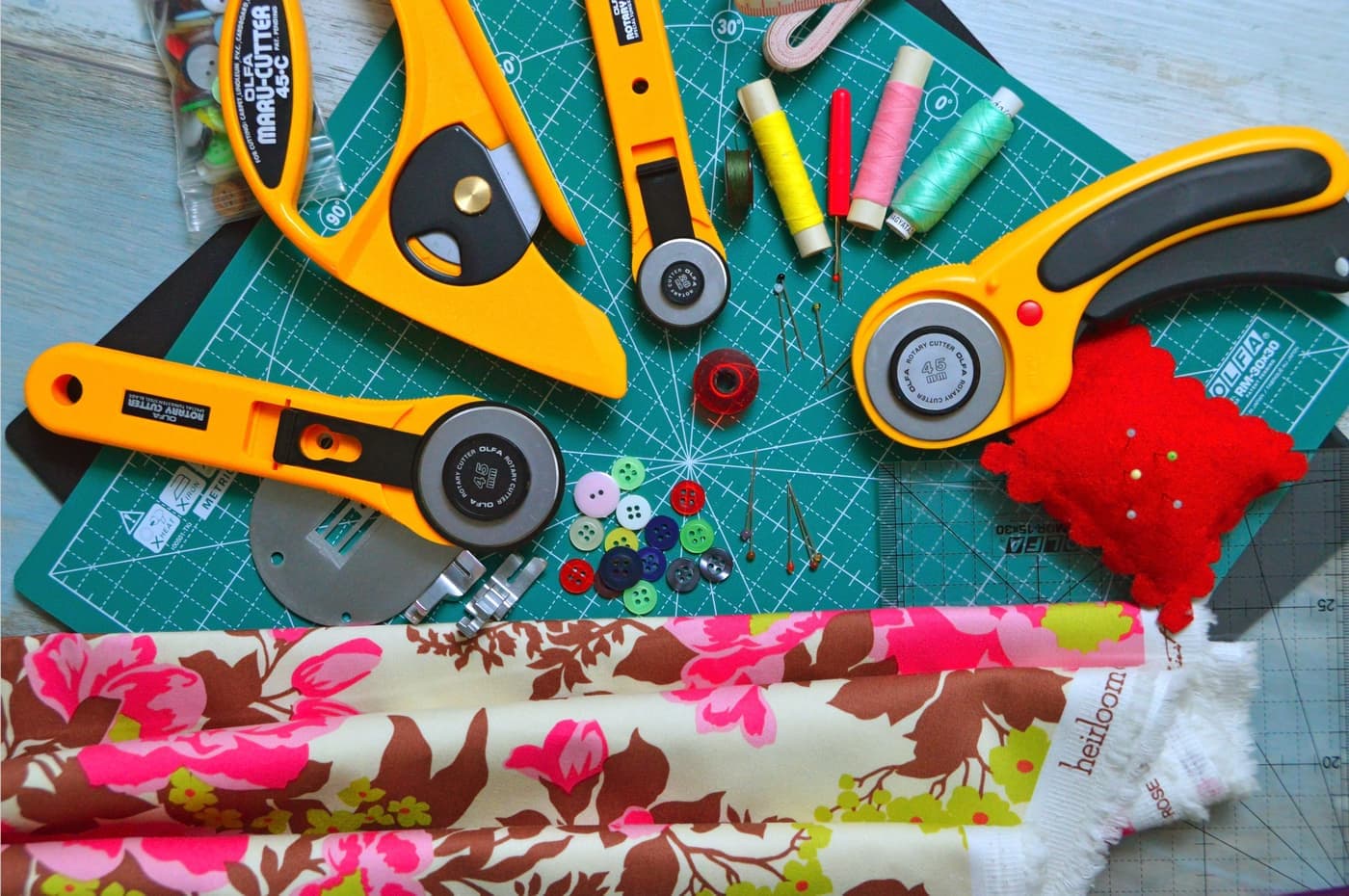
The cutting kit, the two machine accessories and the notions a first quilt needs — and what can wait.
First quilt
Your first quilt project
A baby or lap quilt in squares — the size a domestic machine can actually handle, and the seam that decides it.